




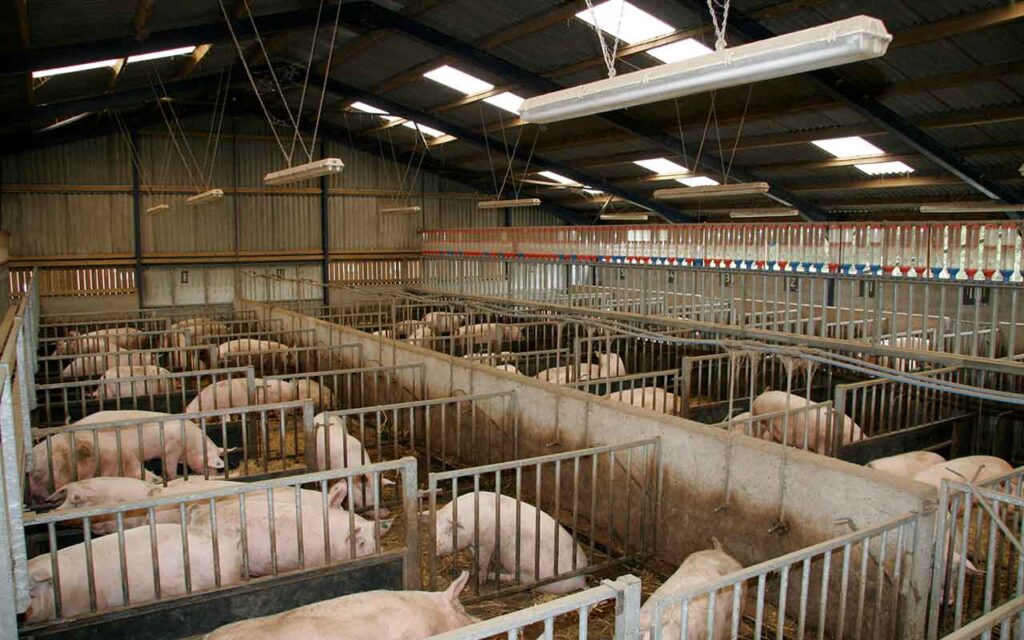
Proper winter ventilation is as important as feed and bedding when it comes to pig health. As temperatures drop, keeping fresh air flowing through the building prevents ammonia build-up, dampness and disease – helping us keep our herds comfortable and productive.
Winter on a pig farm is a balancing act between keeping sheds warm and the air fresh. When the cold sets in, it’s tempting to seal up buildings to save heat. But pigs produce a lot of moisture, noxious gases and body heat, even in winter – without enough ventilation these contaminants quickly accumulate.
Good ventilation provides fresh air, removes harmful gases and helps control temperature. High ammonia and stale air can harm both pigs and stockpeople. Poor ventilation inevitably leads to more illness and slower herd growth.
Poor air quality
One of the biggest winter hazards is ammonia from manure. You can often smell it in a poorly ventilated shed – that sharp odour signals trouble. At just 25 parts per million (ppm), ammonia irritates pigs’ eyes and lungs and makes them more prone to pneumonia. It also tends to peak in winter when airflow is limited.
Humidity is another winter challenge. Cold air holds little moisture, so the air in pig buildings quickly becomes saturated with water vapour from pigs, manure and damp bedding. The result is condensation on walls and ceilings – if you notice clammy walls or dripping water, it’s a red flag that ventilation is lacking. High humidity creates a perfect environment for germs.
Relative humidity often exceeds 80-90% in UK pig buildings during winter and pathogens survive longer in damp, cool air. Beyond disease, condensation leads to wet bedding and slippery floors that can chill the pigs.
All these air quality issues add up to a higher risk of respiratory disease. Pneumonia outbreaks often spike in stuffy, underventilated buildings because pigs’ lungs are overwhelmed by ammonia, dampness and germs. If you notice pigs coughing or see cobwebs in the rafters (a sign of stagnant air), it’s a clear warning that ventilation needs improving
Practical strategies
Fortunately, you can take a few key steps to manage winter ventilation effectively:
l Fight drafts: Seal up gaps and cracks – even small leaks of cold air can bypass your system and chill pigs. Make sure fresh air enters from above and mixes with warm air before reaching the pigs.
In mechanically ventilated barns, set inlets so incoming air is directed toward the roof instead of dropping onto the animals. If you use natural ventilation (curtains), add insulation on the windward side during the coldest months and watch pig behaviour. If they huddle together or crowd under a heater, they’re likely to be cold or in a draft – adjust airflow or temperature.
l Maintain equipment: Keep fans, vents and heaters in good working order. Clean fans move more air – even a 3mm layer of dust can cut fan output by about 40%, so brush off fan blades and louvres regularly.
Seal unused fan openings to prevent cold backdrafts. Check that controllers and thermostats are working correctly; a faulty sensor can throw off the ventilation system. Also service heaters so they burn clean – a poorly tuned heater can leak carbon monoxide and excess moisture into the shed.
l Set minimum ventilation: Don’t turn your building into an airtight box to save fuel – always maintain at least a minimal air exchange, even on the coldest days. Minimum ventilation is the continuous low-level airflow needed to remove moisture and gases while keeping temperature stable. Take the time to dial in proper fan settings or timer cycles for your herd size.
If you underventilate, humidity and fumes will skyrocket; if you overventilate, you’ll waste heat. Barn humidity of 60–70% is a good target for balance. Keep an eye on conditions and tweak settings as pigs grow or weather changes.
With some planning and vigilance – and by watching your pigs for cues – you can keep buildings warm and well aerated through winter. Keep the balance between warmth and fresh air, and your pigs will stay healthy, comfortable and productive all winter long.