



Porcine ear necrosis (PEN), often referred to as ear-tip necrosis, is a familiar but challenging condition in nursery and early grower pigs.
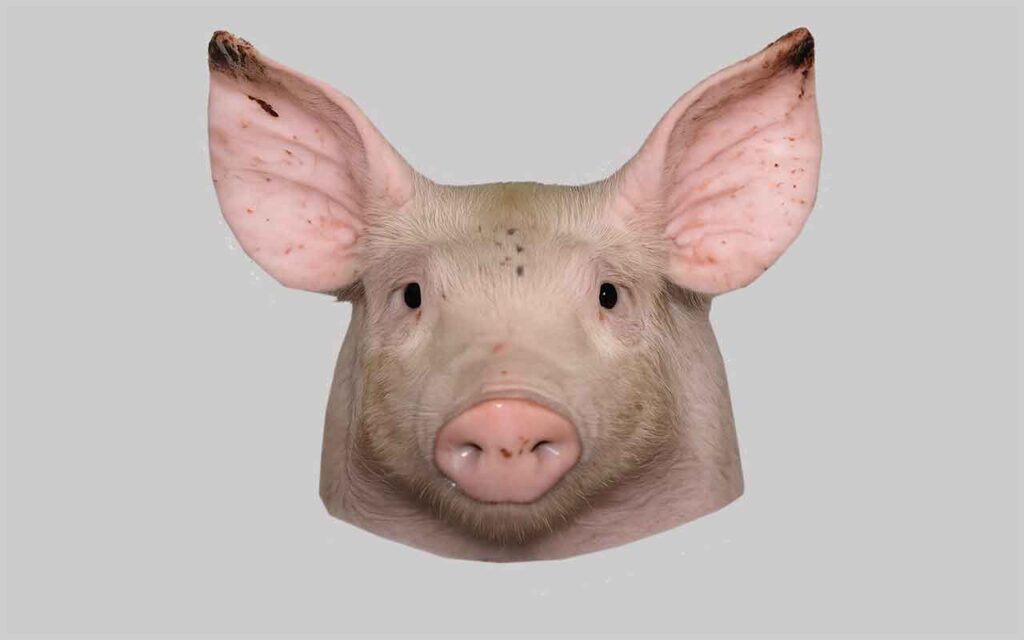
Lesions usually begin as redness and swelling at the ear tip and can progress to scabbing, necrosis and, in severe cases, loss of part of the ear.
Although recognised for decades, uncertainty around the cause of PEN has limited effective prevention, with most control efforts focusing on managing risk factors rather than stopping the disease itself.
New research has now provided the clearest evidence to date that PEN has a specific infectious cause, helping to explain its behaviour on farm and offering a clearer direction for control.
Long-standing problem
PEN has traditionally been viewed as a multifactorial syndrome. Environmental factors such as stocking density, ventilation, humidity and flooring have all been associated with outbreaks.
Behaviour, particularly ear biting and oral manipulation, is also consistently linked to lesion development. Various infectious agents, including Staphylococcus hyicus (the cause of greasy pig) and porcine circovirus type 2, have been proposed as possible causes, but none had been conclusively shown to induce PEN on their own under controlled conditions.
As a result, outbreaks can still occur on well-managed units, often appearing suddenly and spreading, despite improvements in housing or management.
A recently published controlled study has moved understanding of PEN forward significantly. In the trial, healthy five-week-old pigs from a farm with no history of ear necrosis were experimentally challenged using pure cultures of bacteria isolated from field cases.
Pigs inoculated with S. hyicus did not develop lesions, despite the strain carrying genes associated with skin disease. In contrast, pigs inoculated intradermally in the ear with Fusobacterium necrophorum developed lesions clinically indistinguishable from PEN, including tissue necrosis and loss of part of the ear. The bug was recovered from affected ears, while non-infected pigs in the group remained lesion-free.
This is the first time PEN has been reliably reproduced using a single bug in controlled conditions, strongly implicating F. necrophorum as a key cause of the disease.
F. necrophorum is well known for causing necrotic conditions in livestock, including foot-rot and liver abscesses in cattle.
Importantly, it is also a normal inhabitant of the pig’s gastrointestinal tract and oral cavity, meaning it is already widespread on pig units.
The bacterium produces several factors that damage tissue and disrupt blood vessels. Once the skin barrier is broken – for example, through ear biting – F. necrophorum appears able to establish a local infection that compromises blood supply, leading to progressive tissue death.
This helps explain why PEN lesions typically begin at the ear tip and worsen gradually rather than presenting as sudden systemic disease.
Rethinking how PEN develops
These findings support an ‘outside-in’ model of disease. PEN is likely initiated when damaged ear skin becomes contaminated with F. necrophorum, often through normal pig behaviour.
Repeated biting or manipulation may act as repeated infection events, increasing lesion severity and the risk of tissue loss.
This does not reduce the importance of environment or management. Instead, it reinforces their role in creating conditions that allow infection to take hold.
While this research does not yet provide a vaccine or targeted treatment, it sharpens the focus of prevention. Measures that reduce ear damage – including good stocking density, environmental enrichment, careful management around weaning and good air quality – are likely to reduce the opportunity for F. necrophorum to enter through the skin.
Crucially, PEN should be viewed not just as a behavioural or cosmetic issue, but as an infectious disease with clear welfare implications.
Porcine ear necrosis is painful, raises welfare concerns and may negatively affect growth performance. By demonstrating a causal role for F. necrophorum, this work provides a solid foundation for improved prevention strategies.
Further research will be needed to refine control measures under commercial conditions, but the key message is clear: PEN is no longer simply a vague, multifactorial problem – it is increasingly a defined infectious disease, and that understanding is an important step forward for the pig industry.