


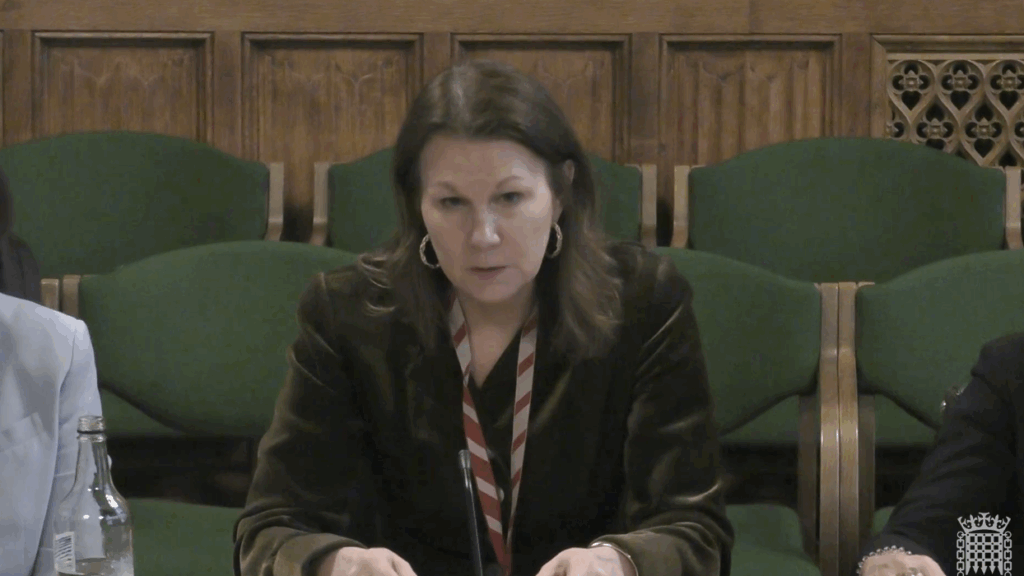
Biosecurity minister Baroness Hayman has told MPs the government has learned its lessons from earlier this year when it comes to its response to Spain’s African swine fever outbreak.
The government came in for criticism of its handling and communication of the ban on products from Germany, sparked by its foot-and-mouth outbreak at the start of the year. The Environment, Food and Rural Affairs Committee was told in February that meat and dairy products from Germany continued to enter the UK after the ban came into force.
Appearing in front of the committee on Tuesday, Baroness Hayman was asked by EFRA chair Alistair Carmichael how soon after Defra was notified of the ASF cases in Spain, confirmed on November 28, was Defra able to implement its import ban.
Baroness Hayman said Defra ‘immediately’ initiated the steps to update the government IPAFFS import system. “We’re aware that there were concerns raised by the committee over the foot-and-mouth disease outbreak in Germany and the IPAFFS system,” she said.
“That had affect the following day and we didn’t have any capacity issues at the border control posts with doing that. Then we updated our country listings that had been approved accordingly, also on the same day, so that imports from pigs and wild boar from the regions of Spain restricted by the outbreak were no longer approved. We’ve kept in regular contact with all the stakeholders involved in that.”
She said around 30 products were held at ports and subsequently released once the regionalisation agreement was in place, allowing Spanish imports from outside the restricted region of Catalonia.
Asked if Defra had learned some of the lessons from its response to FMD in Germany, Baroness said: “Absolutely.”
She added that the department had been ‘pressure testing the system very recently’ and would be discussing ‘the things that we can do to further improve’.
\“Biosecurity is incredibly important. There are going to be a lot of changes coming up SPS agreement and I take my role very seriously. I want to be looking at how we can improve all the time, but as we make changes we mustn’t inadvertantly open up loopholes or cause other problems.”
Illegal meat challenge
However, she was later challenged by Mr Carmichael on Defra’s response to two damning reports by EFRA on the government’s import controls and preparedness for animal disease outbreaks. In particular, he questioned Defra’s assertion that it would await more details of the EU-UK SPS agreement before acting on recommendations regarding the illegal meat crisis.
He suggested the gangs involved in the illegal meat trade would not be concerned whether an agreement was in place with the EU or not and whether they had to fill in a different set of forms.
Baroness Hayman argued that it would be easier to tackle the illegal flow of illegal meat imports with an SPS agreement in place, as there would be a ‘closer working relationship’ between the authorities in the UK and mainland Europe. For example, this could include better sharing of information about the vehicles that are repeatedly bringing in loads of meat through the Port of Dover.
Dover visit
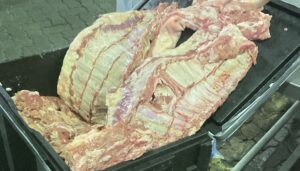
Baroness Hayman also revealed that she had finally paid a visit to the Port of Dover to witness the work there in tackling the illegal import threat at first hand and appeared to be shocked at what she found there in terms of facilities.
Mr Carmichael said he had been told by the port health authority (PHA) that a total in excess of 338 tonnes of illegal meat had now been seized at the port.
Baroness Hayman said she was ‘so pleased to finally be able to get to Dover’. “It was incredibly interesting and I think the people who work there are really dedicated in the work that they’re doing. We did see a van stopped and unloaded with illegal meeting, which was quite an eye opener. It is quite extraordinary,” she said, adding that she discussed the challenges around this work with DPHA.
“The thing that struck me most about Dover was the poor facilities where they have to do the checks, and the sharing arrangements with Border Force, which means that the Dover teams have very little space to work in and it isn’t ideal at all. So, that’s concerned me.
“The issue we have is that the area where all the checks are done is owned by the port, not by Defra. We have no jurisdiction over that – we cannot improve the facilities just because we want to.
“So, having been to visit the port and seen the problems around the facilities and the space that they have to use, I have asked my officials to get in touch with the Port of Dover because I do think we need to start talking to them about how these facilities need to be made fit for purpose.
She said the facilities at Dover were in ‘stark contrast’ to what she saw during a recent visit to Belfast to look at the new facilities there.