




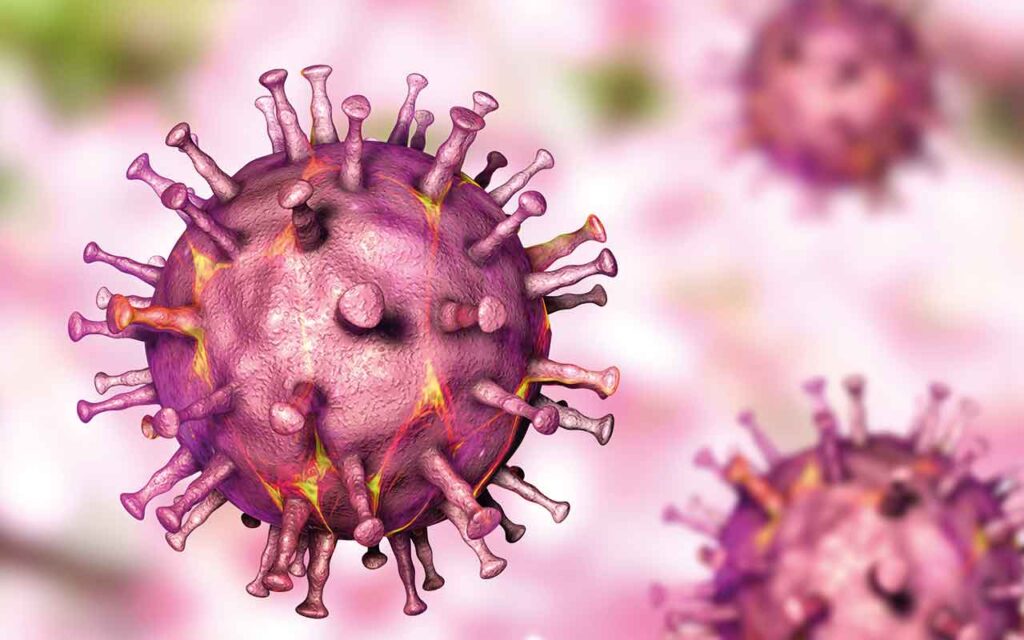
 Given the global threat posed by African swine fever (ASF), ongoing efforts to develop effective vaccines to help control it are being monitored very closely.
A great deal of work towards this end has been taking place around the world, with the highest-profile development being a live ASF vaccine developed in Vietnam and currently in use in Asia.
This is just one strand, however. UK researchers are working extensively to help understand the large-DNA virus that causes ASF and to develop effective vaccines, contributing to research efforts across the globe aiming to tackle the ASF threat to global food security and economies in both developing and developed countries.
For example, in Africa, the disease restricts the development of a thriving pig sector that offers an income stream for the rural population, while the outbreak in China in 2018 ultimately led to a contraction of nearly 40% in the Chinese pig herd.
If ASF arrives in the UK, it has the potential to cause a great deal of damage to the industry and the wider economy through direct losses on farms and the huge financial impact of a UK pork export ban.
Dr Chris Netherton, who leads the African swine fever vaccinology research group at the Pirbright Institute, said the biggest challenge is understanding the ASF virus (ASFV) itself, which is a complex pathogen.
“We don’t yet have a thorough understanding of the protective immune response against ASFV, which makes designing safe vaccines difficult,” he said. “This is something we are trying to address at Pirbright.”
The institute has four or five vaccine candidates in development, some of which are designed for specific regions of the world. “It’s very difficult to draw conclusions about the total number of vaccines being developed across the globe,” Dr Netherton said.
“A lot of modified live viruses have been described by different research groups, which could represent vaccine candidates, but it is unclear if these are being actively pursued as a vaccine and going through safety testing, for example.
“Pirbright has programmes on genotype I ASFV, which is prevalent in western Africa, and genotype II, which is present across the globe. We also have a programme studying genotype IX, which is present in eastern Africa.”
Most laboratories around the world working on ASFV are developing or testing modified live virus vaccines and some are also trying to generate ‘sub-unit vaccines’, which include only specific parts or ‘sub-units’ of the pathogen. The Pirbright Institute is looking at both.
Latest trials
The institute’s vaccinology team’s latest trial, which ran this summer, was for a sub-unit vaccine. It was targeting the prevalent strain circulating in Europe and Asia, so-called genotype II ASFV, which is similar to the original outbreak strain from Georgia in 2007.
“In this study, we collaborated with the Vaccine Group in Plymouth, which has developed bovine herpes virus 4 as a vaccine platform,” Dr Netherton explained. “This platform has a number of potential advantages over the adenoviruses we have used in the past.
“Firstly, herpes viruses generate good mucosal immunity, which is important for stopping pathogens ‘at the front door’, so to speak. Secondly, herpes viruses are much larger than adenoviruses and so could accommodate more ‘foreign’ genetic content in the form of ASFV proteins, which will be important for making vaccines against complex pathogens like ASFV.
“It is very unlikely we will find a single ASFV protein capable of producing complete protection against the virus – unlike with Covid, for example, where the spike protein was sufficient. Therefore, a vaccine platform that could deliver multiple ASFV proteins in one go would have a big implication for cost and manufacturing when it comes to commercialisation.”
This recent trial tested a number of model ASFV antigens that are known to induce immune responses, to see if the herpes virus vectors could induce good immune responses against the individual ASFV proteins and the virus itself. The team then went on to test the vaccine by challenging vaccinated pigs with virus.
Importantly, the vaccine is compatible with a ‘differentiating infected from vaccinated animals’ (DIVA) approach to diagnostics and surveillance; DIVA vaccines induce an immune response different from that induced by natural infection.
The research team’s aim is to analyse the data and publish the results as quickly as possible. However, intellectual property does need protecting, as this is important to attract industrial support for commercial development.
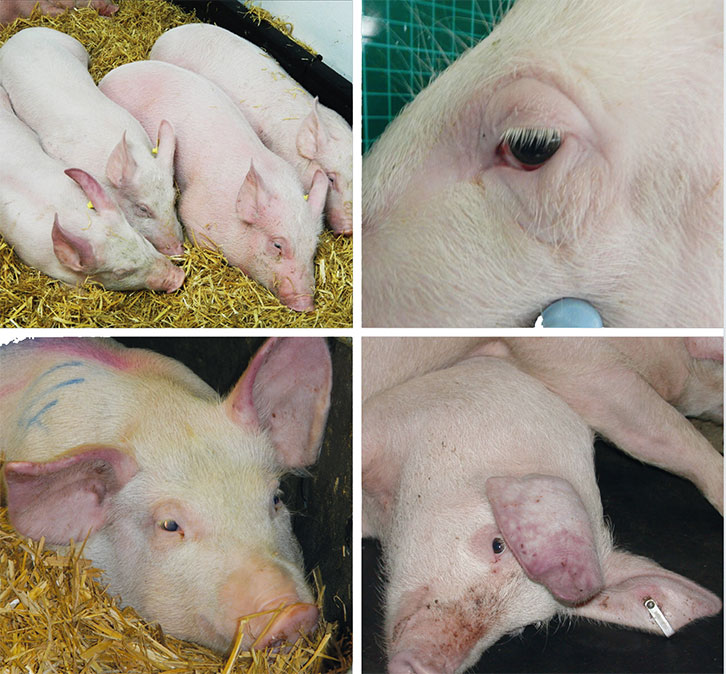
Trial methodology and measurements for ASF vaccinology research depend on the type of vaccine being tested. “We typically use UK farm pigs, but for some studies we use our in-bred Babraham line [Large White], as we can get more detailed measurements of the immune response with these animals,” Dr Netherton explained. “We usually look for clinical behaviour after vaccination and challenge, and measure immune responses before and after each immunisation and before challenge.”
Any ASF clinical signs after challenge are recorded and the amount of virus in the blood is measured.
The institute’s vaccine development research is founded on its crucial, ongoing research into how the virus works and how it interacts with the pig’s immune system.
For example, work led by Pirbright colleague Dr Linda Dixon has established that African swine fever virus adheres to red blood cells through an interaction involving CD2v, a specific protein in the virus’ external envelope.
“Earlier iterations of Pirbright’s modified live virus vaccines induced viraemia in pigs. To try to reduce this, we modified CD2v to disrupt the interaction between the virus and red blood cells,” said Dr Netherton.
It was an important step forward. However, looking ahead, it is very difficult to predict how long it is likely to be until a fully effective and safe vaccine is available commercially.
Vietnamese vaccines
Dr Netherton said the ASF vaccines developed by Vietnamese company AVAC, which have been used in fairly large numbers in Vietnam, the Philippines and Indonesia, ‘appear to be safe based on the data we have seen so far’. “However, reliable field data has not been published, so we don’t know how effective or safe they really are in the field,” he said.
“There are still some safety concerns and the vaccines are not DIVA compliant, which would have trade implications. Plus, the main issue with the Vietnamese vaccines now is the emergence of a hybrid recombinant form of the virus between two genetically different viruses.
“This recombinant is fully virulent, so it is spreading in the region and the Vietnamese vaccines do not protect against it. The hybrid recombinant virus and ASFV’s ability to readily recombine in this way is a major concern and potential challenge for vaccine development across the globe.”
The modified live virus vaccines at the Pirbright Institute are the same concept as the ones being used in Vietnam, but they have multiple deletions which improve safety and are DIVA compliant.
“Our sub-unit vaccines are inherently safe, but we have not yet demonstrated robust protection against the viruses circulating in Europe and Asia,” said Dr Netherton. “The vaccines are also fairly complex and require further rationalisation to reduce costs.”
Future control strategies
Future use of effective vaccines would need to be part of an integrated control strategy, and how they might be deployed is going to be very case dependent. “The field data from Vietnam would be helpful here,” Dr Netherton added.
“There is no international framework that I’m aware of on how countries that use ASF vaccines can trade pigs and pork products with each other. Ultimately, safe and effective ASF vaccines would help control the disease abroad, and so reduce the risk of an outbreak in the UK.
“I think it will be very difficult for the EU to eradicate ASFV from wild boar without a vaccine. Countries will need to decide how they will use ASF vaccines and then how they will trade if they have used them.
“Introduction of ASF into the UK would almost certainly be a specific ‘point introduction’ and would hopefully be detected quickly,” Dr Netherton continued. “The current control strategy of quarantine and slaughter should bring the disease under control, so it might not be necessary to consider vaccination.”.