



Defra has been accused by MPs of ‘putting the cart before the horse’ in launching proposals to ban carbon dioxide (CO2) in abattoirs without clear scientific evidence that there are commercially viable alternatives.
On Monday, Defra launched a consultation on proposals to replace high-concentration CO2 as a means of stunning pigs with alternatives such as argon or electrical stunning. It stated a preference for a transition period of a maximum of three years, which has been described as ‘totally unworkable’ by the NPA, while the abattoir sector has warned the policy could undermine UK food security.
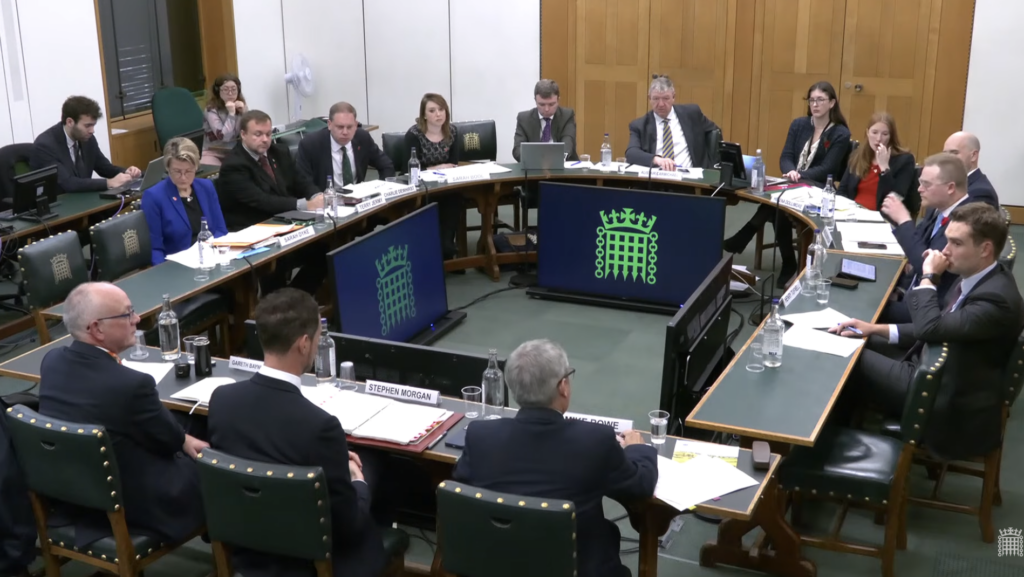
Food security minister Stephen Morgan was challenged on the policy during his appearance in front of the Environment, Food and Rural Affairs (EFRA) committee on Tuesday.
Robust evidence
Labour MP Josh Newbury welcomed the government’s ‘visionary’ animal welfare strategy but stressed that, in order to achieve real welfare gains, any changes must be ‘based on robust evidence’.
He pointed to comments in the consultation that ‘both argon and electric stunning are proven to substantially reduce animal suffering’. However, he highlighted passages in the Animal Welfare Committee’s report on which the policy is based, which stated that ‘exposure to argon still causes vocalisations and sometimes escape attempts’.
“It takes longer for pigs to lose consciousness, which could have welfare implications and would certainly have commercial impacts for abattoirs,” Mr Newbury said. “It goes on to say that the CCTV the committee saw wasn’t in the gas system itself, so it was inadequate to properly assess their welfare.”
He also highlighted the committee’s comments that, in the EU PigStun trial on automated electrical stunning, one fifth of pigs showed signs of consciousness after they had been elecrtically stunned, and had to be re-stunned, with potential huge welfare implications for pigs and risk to staff.
“So, given all of that, can you, hand on heart at this point, say that the evidence base is strong enough to bring that consultation forward?” Mr Newbury asked the minister.
Engagement
Mr Morgan said the government had negotiated with the industry in advance of the proposals going out for public consultation.
“I think it’s really important that we have that engagement with industry, and obviously we are encourageing people to respond to the consultation,” he said. “I’m very keen to make sure we do deliver on our manifesto commitments, as we set out at the election, but also to work with industry around mitigating risks and challenges.”
Mr Newbury then stressed the need for a ‘full industry-led trial with independent oversight’ to address the ‘huge gaps in the evidence’ and asked the minister why this wasn’t gathered before the consultation was released.
He added that NPA officials had told him at a meeting on CO2 in abattoirs in parliament on Monday that concerns they had raised in various meetings with Defra ‘did not seem to have had any bearing on what’s in the consultation document, whatsoever’.
He again pressed Mr Morgan on whether he will be engaging with producers and abattoirs, predicting that their concerns are ‘only going to grow louder and louder in the coming weeks’. “There’s a lot going on in the industry and this is another thing that is being heaped on them,” he said.
Cart before the horse
EFRA chair Alistair Carmichael picked up on theme, expressing surprise that he had heard directly of the concerns of the NPA and others, but the minister seemingly hadn’t.
“You’ve published the consultation, but you’re consulting on stuff that you haven’t properly trialled. Is that not putting the cart before the horse?” he asked.
Mr Morgan and Defra’s farming director, Mike Rowe, alongside him were unable to answer when Mr Carmichael asked whether other countries, such as the Netherlands and Denmark, were considering similar bans. Mr Newbury added that the US has only just moved to CO2 stunning and was ‘baffled’ by the UK’s move.
Conservative MP Charlie Dewhirst, formerly of the NPA, noted that the UK currenty has ‘readily available’ supplies of CO2, despite the consultation’s argument that the move would address the pressure on CO2 availability.
He asked the where Defra would expect to import argon and nitrogen, another potential alternative, from. When the Defra official said they would have to get back to him on that, Mr Dewhirst pointed out that Russia is a ‘major producer of those gases’. “And that would mean our domestic food security is further compromised by relying on the Russian imports. So, that, in itself, would seem to be a wrong way about it,” he said.
Mr Dewhirst also challenged Defra on the proposed transition period of two or three years, pointing out that the pig sector already has 15,000 picks backed up on farm this autumn, a situation likely to get worse.
“The transition would require shutting down the abattoirs for a conversion – these are abattoirs that are running at full capacity, trying to deal with the situation with the market, as it is. Two to three years would be unworkable, and would create additional welfare problems on farm, because there wouldn’t be the throughput capacity in the abattoirs for the pigs we’re already producing.”
Minister’s response
Throughout these questions, Mr Morgan and Mr Rowe struggled to directly address the details of the MPs’ concerns. However, the minister repeatedly stressed that he has engaged with the pig industry and will continue to do so on these issues, and that the consultation is an opportunity for all these issues to be raised.
He confirmed that Defra will be hosting a pig industry summit to discuss the current issues facing the sector, which are likely to include the proposed CO2 ban.
“My understanding is that the proposal would have significant improvements to pig welfare at the time of killing,” he said. “I will commit to seeing the sector further to get into that deatail and make sure that everyone contributes to the consultation.”