



News Focus
Researchers at the University of Sheffield are leading an international programme to improve the prediction and prevention of African swine…
Highlights - B
Researchers at the University of Sheffield are leading an international programme to improve the prediction…
The British Meat Processors Association (BMPA) has warned that Defra’s proposals to ban carbon dixide…
Researchers at the University of Sheffield are leading an international programme to improve the prediction…
Researchers at the University of Sheffield are leading an international programme to improve the prediction…
Focus Grid
Researchers at the University of Sheffield are leading an international programme to improve the prediction and prevention of African swine fever (ASF), with a focus on the UK and Asia. …
Listing: Modern
Researchers at the University of Sheffield are leading an international programme to improve the prediction…
The British Meat Processors Association (BMPA) has warned that Defra’s proposals to ban carbon dixide…
Listing: Blog
Researchers at the University of Sheffield are leading an international programme to improve the prediction and prevention of African swine fever (ASF), with a focus on…
The British Meat Processors Association (BMPA) has warned that Defra’s proposals to ban carbon dixide stunning of pigs in abattoirs could undermine British food security. The…
Pig farmers and businesses across the sector are being invited to join a webinar this week exploring how ADOPT can support farmer-led trials of practical ideas…
Listing: Timeline
Listing: Classic
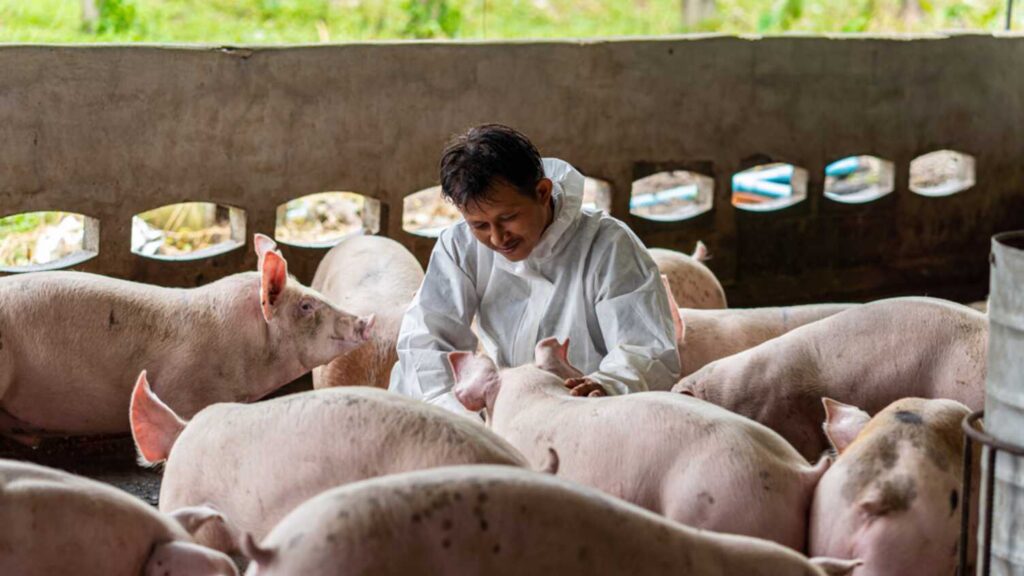
University of Sheffield leads research to tackle global threat of African swine fever
0Researchers at the University of Sheffield are leading an international programme to improve the prediction and prevention of African swine fever (ASF), with a focus on the UK and Asia. The project, ASF Nexus, led by Professor Pete Dodd, Professor of Mathematical Modelling and Epidemiology, School of Medicine and Population Health, brings together experts in bioscience, mathematics, economics and behavioural science. The project aims to investigate how the disease spreads and how future outbreaks can be prevented, in particular inthe UK and Southeast Asia. Research will begin in Sarawak, in Malaysian Borneo, with potential to expand across the region. The…