



A number of new innovations designed to support pig producers will be on display in Hannover in November at EuroTier 2026, one of the biggest livestock events in the world. We take a look at some of the new technology that is intended to ease workloads, as labour becomes increasingly sparse, while addressing challenges like rising energy costs, improving efficiency and delivering on welfare, health and sustainability objectives. Much of it deploys artificial intelligence to help producers automate their systems and collect relevant data
What’s new in farrowing?
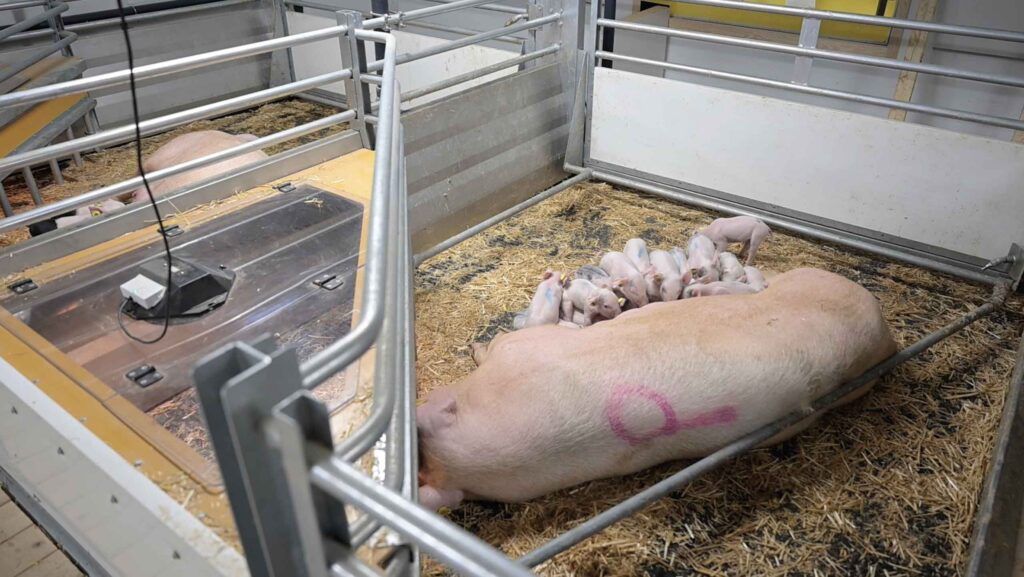
Swedish agtech company Moving Floor will present its farrowing box, which now incorporates the company’s automated moving-floor technology for the farrowing environment.
Instead of designing the farrowing box around manure storage underneath the animals, the company takes a different approach, removing manure from the animal area frequently and automatically.
A slow-moving floor transports manure and soiled bedding out of the box, where it is removed by a scraper. Fresh bedding can be supplied to maintain the environment for the sow and piglets.
Moving Floor said the concept brings together three increasingly important requirements in modern pig production – animal welfare, low-emission housing and automation.
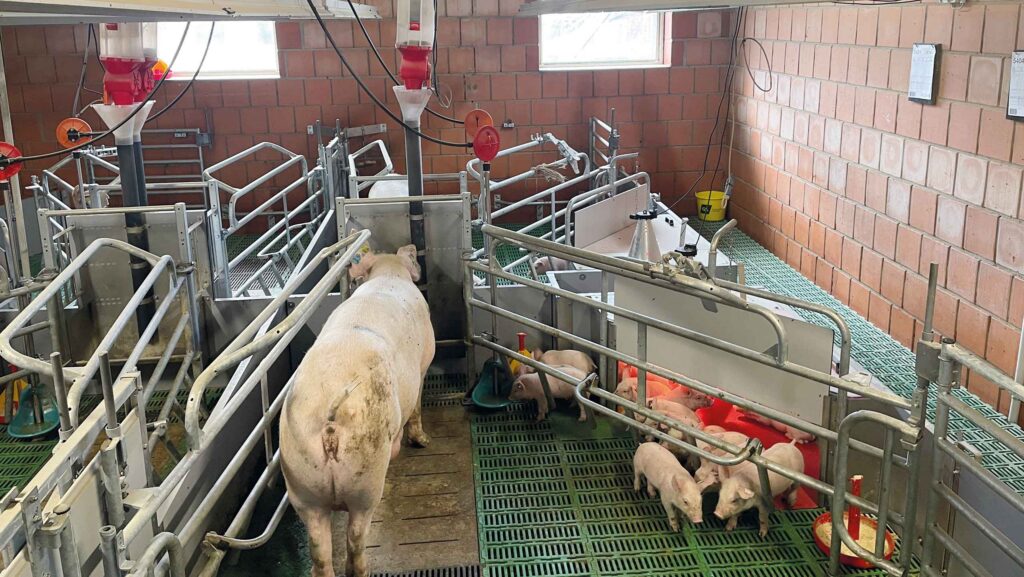
WEDA and VetVise have developed a smart farrowing pen with artificial intelligence (AI)-supported animal welfare analysis and adaptive barn control. It has been recognised with the Animal Welfare Award 2026 as part of the Innovation Award EuroTier scheme
The Smart Farrowing Pen is a retrofittable, camera-based and AI-controlled assistance system for WEDA farrowing pens that analyses the behaviour of sows and piglets around the clock.
The pen combines AI-supported analysis of the behaviour of sows and piglets with automated barn and feeding technology. Control variables such as the piglet nest temperature or the feed curve are adjusted independently and autonomously on the basis of real-time data. In this way, the animals indirectly control their husbandry environment themselves for the first time.
The system therefore enables care that is more appropriate to the situation for sows and piglets, assists the support personnel and helps to specifically adapt the husbandry conditions to the animals’ needs, the company says.
Ventilation and heat
Big Dutchman has introduced OSCA, an intelligent balanced-pressure control for pig houses with open fronts or open- air runs.
The core of OSCA is the tried-and-tested 310pro climate and production computer. This ensures that houses with open fronts or open-air runs are ventilated naturally for as long as possible.
If natural ventilation no longer meets animal welfare requirements – for example, during storms, heavy rain or extreme temperatures, OSCA automatically switches all connected climate control components to active ventilation.
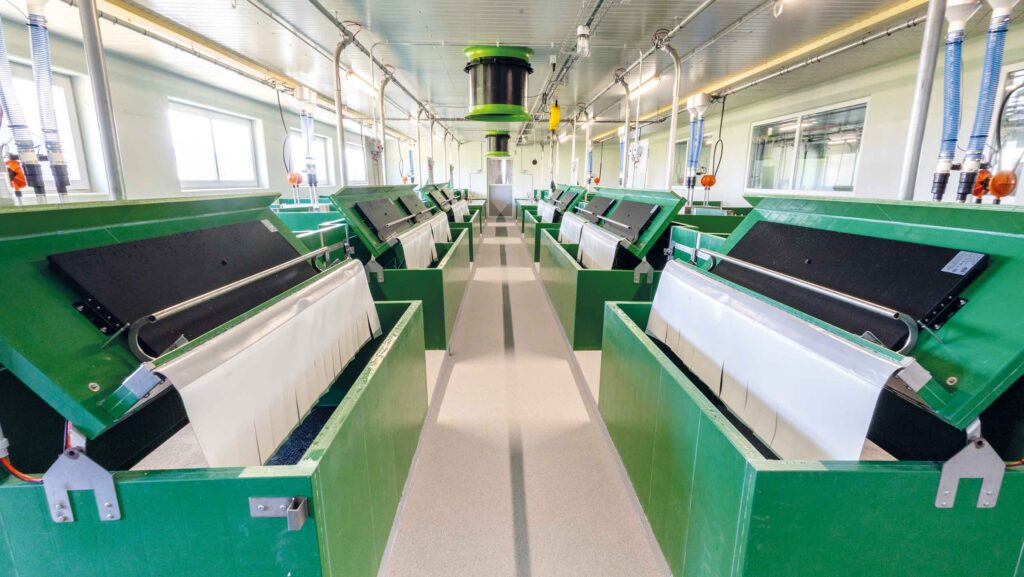
This includes curtains, fresh air flaps, doors to open-air runs, windows, fans and recirculation fans, as well as heating and cooling systems.
Meanwhile, the ATX Suisse’s AluXheat is an infrared heating system for pig rearing that has been developed specifically for the conditions in pig buildings.
The system combines sealed aluminium housing with energy-optimised infrared technology and an ingenious safety concept to reduce fire risks and protect against moisture and short circuits.
Cleaning up
Peter Prinzing has launched its Pig Barn Cleaner, an autonomous, fully automatic system for cleaning and removing manure from defined partial areas within each individual pen.
The machine is described as a completely new approach to cleaning and removing manure in buildings with partial and continuous solid floors.
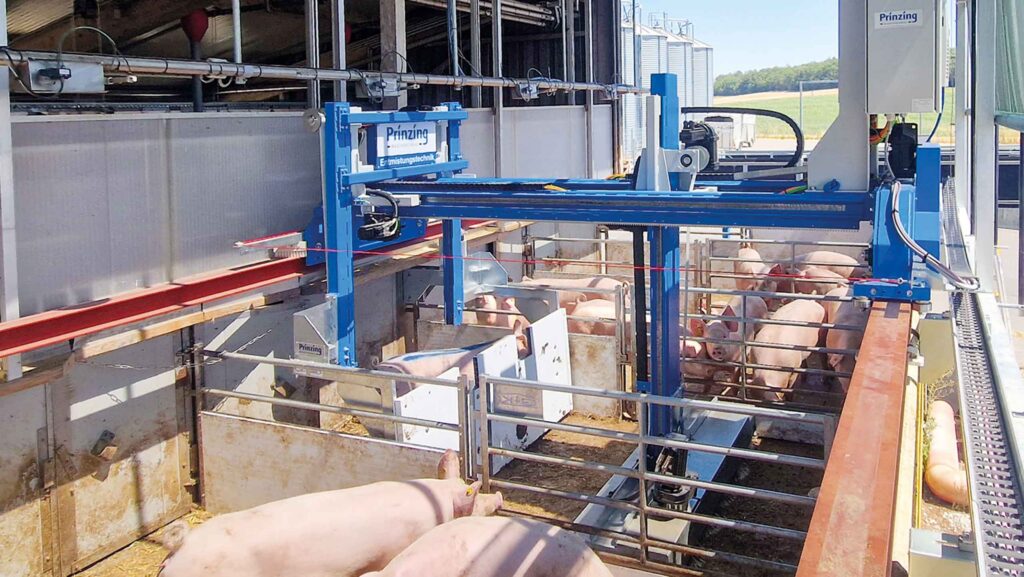
The innovative system ‘automatically and gently’ drives the animals out of the corresponding pen area with the aid of a pen partition wall. The area is then automatically cleaned independently with a corresponding cleaning unit based on a radial brush system. The manure is caught in a collecting tank and discharged again at a transfer point.
The MS Smart Cleaning Robot by MS Schippers also automates cleaning in pig housing and combines chemical soaking, washing and disinfection in a single system.
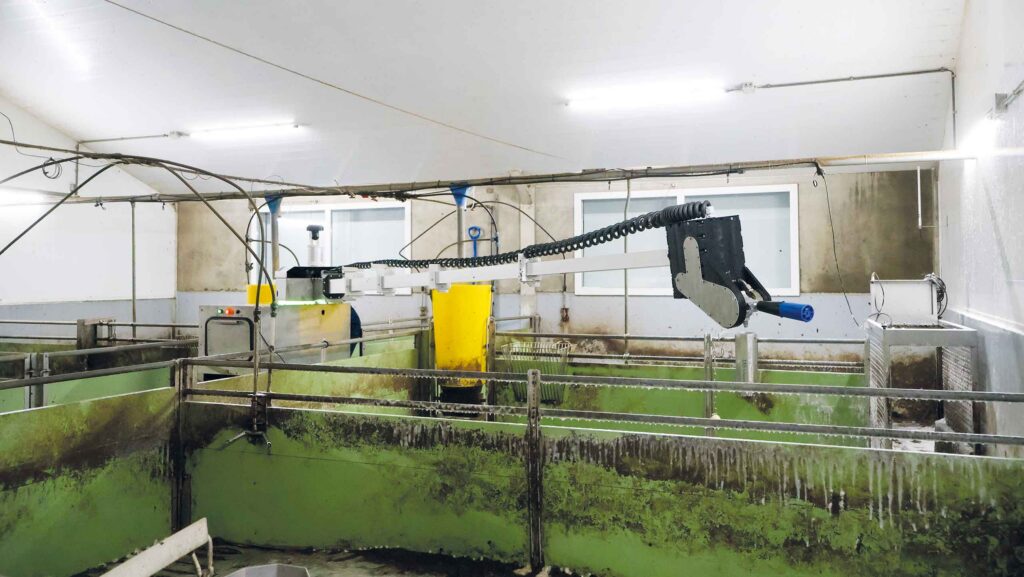
With the aid of a high-precision 3D LiDAR scanner, the software built into the robot autonomously recognises the housing structures and is able to clean without the need for time-consuming programming or standardised sensor technology.
The intelligent software can also recognise the differences between aisles and pens. The robot is easy to manoeuvre using a remote control. In future, the system should also be able to recognise any remaining dirt stains by means of photos and digital feedback with the aid of artificial intelligence, the company says.
Even deeper group pens can be cleaned precisely and efficiently thanks to the 5.5m-long, extendable washing arm.
Big Dutchman has come up with an automated solution for pig house cleaning, following a new partnership with Washpower.
The stainless steel ProCleaner X150 cleaning robot features two cleaning arms with automatic obstacle detection.
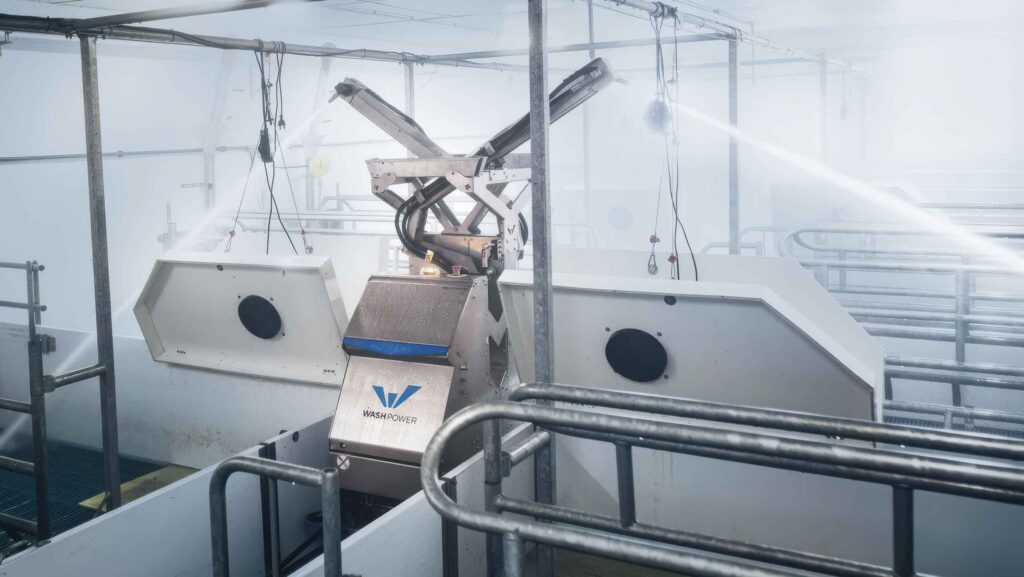
The robot does not require any complex programming, and once the water supply has been connected and the type of house selected, cleaning can begin straight away.
Four sensors recognise obstacles and enable the arms to retract individually. The washing process can continue without the robot having to come to a complete stop every time it encounters an obstacle. Depending on the capacity of the high-pressure pump used, simultaneous cleaning with both arms is possible.
The battery-powered robot weighs 280kg and has a minimum operating time of 20 hours.
Health and welfare
PigTail from WEDA is a fully automated, camera-based image processing system for sorting gates in group housing for pigs.
The sorting gate is supplemented by a visual animal welfare diagnostic tool in which the animals are monitored from above using a camera.
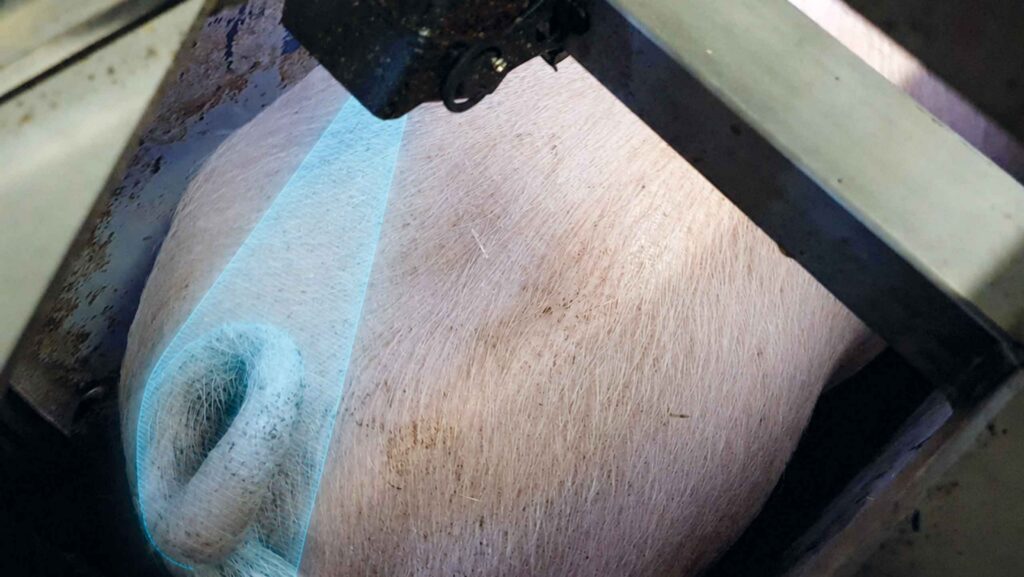
Comparison with the images previously taken by means of artificial intelligence (AI) is used to recognise whether a curly tail is intact or whether there are indications of tail-biting or even tail necrosis.
As the system continuously aggregates the data, it can supply the exact number of animals with intact curly tails at the push of a button prior to the marketing date, in order to apply for animal welfare premiums in some countries.
The BarnBuddy from VetVise is an AI-supported herd and health management system for pigs, poultry and cattle. Cameras analyse behaviour, activity and animal distribution, recognise problems early on and provide specific action recommendations.
The core element of the BarnBuddy is a generative AI assistant that links complex data with veterinary medicine and agricultural science details and translates this locally into precise action recommendations.
