


he key piece of advice when it comes to keeping pig farms free of swine dysentery (SD) is clear and unchanged: clean vehicles greatly reduce the risk of spread.
There were 55 swine dysentery submissions to the Great Britain scanning surveillance network, made up of SRUC and APHA laboratories, in 2025 and there have been 38 submissions so far in 2026. A direct comparison between the years is not straightforward, in part because the PCR diagnostic test changed last summer.
“However the continued presence of SD around the country is a sharp reminder to redouble biosecurity efforts,” said Katie Jarvis, NPA chief policy adviser. “The main point is to make sure no trace of pig muck is transferred from one farm to another.”
Swine dysentery is a condition affecting growers, finishers and younger breeding stock, with symptoms including blood and/or mucous in the faeces, weight loss and poor condition. The disease has low to moderate mortality, but pigs that survive infection will take longer to reach slaughter weight.
The cost to farms can be huge. Once on farm, it is difficult to get rid of, with depopulation often agreed as the best approach.
It is a bacterial disease caused by Brachyspira hyodysenteriae, of which there are different types.
“The bacteria can be spread via movement of livestock, themselves, or any fomite contaminated with infected faecal matter,” said Pig Veterinary Society president Alex Thomsett. “Care must be taken with biosecurity for all movements of animals, vehicles and people.”
Cases of B. hyodysenteriae do not always present with clinical signs and some of the recently identified strains are causing milder symptoms and taking longer to spot, said Lauren Turner, AHDB’s lead animal health and welfare scientist.
“This may be one reason for the apparent increase in spread this year, with the pathogen more likely to have been transferred to other farms before it was identified and additional biosecurity measures put in place,” she said. “There have been cases across the country; it’s not confined to a particular region.”
If producers have any concerns or find any unusual diarrhoea and think it might be swine dysentery, they should ask their vet for advice straight away.
Clean vehicles cut risk
To prevent swine dysentery getting onto farms, biosecurity for both vehicles and people needs to cover everyone from staff, who might move between different sites within the same business, and regular visitors such as pig hauliers and feed lorries, to contractors such as electricians.
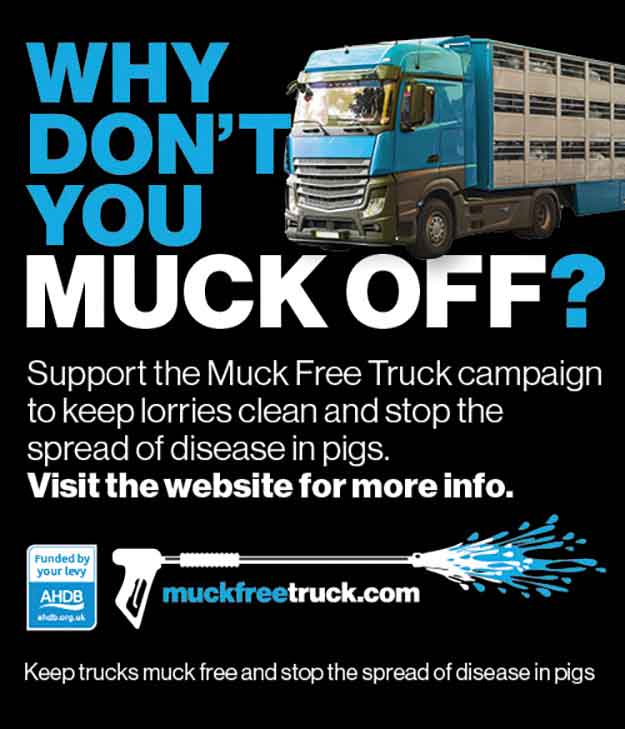 The industry’s Muck-Free Truck campaign highlights the disease risk posed by contaminated vehicles, in particular, and what can be done to reduce that by producers, hauliers, supply companies and abattoirs alike – it is a shared responsibility.
“Clean vehicles are vital for clean farms and healthy livestock,” said Lauren.
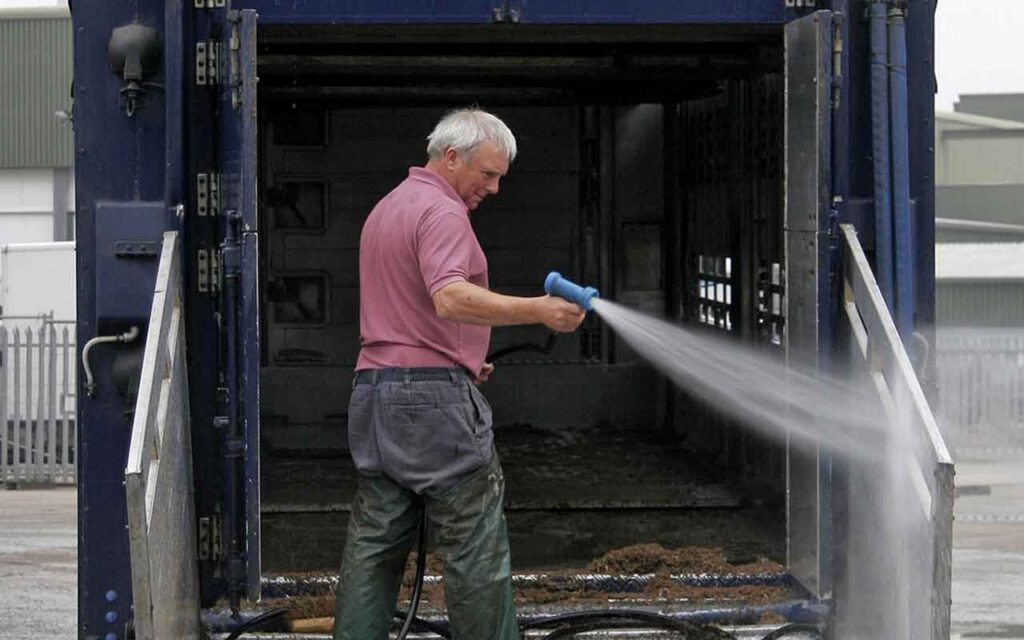
“That message remains the same, as we know that thorough cleaning of vehicles, every time, massively reduces disease spread, not just of swine dysentery, but many other diseases, too. We’ll be running another burst of the campaign this autumn.”
There is a lorry-washing standard operating procedure (SOP 7), along with a video, available online.
Further risks to manage include tractors, which might be moving between sites. Muckspreading is another risk to consider, as are rodents and birds, which can also carry faeces between farms.
Unit boundaries, barriers and gateways with clear areas and facilities for cleaning and disinfection must be prioritised, as well as communication. Lauren stressed that a few uncomfortable moments can prevent catastrophic losses later.
“We want producers to feel empowered to turn away any vehicles they are not satisfied with,” she said. “This can understandably feel hard to do, but they should only ever allow clean trucks onto their farm.”
Katie raised another important point that often crops up when units are dealing with a case of SD. “Producers don’t always say when they have SD on farm because they feel embarrassed about it. However, it is vital that they inform any visitors, whether that’s the builder or feed delivery driver, so they don’t inadvertently take it to the next farm they visit.”
PPE, footwells and feed pipes The industry must make sure it is paying enough attention to all areas of the lorry, in addition to cleaning and disinfection of the lorry body and wheels, said Alex.
“The truck might be sparkling clean but some areas, for example, boot lockers and the driver’s footwell can be overlooked. Hauliers generally do their best but producers could be proactive and provide PPE at the entrance and loading ramp to make it easier and ensure it is used every time.”
A low-cost and effective measure for all farms is simply to invest in a dozen or so pairs of wellies in a range of sizes, to ensure anyone visiting the unit only wears unit-designated boots, while hauliers can keep overshoes handy, to put on before stepping out the cab.
“Providing a farm-specific feed pipe is another step producers can take,” said Alex. “Otherwise, there is always a risk that the pipe that lives under the lorry has been contaminated at another farm.”
Extra support for your farm
While the advice to regularly review farm biosecurity is clear, every unit and business is different and it is not always easy to spot any remaining gaps in biosecurity plans.
To support producers with this, AHDB has purchased more 12-month licences for pig farmers to access the advanced Biocheck biosecurity assessment tool, which is evidence-based and used worldwide.
Since it began the initiative last year, about 300 producers have taken advantage of the tool to generate tailored recommendations to improve biosecurity, working in collaboration with their own farm vets.
There is more information available online on the AHDB website.
ASF indicator
SD is a good proxy for African swine fever (ASF), providing an indicator of how well positioned UK farms are to prevent its spread, as they are both fomite-driven diseases, Katie pointed out, adding that the same key biosecurity measures are important.
“If we are not controlling SD effectively, it’s an indicator that we would also struggle to control ASF if it arrived,” Lauren added.
Communication
The Significant Diseases Charter is there to provide increased awareness to producers, alerting them anonymously if swine dysentery is found in their area, and enabling them to double down on biosecurity and help reduce further spread.
Positively, reporting of SD cases via the charter has continued to increase, with the number of notifications now very close to the numbers confirmed by the APHA.
Producers can sign up for alerts directly via their existing Pig Hub account.
Tools to boost biosecurity
With cases of swine dysentery (SD) increasing this year, robust biosecurity measures are more important than ever, according to Dan Clow, Kersia’s business development manager.
“Every farm should have a clearly defined cleanout protocol, with staff trained to implement it consistently,” he said.
“These protocols should be reviewed regularly, and an effective cleanout plan is essential. Choosing the right cleaner and disinfectant for the challenge on your farm can make a significant difference.
Seeking expert advice can help ensure products deliver maximum effectiveness.
“For farms facing persistent health challenges, a double wash prior to disinfection may be beneficial.
“Thorough removal of biofilm is critical, as pathogens can remain protected beneath these layers. By exposing these hidden organisms, disinfectants can work far more effectively.
“At Kersia, we work closely with farmers, merchants and veterinary teams to develop practical cleanout programmes that deliver results.”
Intestinal health
Anpario’s Caitlin Pearson highlighted the increasing recognition of the role intestinal health plays in herd resilience against diseases like SD.
The disease is associated with disruption of the colonic environment, resulting in inflammation, diarrhoea and reduced performance.
“Our focus is on practical nutritional solutions that support gut health and resilience throughout the production cycle. Maintaining a balanced gastrointestinal environment can help pigs better cope with enteric challenges and support performance,” she said.
“Orego-Stim contains 100% natural oregano essential oil, providing a consistent source of carvacrol and thymol.
“Scientific studies have demonstrated that both compounds exhibit inhibitory activity against Brachyspira hyodysenteriae in vitro, with synergistic effects observed when combined.
“In addition to these antimicrobial properties, oregano essential oil has been reported to possess antioxidant and anti-inflammatory activities and may help support a healthy intestinal microbiome.”
