




Sustainability is firmly at the forefront of the pig industry’s future. Achieving it requires balancing environmental protection, economic viability and social responsibility, without compromising resources for the next generation.
While efficiency has improved and environmental footprints have reduced, further progress will inevitably come at a cost, according to Premier Nutrition, which pointed out that it remains unclear where these costs will fall within the supply chain.
Despite this uncertainty, it continues to innovate and test diets that can meet future sustainability requirements.
With feed contributing 75-80% of a pig unit’s carbon footprint, selecting raw materials with lower environmental impact offers one of the biggest opportunities for meaningful reduction.
Soya, though nutritionally excellent with highly digestible amino acids and good palatability, is a major contributor to feed’s global warming potential (GWP). To reduce reliance on soya, the company has trialled several alternative protein sources.
Field beans
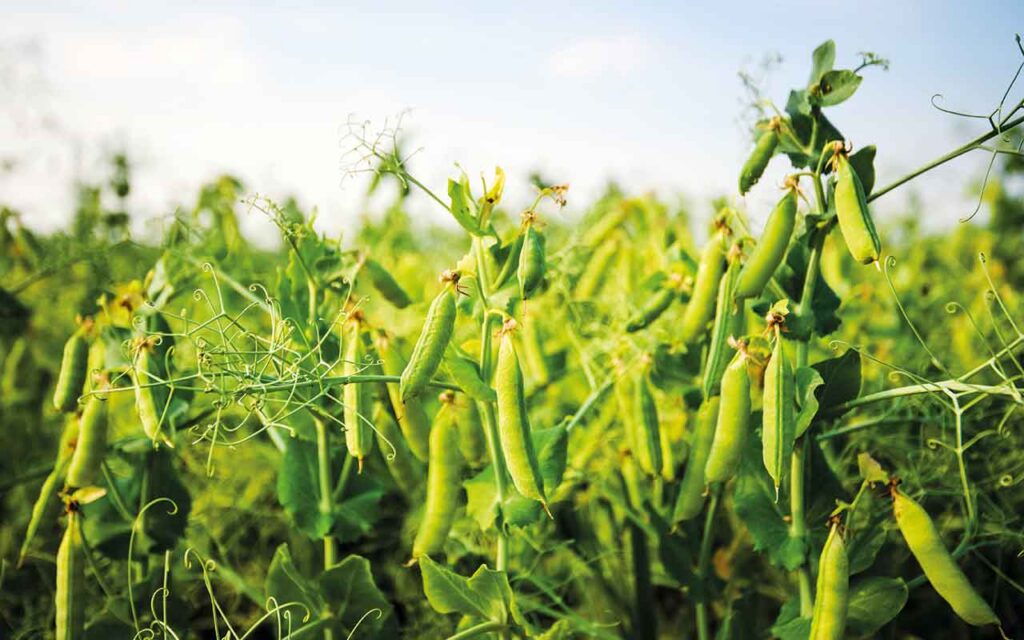
Field beans offer a significantly lower environmental impact and reduced GWP, partly due to their suitability for temperate climates and their nitrogen-fixing ability. Historically, their use has been limited by anti-nutritional factors, but plant breeding has produced varieties with far lower levels of these compounds.
In one Premier Nutrition trial, finishing pigs, from 37kg to 115kg, were fed diets containing varying levels of field beans, up to 25%. Pig performance was unaffected across all inclusion levels, while the 25% bean diet delivered up to a 30% reduction in carbon dioxide equivalent (CO₂e)/kg deadweight.
“At the time, field beans were competitively priced, so maintaining performance also reduced cost/kg gain,” said Sam Wootton, commercial pig nutritionist at Premier Nutrition.
“However, this price point has since changed, and unless soya prices increase significantly, field beans purchased commercially will struggle to compete. A reduction of about £20-£30/t from current prices would be required for high inclusion levels to be economically attractive.
“Supply also remains inconsistent, meaning wider adoption will depend on producers incorporating beans into their own rotations.”

Sunflower meal
A second trial used sunflower meal alongside higher levels of synthetic amino acids, allowing Premier to formulate a finishing diet with a 25% lower GWP than a standard regime.
Performance and carcase quality were maintained, and overall batch GWP fell by 28% (CO₂e/kg deadweight).
However, sunflower meal’s price premium meant the diet cost an additional 3.7p/kg deadweight at the time of the 2024 trial. Prices have since increased further, making sunflower meal an unattractive option unless supported by a sustainability premium.
Beyond conventional synthetic amino acids such as lysine, methionine, threonine, tryptophan and valine, newer amino acids, although currently expensive, allow even more precise alignment of diets to pigs’ nutrient requirements.
“This enables reductions in crude protein, nitrogen and phosphorus excretion, further lowering environmental impact. Diets using these strategies have achieved GWP reductions of up to 40% compared with standard formulations, said Mr Wootton.
“The key questions now are when such formulations will be required by retailers, and whether demand will be driven by consumers or legislation.”
Carbon footprints
Alongside these trials, Premier Nutrition can now provide accurate CO₂e values for its pre-mixes, offering greater understanding of their environmental contribution.
“This work highlights the significant carbon footprints associated with manufacturing amino acids, vitamins, minerals and other additives,” Mr Wooton added. “By incorporating these components accurately into carbon calculations, each pre-mix now carries a bespoke value, enabling a more realistic assessment of overall feed impact.
“Meaningful progress is being made through improved efficiency and nutritional innovation, and further opportunities to reduce GWP and other environmental impacts continue to be explored.
“However, achieving additional gains will require sustained investment and collaboration across the supply chain. To ensure long-term sustainability, the costs and responsibilities associated with environmental improvements must be shared fairly, rather than falling solely on producers.”