


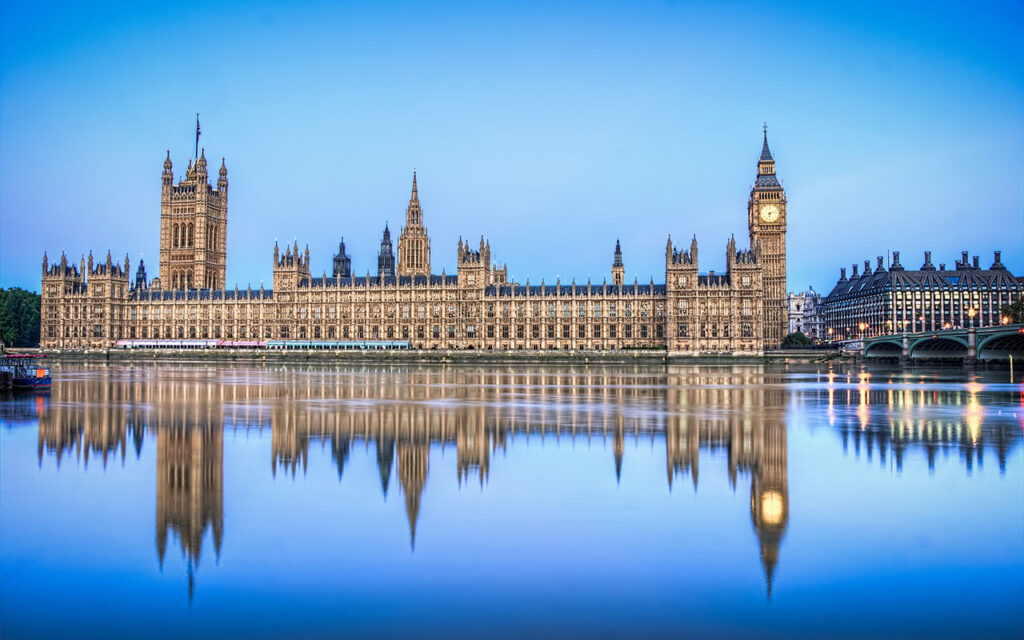
MPs from across the political spectrum urged the government to take action to support independent pig farmers in the current ‘crisis’, in the House of Commons on Tuesday.
Food security minister Stephen Morgan promised that the government will enage with the pig sector during the current market turmoil, but indicated it is not considering a financial support package, in response to MPs’ calls during the Westminister Hall debate.
Mr Morgan is due to meet the NPA today, days after the Scottish Government announced a £2m support package for its stricken independent pig farmers.
Sustained difficulties
Opening the debate, Harriet Cross, Conservative MP for Gordon and Buchan, said: “The current trough and range of difficulties faced by our pig farmers is sustained and significant, and there seem to be few routes to stabilising the sector.”
She cited a farmer she recently met in her constituency who is losing about £50 per pig, while, across Scotland, the industry has lost £5.7 million since January. “Unless farmers are paid a price that at least covers the cost of production, there can be no future in the sector. It is as simple as that,” she said.
Ms Cross highlighted the ‘attractiveness to UK retailers of the flood of cheap pigmeat from the European continent’ and concerns over ‘fairness in the contracts for independent pig farmers’.
She reiterated industry requests for the government to undertake an assessment of whether the Fair Dealing Obligations (Pigs) regulations (FDOP) are ‘truly robust enough to address the pricing and margin concerns of producers when dealing with processors’. She concluded by calling for the minister to ‘commit to meeting the NPA and, when he does, making sure that there is a substantial package brought forward that can help support the sector’.
Imbalance of power
Labour MP for South-West Norfolk Terry Jermy highlighted the NPA’s prediction that, by November we could see 10,000 to 15,000 pigs per week without an outlet to be sold, ‘placing a significant financial burden on farmers and risking animal welfare issues’.
He said: “There is a huge power imbalance in the supply chain, and a lack of credible contractual relations between far too many pig sellers and buyers. Specifically, will the Minister review whether the fair dealing obligations are being upheld and whether they are robust enough?”
Brian Matthews, the Liberal Democrat MP for Melksham and Devizes, referred to a letter from constituent Cameron Naughton, whose business is losing about £5,000 a week
“Operating a high-welfare, outdoor-bred, RSPCA-assured farm like Cameron’s inevitably carries a much higher cost of production, but what he finds incomprehensible is that prices to the consumer keep rising while the supermarket supply chains continue to make substantial profits that are not reflected in what farmers are paid,” he said.
He urged the minister to sit down with the industry ‘to determine what can be done to secure the survival of this vital sector and to help secure our country’s vital food security’.
In crisis
Robbie Moore, the Conservative MP for Keighley and Ilkley and the shadow food security minister, said: “The British pig sector is in crisis, and our pig farmers need our help.”
“The Government simply cannot stand on the sidelines and hope that the market corrects itself, because by autumn, the industry fears that up to 10,000 to 15,000 pigs a week could have no market at all. If nothing changes, we know what follows—more farm closures, more herds reduced and more businesses walking away from the industry altogether,” he said.
He also called on the minister to review the FDO regulations and echoed other MPs in urging the government to improve its border controls and help the industry ‘build a workforce based on domestic skills and apprenticeships’.
“British pig farmers are not asking the Government to solve every single commercial challenge, but they are asking for regulations that genuinely protect producers rather than leave them exposed. Above all, they are asking the Government to recognise the strategic importance of British food production before more independent producers simply disappear for good. We cannot lose more of this vital industry,” he said.
Continue to engage
 Responding, Mr Morgan said pig farmers were ‘navigating a period of profound difficulty, confronting a range of economic and structural challenges across all nations of the UK’.
He stressed that the Government ‘will continue to engage with the industry as it responds to the challenges it faces’, adding that he had ‘prioritised’ meeting with the NPA. “I hope tomorrow is the start of that relationship,” he said.
He noted that the government has powers under section 21 of the Agriculture Act 2020 to provide support to farmers in England ‘intended to deal with unforeseen short-term shocks to agricultural markets, where there is a significant adverse effect on price achievable for one or more agricultural products’. These powers were previously used during the ‘exceptional disruption’ faced by the pig sector in 2021.
However, he said: “We recognise the challenges facing the sector today, but our assessment is that the circumstances are materially different from those seen in 2021. The current pressures reflect broader market conditions rather than a breakdown in processing capacity or market function. As such, the threshold for intervention in England under section 21 of the Agriculture Act is not currently met. As it is a devolved matter, it is for devolved Governments to take a judgment on intervention.”
Mr Morgan said the government would ‘continue to monitor the situation closely’, noting that while the backlog that built up earlier in the year has now cleared, ‘wider pressures remain’.
He said the FDO regulations 2025 were designed to end unfair contract practices and give British pig farmers greater transparency and certainty in their commercial relationships and would ‘reflect’ on MPs’ calls to assess whether they are robust enough.
The government’s understanding is that notices being served on producers were being issued by processors ‘in line with contractual provisions’, he said, adding that the regulations will be subject to statutory review processes that will assess their effectiveness and whether any changes may be required in future.
The concerns raised by MPs ‘have reinforced the importance of continuing to work closely with producers, processors and the wider industry’, the minister concluded.