


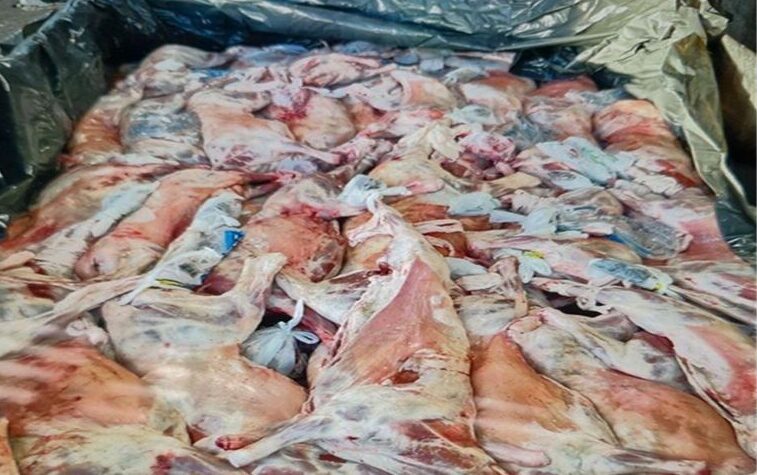
The NPA has urged the government to use the new UK-EU Sanitary and Phytosanitary (SPS) agreement to step up its efforts to address the illegal meat import trade and ensure it does not further undermine the UK’s border controls.
In its response to the government’s call for information on the agreement, the NPA says the potential impact of the reset on biosecurity and border controls is its most significant area of concern.
“One of the perceived opportunities of the UK’s departure from the EU was to have a more robust approach to border security to protect the UK from threats such as notifiable disease (FMD, ASF etc),” the NPA submission said.
“Whilst it is evident this is not currently happening, as supported by the continued influx of banned products of animal origin (POAO) entering the country illegally, the SPS agreement risks unpicking this further and resulting in the UK having even weaker border security measures.
“We urge the UK Government to use this as an opportunity to focus resource into combating this form of organised crime, given the huge threat it poses to the UK’s livestock sectors, rather than just relying on EU data systems and agencies.”
The NPA cites figures from the National Audit Office, estimating that the 2001 outbreak of foot and mouth disease cost the public and private sectors around £14.7 billion in today’s prices. The immediate impact of an outbreak of ASF or FMD would be an export ban on UK pork worth around £600 million, it adds.
Reset benefits
The NPA is supportive of government efforts to reset relationship, with the ambition of reducing costs and other barriers to trade, given that the EU is our largest trading partner for pigmeat.
“The primary advantage will be helping facilitate greater volumes of trade. This will first allow the UK to restart the export of live animals for breeding, as currently there is no Border Control Post in the EU for us to take animals through, as well as the export of certain restricted products that are currently banned such as minced meat and sausages,” the response said.
“The deal will also reduce the cost for exporters of commodities like cull sows. With regard to imports, this would again significantly improve the flow of trade and reduce the cost and bureaucracy for importers having to engage with the Border Target Operating Model (BTOM).
“However, we continue to have a number of concerns with relation to the deal.”
Lack of awareness
Despite the NPA’s our efforts to engage our membership, the response also highlights a lack of awareness among primary producers of the changes coming down the track and how wide ranging the agreement is or how it could directly impact their business.
“We feel that many producers do not appreciate the difference between this agreement and other trade agreements, with a common misconception being that it will only apply to those businesses that trade directly with Europe,” the NPA tells the government.
It calls for ‘some detailed and direct industry engagement’ from government to help get the key messages across.