


Defra says it has ‘established a new Illegal Imports Improvement project’, which will produce an ‘action plan’ to tackle the problem.
In its response to the Environment, Food and Rural Affairs (EFRA) Committee’s report on the sanitary and phytosanitary (SPS) agreement with the EU, the department said it will seek input from the Food Standards Agency, Home Office, Border Force and others to develop a plan.
“This will consider demand, alongside other areas, and prioritise resource where evidence suggests the greatest impact will be delivered,” Defra said.
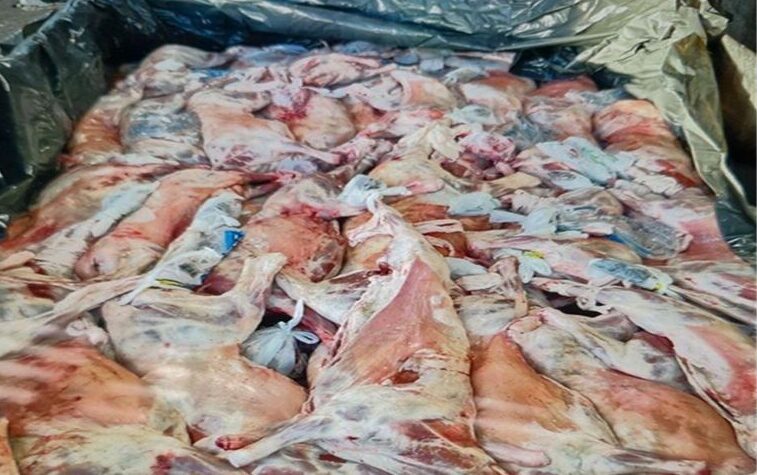
The Dover Port Health Authority (DPHA) revealed it identified and removed more than 14.2 tonnes of illegal meat in a single week at the end of March. In total, more than 422t of illegal meat has been seized at the port since September 2022, with volumes seized increasing markedly over recent months
The department has come in for heavy criticism over its handling of the UK’s illegal import crisis. In its report, published in February, the EFRA Committee said any future SPS agreement will require adjustments to existing border controls, but said it remains essential that GB retains the ability to ‘apply robust, evidence-based measures to prevent the introduction of diseases from Europe’.
It stressed that Defra must not wait until SPS negotiations are concluded before developing a strategy to reduce demand for illegally imported animal products, and called for the government to begin work with others to develop a strategy to tackle the domestic demand for imported illegal meat by June 2026.
The Government also agrees to the recommendation to evaluate how BTOMs were rolled out, including by taking feedback from port health authorities and traders, and to learn lessons to inform any future changes to border policy. It also suggests it is exploring ways to compensate authorities for the investment they made in border infrastructure.
DEFRA has taken forward the committee’s recommendation on improving the way it uses surveys to understand the level of public knowledge of personal import rules regarding meat and plant products. MPs said this was necessary given how reliant biosecurity policy is on people abiding by the rules. The survey results will be published in May.
EFRA Committee chair Alistair Carmichael MP said:“It is reassuring, at least, that Defra appears to have belatedly awoken other departments – most importantly the Home Office – to the need for an action plan to reduce illegal meat imports. Ministers must know by now that this is a rapidly growing problem with potentially devastating consequences. Swift action is required.”
Transition rejection
The committee expressed disappointment, however, after the government rejected its recommendation to implement a transition period for affected farmers and businesses. It called for ‘realistic implementation periods of at least 24 months’ for any regulatory changes that arise from dynamic alignment with the EU once the SPS agreement comes into force.
In its response, the Government maintained that the SPS agreement will take effect from mid-2027. “We know that some businesses require longer to adjust to the new arrangements and will continue to work with them to ensure a smooth transition,” its response said.
Mr Carmichael said: “Our report was primarily concerned with ensuring that the Government puts its best foot forward in negotiating a new SPS deal with the EU, one that supports our farmers and growers, and we welcome the Government’s positive response to many of our recommendations.”
“It is disappointing, however, that Ministers have disagreed with our call to give businesses a transition period to adjust to what could be very disruptive changes coming down the track. With headwinds already howling in their direction, the sector needs all the help it can get.
Animal welfare opt out
The response agrees with the Committee’s recommendation that Ministers should seek a carve-out from dynamic alignment on regulations regarding animal welfare, and avoid UK industry being undercut by products from countries with lower standards.
Although this will be subject to negotiation with the EU, the government says it ‘will continue to champion the importance of high standards of animal welfare and promote best practice around the world.” It adds: “We will keep working collaboratively with our international partners as part of this to promote robust standards nationally and internationally.’
A veterinary agreement
The Government rejects MPs’ recommendation of pursuing a veterinary medicines agreement in tandem with SPS negotiations.
It said concerns about availability of medicines should be addressed by two schemes it launched earlier this year – the Veterinary Medicine Health Situation Scheme and Veterinary Medicines Internal Market Scheme. The response says Ministers are ‘open to’ working with the EU and other international trading partners on the regulation of veterinary medicines.
Mr Carmichael said: “Despite the government’s previous enthusiasm to negotiate an additional agreement to improve veterinary medicines access in Northern Ireland, the wording of their response on this point – that Ministers are now merely ‘open to’ a deal – is likely to raise some eyebrows. If the Government is now lowering its ambitions in this area that will be a great disappointment to many. They would be well-advised to provide clarity on this point.”
Precision breeding
The Government says the future of regulations that could impact precision breeding are up for negotiation with the EU, but that the UK has communicated that this is a matter where it should continue to have its ‘own rules’.