



Poland’s pig industry has undergone one of the most dramatic structural transformations in Europe over the past two decades.
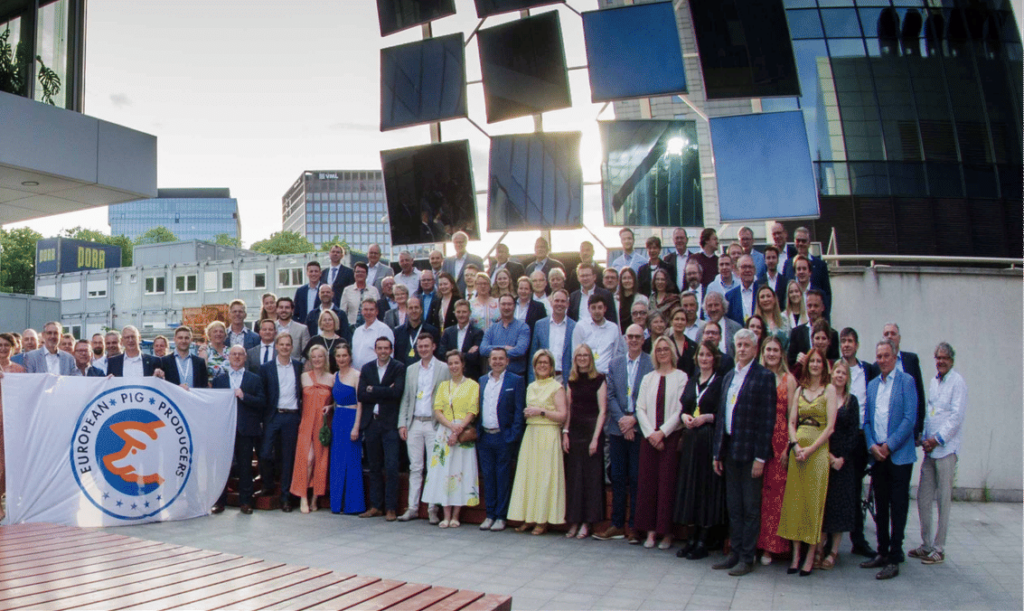
Once characterised by small-scale production and high pig numbers, the sector is now defined by consolidation, improved efficiency and an ongoing battle with African Swine Fever (ASF), according to representatives from the UK delegation to the European Pig Producers conference in Warsaw.
In an article on the NPA website, Quality Equipment’s India Griffin-Jenkins and Pilgrim’s Europe’s Toni Bagguley explained how discussions at the event ranged from developments in genetics and changes in consumer trends to differing approaches to sustainability, highlighting both the diversity and similarities across international pig production systems.
A sector reshaped
Poland’s agricultural landscape has changed significantly since 2005. Farm numbers have fallen from around 315,000 to just 43,000 in 2026, while average herd size has increased from 54 sows to over 200 per farm. Despite this consolidation, pig numbers have stabilised at approximately 9 million head following a sharp decline driven by inefficiency and the impact of ASF, first detected in 2014.
Production is now concentrated in central regions, with around 60% of pigs located in key provinces. While the number of farms is expected to continue falling, improved productivity means overall pig numbers are likely to remain stable.
Three business models dominate today’s sector:
- Vertically integrated systems (40%), where integrators supply pigs, feed and logistics
- Independent producers (55%), although this share is declining
- Horizontal cooperatives (5%), offering shared purchasing and marketing.
The trend is clearly towards scale, with large sow units, around 3,000 sows, seen as the future.
Efficiency gains amid reliance on imports
Despite reduced domestic herds, Poland has maintained slaughter throughput, largely through efficiency gains. However, the system increasingly relies on imported piglets, particularly from Denmark, with volumes rising from 2.5m in 2013 to 7.8 m in 2025. This dependence presents a biosecurity risk, especially in light of ASF.
At the same time, Poland exports around 350,000 tonnes of pork annually, with key markets including the Czech Republic and the UK, while importing roughly 700,000t from countries such as Denmark and Germany.
ASF remains the most significant threat to the Polish pig industry, costing an estimated €4.3 billion over 11 years when combining farmer losses and state expenditure. Poland has implemented strict biosecurity measures, including:
- 90-day grain quarantine before feeding
- Heat-treated and disinfected transport vehicles
- 45-day restocking delays after outbreaks.
There is also a shift towards biosecurity-based compartmentalisation, rather than regional zoning. Controlling wild boar populations, improving carcass detection, and strengthening movement controls remain key priorities.
Productivity and technology driving progress
Investment in technology, genetics and management is improving productivity across the industry. Innovative integrator models, such as AgroIntegracja, are helping smaller farms transition into viable commercial units through data-driven management, shared services and coordinated marketing.
Some participating farms have increased output from 24 to 34 pigs per sow per year within three years, alongside reduced mortality rates.
On-farm innovation is also evident, with:
- Automated feeding systems improving labour efficiency
- Sensor technology monitoring environment conditions
- Biogas plants supporting energy needs and slurry management.
Large-scale operations, such as Goodvalley, demonstrate how sustainability, biosecurity and vertical integration can work together. With 20,000 sows and in-house processing, the company combines free-farrowing systems, renewable energy and full traceability through QR codes on product packaging.
Welfare and sustainability in focus
Poland is increasingly aligning with wider European expectations on welfare and sustainability. Key areas of focus include:
- Free farrowing systems
- Reduced tail docking and castration
- Improved space allowances and transport conditions.
Innovative incentive schemes are emerging, such as payments for pigs with intact tails, supported by abattoir-based monitoring systems.
Environmental priorities include slurry management, odour control and greenhouse gas reduction. Biogas technology is playing a critical role in addressing these challenges.
Profitability and public perception
While market conditions remain volatile, affected by feed costs, global pig supply and geopolitical factors, industry experts emphasise that profitability is driven largely by human factors.
Management, planning, and education are key areas requiring improvement, alongside stronger industry collaboration and lobbying. Farmers also face growing pressure from public perception, environmental concerns and regulatory complexity.
Interestingly, analysis presented at EPP 2026 suggested that:
- 75% of success depends on human and social factors
- 25% on economic conditions
- 0% on ‘higher powers’.
Looking ahead
Despite its challenges, Poland’s pig sector is becoming more competitive, efficient and structured. The industry is investing in promotion, including consumer engagement initiatives funded through levy systems, helping to reinforce pork’s position as a nutritious and sustainable protein source.
With global demand for protein expected to rise, and pigs recognised as efficient converters of by-products, there is a clear opportunity. However, continued progress will depend on disease control, further consolidation, and the ability to balance productivity with welfare and environmental expectations.
Poland’s experience offers valuable lessons for the wider European pig industry: resilience, adaptability and innovation remain essential for future success.
Great experience
India Griffin-Jenkins, from Quality Equipment, said: “As a YNPA and EPP member, it was a great experience to attend my first EPP Congress. The opportunity to gain a deeper understanding of European pig production and to network with other delegates, who together will be shaping the next decade of the industry, was very inspiring.
“Despite the pressures facing the sector, it was encouraging to see the enthusiasm across the wider industry, particularly as science‑led practice will be key to driving industry forward.”
Toni Bagguley, Pilgrims Europe: “I would highly recommend joining EPP to farmers. I have now attended two congresses, Seville 2023 and Poznan 2026. Both have provided a great opportunity to meet like-minded people across Europe with a shared passion for pig farming.
“It has also been valuable to learn how other countries are streamlining their production and investing in advancing the industry. It has also been a fantastic opportunity to experience the wider culture of each host country, which adds to the overall experience.”
- The next EPP congress in 2027 will be held in Belgium, and we look forward to attending and continuing these valuable discussions, sharing knowledge, and strengthening relationships across the European pig industry.
