


 Achieving true sustainability is a challenge for any business, but the range of ways in which Rattlerow Farms is tackling it is hugely impressive, creating a positive example for others to follow.
As one of the largest privately owned and independent pig genetics companies in Europe, the 2025 Sustainable Farm of the Year owns nucleus, multiplication and commercial indoor and outdoor units, supplying sire and dam lines to customers both in the UK and internationally.
Rattlerow’s commitment to sustainability runs throughout every aspect of the business, with judges highlighting its holistic approach, built on the integration of pig, arable and biogas enterprises.
It starts with the pig genetics programme at the core of the business – delivering efficiency, health and welfare – and includes local sourcing of raw materials, renewable energy, people management and in-house services such as transport and building repairs.
The Suffolk-based pig business runs a circular farming system, with cereals grown by its arable division used in its own feed mill to produce pig rations, while muck and slurry from indoor units are either spread back on the land or used as feedstock for its 1.1MW biogas operation, Barley Brigg Biogas.
As the business has grown, it has restructured and continued to evolve how it operates. “Rattlerow has focused on building financial fibre and sustainability into the business so it can remain resilient in an ever-changing environment,” said its projects consultant, Mike Wijnberg.
“In part, this is about risk management, considering what the key risks are and what we are doing to control them – for example, managing feed, fertiliser and energy costs – but also our environmental impact, our public profile and security.
“There is a deep recognition that the business is part of the wider food supply chain and our customers are thinking along the same lines, with increasing emphasis on environmental sustainability.”
Carbon footprinting
Understanding and reducing the company’s carbon footprint is a key commitment and Rattlerow is working towards a longer-term aim to become carbon neutral.
It commissioned Alltech to formally measure and track its carbon footprint, a process that has been in progress for the past two years. Action plans have been put in place on the back of resulting recommendations.
“Some are specific to particular pig farms, some to a business division – for example, the arable operation or the feed mill – while others can be applied across all farms,” said Mike.
“Quite often, the actions to reduce carbon emissions are linked to other key measures, such as improving pig growth rates. Getting people to think about carbon reduction will also help with production efficiency – the two tend to go hand in hand.”
The business has also been taking part in the AHDB’s baselining project, helping to inform the industry as a whole, as well as giving Rattlerow further insight into its progress.
Breeding for efficiency
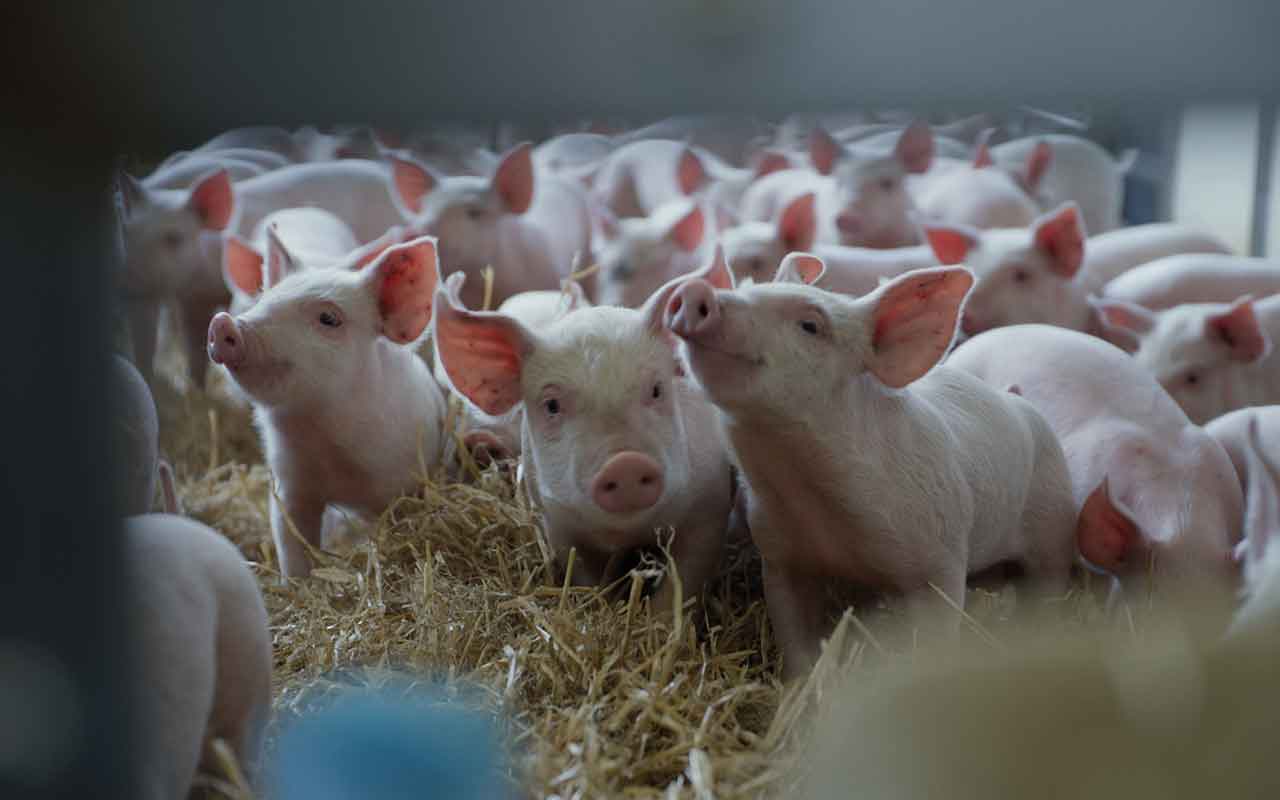
Efficiency is a key driver in Rattlerow’s nucleus breeding programme, with great emphasis placed on the feed conversion efficiency of its terminal sire lines, along with feed intake and average daily liveweight gain.
“Our genetics programmes are constantly evolving,” said Charlotte Forbes, Rattlerow’s technical and marketing sales manager.
“With feed such a major and expensive input, we are doing everything we can at nucleus herd level to enhance feed efficiency and growth, but making sure it is not at the expense of other important traits.”
For example, the OMX boar has been developed to produce progeny with high lean growth and feed efficiency, as well as being calm and easy to handle.
Meanwhile, damline selection is focused not only on numbers of pigs born alive, numbers weaned, weaning weights and numbers sold per sow, but also on factors influencing sow longevity.
One Rattlerow customer, who operates a single-parity herd structure, has reported 92% retention of animals from maiden gilts to parity five – just one example of the longevity Rattlerow gilts are capable of with good management.
Robustness has always been part of Rattlerow’s damline breeding programmes – being based in East Anglia, producing pigs that thrive and deliver high performance in outdoor systems, as well indoors, is key. “For example, our F1 hybrid, Large White and Landrace cross has developed hardiness, good bone structure and temperament over the years, along with being highly prolific,” Charlotte explained.
“We also have the WhiteRoc, a Large White, Landrace and Duroc cross, which is better able to withstand extremes of temperature, which is hugely important in the dam line.”
Health is another vital consideration in Rattlerow’s genetics programmes and commercial herd management. Despite challenges such as the removal of zinc oxide from piglet diets, antibiotic use across Rattlerow farms remains significantly lower than the national average reported by AHDB.
Rattlerow’s dedication to breeding robust stock with low levels of vice has also been a key contributing factor to this reduction in antibiotic use. “Genetic selection for sow longevity and robustness are examples of how we can help improve welfare, which also contributes to greater production efficiency,” Charlotte added. “That ultimately helps to reduce carbon emissions.”
Grass leys
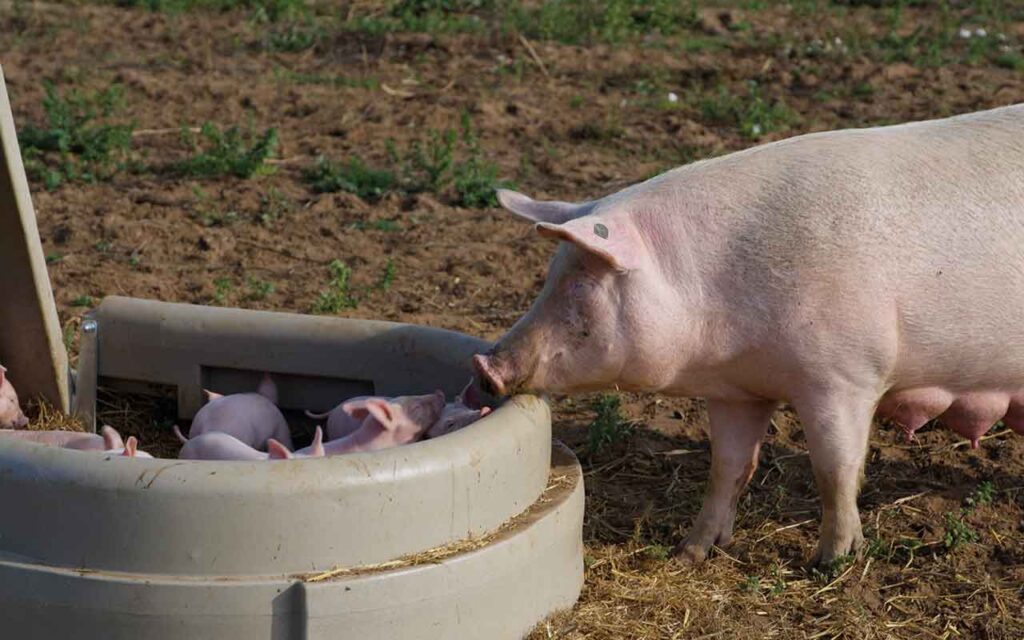
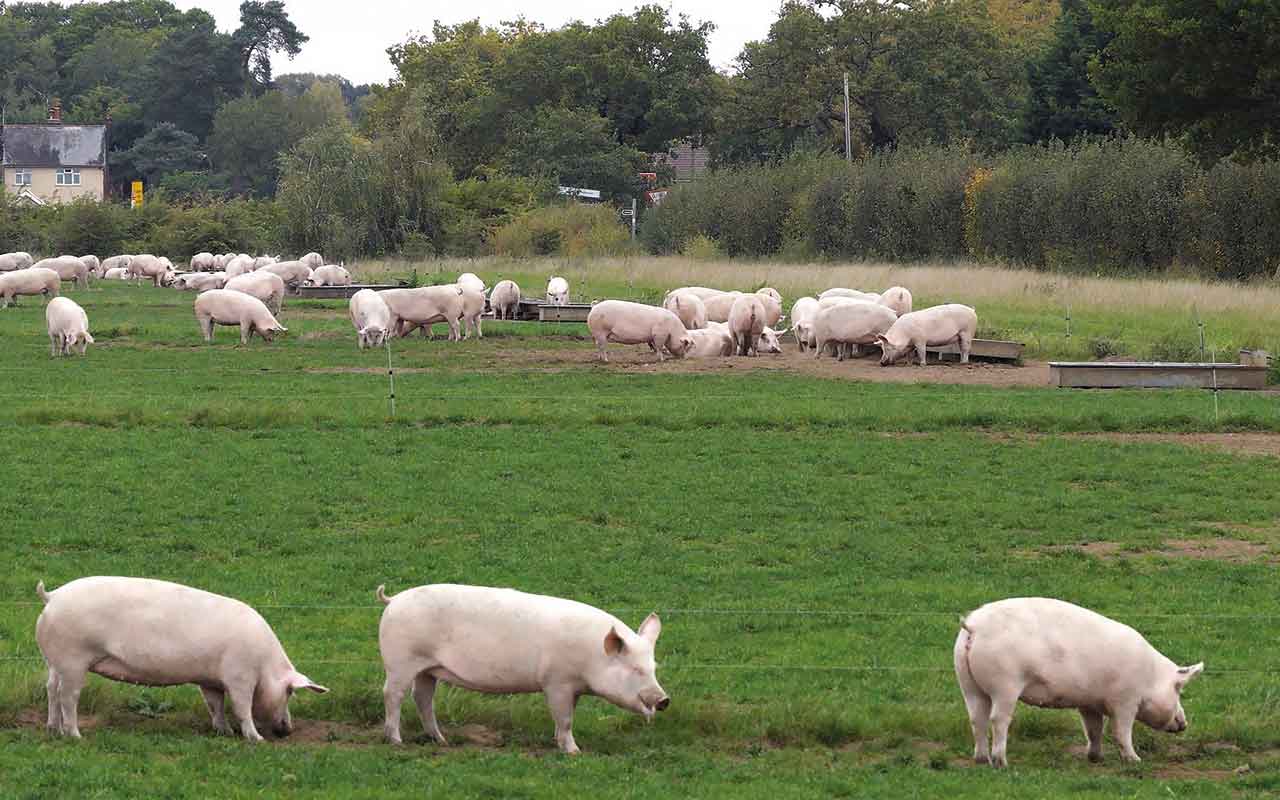
Establishing grass leys on all Rattlerow’s outdoor sites before pigs are moved onto the land is proving highly beneficial. It not only provides enrichment for the pigs, but also stabilises and improves soil structure, while minimising soil erosion and phosphate and nitrate losses caused by surface run-off.
Including their outdoor herds in crop rotations is improving soil fertility and health and reduces the need for artificial fertilisers.
“The main challenge to manage is the timing of when land becomes available, depending on the preceding crop in the rotation,” said Charlotte.
“We aim to drill the grass leys as long as possible before the pigs are moved on, so grass can fully establish its root structure. A lot of sites are rented, so it’s important that we maintain good relationships with landlords and keep communicating.”
More than 2km of hedgerow and 1,600 trees have recently been planted across Rattlerow-owned land, as well as over 50 acres of flower-rich grass areas and winter bird cover to support pollinators and wildlife. This is helping improve soil structure as it reduces the amount of time that soil is exposed, cutting nutrient loss and minimising the need for artificial inputs.
Feed, fertiliser and energy
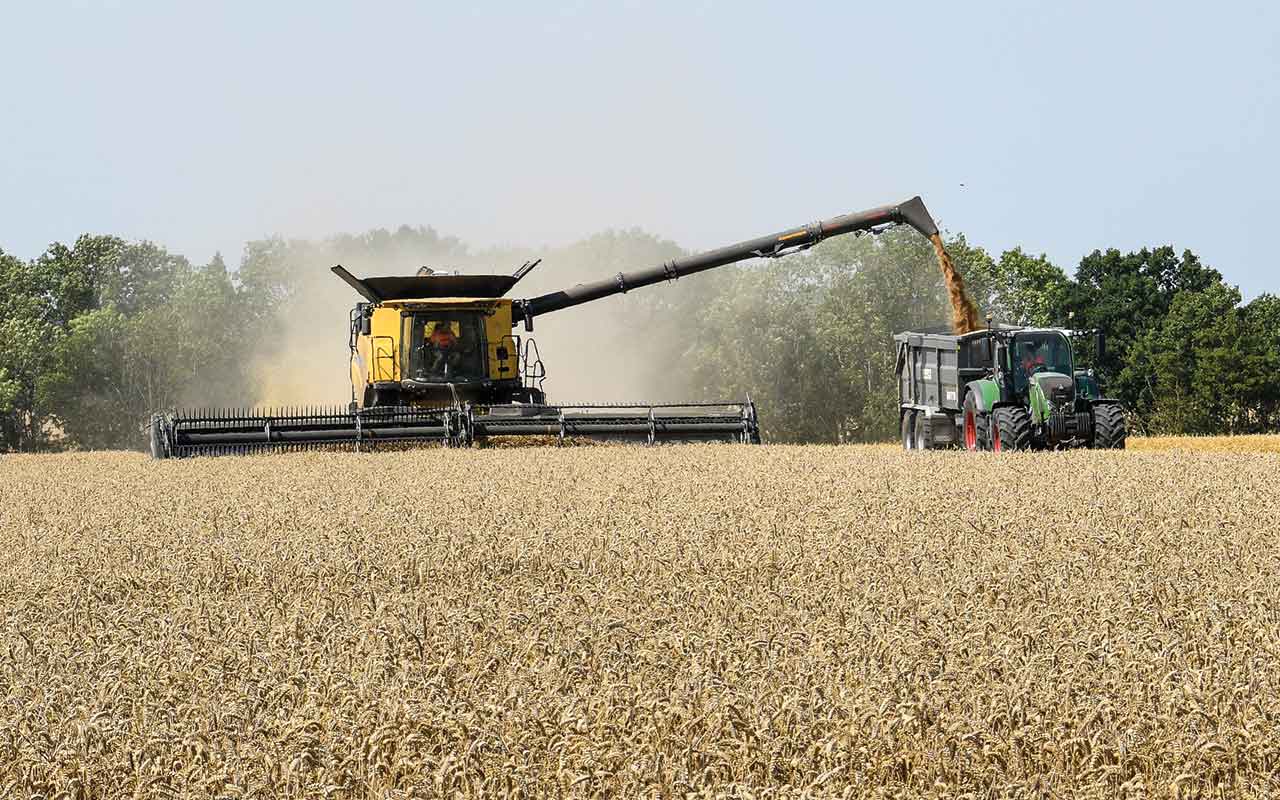
Home-grown cereals and beans from Rattlerow’s arable farming enterprise go through the company’s own feed mill, which supplies the majority of its pig feed.
This helps to mitigate the risk of fluctuating feed costs, and the global warming potential of diets produced by Rattlerow’s feed mill are significantly lower than average as a result.
A dedicated arable team focuses on achieving the best yields possible. The furthest field from the mill is just 10 miles away, which also helps to reduce the carbon footprint of the raw materials used in home-milled weaner and finisher diets.
“We also have contracts with feed compounders for some of our feed rations,” said Mike. “This helps with risk management – if, for example, our feed mill was suddenly out of action, we would already have established relationships with feed suppliers.”
In total, more than 3,000 acres are cropped by Rattlerow’s arable enterprise, which operates on land that is a combination of owned, contract-farmed or under a farm business tenancy.
Crop varieties include wheat, barley, maize, sugar beet and beans. Min-till methods are used wherever possible, which helps reduce soil compaction and increases retained soil carbon levels.
A proportion of the muck and slurry from Rattlerow’s indoor units is spread back onto arable land, while the rest is used as feedstock for biogas production at Barley Brigg Biogas. Other feedstocks include maize, poultry litter and straw.
The business is working on increasing the proportion of waste feedstocks generating energy from the plant. In 2022, maize accounted for 43% of biomethane production – the aim is to reduce the maize figure to below 30%.
Digestate from the plant provides another form of fertiliser to spread on the arable land and the heat produced is captured and used in Rattlerow’s own crop-drying facilities. The electricity generated is used to power the feed mill and nearby pig unit, with surplus going into the national grid to power local homes.
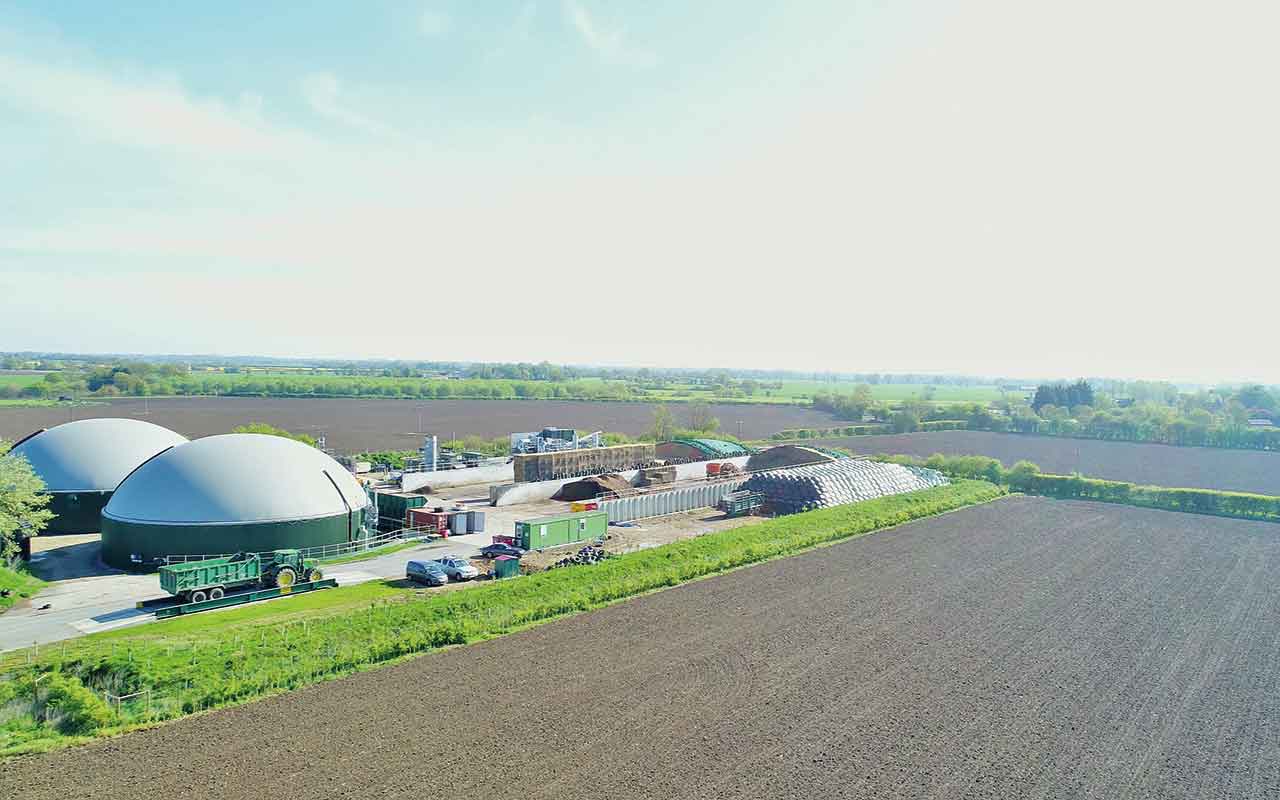
Using muck and slurry for power generation, rather than it all being spread directly as fertiliser, enables a 16.7% reduction in emissions from Rattlerow’s farrowing, nursery and finisher units, achieved through carbon reallocation within the business.
Further to this, the Barley Brigg Biogas enterprise has recently formed an exciting partnership with CCm Technologies, an award-winning clean technology company. The biogas plant will supply heat and power to aid in manufacturing CCm’s range of carbon-positive organic fertilisers.
“Nationally, there is a steady effort to diversify and for farming to become less dependent on manufactured fertiliser, given the volatility in fertiliser prices and supply since the Ukraine war began,” said Mike.
“We’re in the early stages of our venture with CCm and looking forward to progressing it as a way to help improve financial resilience and reduce environmental impact.”
Every opportunity has been taken over the years to invest in solar energy, installing panels on pig buildings, so that most Rattlerow indoor units operate using some solar power. Photovoltaics have been installed on the roof of the arable centre, providing renewable energy there, too.
People
A key component under the umbrella of ‘sustainability’ is the people across the business, who need the knowledge and shared motivation to help deliver sustainability aims.
“It’s vital that we find the right people, make sure they are trained properly and that we continue to enthuse them throughout their careers,” said Mike.
“The effort we put in to look after and develop staff is greater now than ever before, including clear reward structures and communication, as well as training,” he explained. “We have recently run our annual staff survey and further changes are being made in response to the feedback.”
Recruitment is always going to be tricky, Charlotte acknowledged, and farming is still seen by the public as a relatively unskilled sector. “There is a need to make careers in the pig sector more appealing, including a focus on opportunities for progression, which is really important to many young people,” she said.
Wherever possible, Rattlerow aims to promote employees from within the team, giving them the opportunity to apply for roles before they are opened up to external applicants.
“We have monthly team meetings, where colleagues can mingle and chat, have something to eat and learn what else is going on, with people from across the business giving mini presentations,” said Charlotte. “It helps build understanding of how their work fits into the aims of business overall.”
Mike added that the changes and improvements that are driving sustainability are not necessarily groundbreaking or high-tech. But he stressed that getting the fundamentals of efficient crop and animal production right consistently is key – from genetics, to people management, pig husbandry and efficient use of resources.
