


An NPA member survey has shone more light on the scale of disruption facing the pig sector, following the unprecedented wave of notices served on independent producers by leading processors.
The survey results confirm the sector is heading for a further contraction, with more independent producers set to quit the industry. It also appears to highlight uncertainty around pig contracts ahead of the mid-August deadline for the Fair Dealing Obligations (Pigs) Regulations (FDOP).
The survey, completed by about 50 NPA members during July, was voluntary, so the figures for each question cannot be extrapolated with any confidence across the sector due to self-selection bias. Nonetheless, the responses provide some stark indicators of where the pig sector is at, heading into what is going to be a difficult autumn and winter.
Nearly half of respondents said they had been served notice on their contracts. Asked to state what proportion of their herds were covered by the notice served, the answers varied significantly, ranging from as low as 15% in some cases to 100% in others, with a wide range of figures in between.
The responses also confirmed that all of the big four processors – Cranswick, Pilgrim’s Europe, Sofina Foods and the Myton Food Group, the manufacturing arm of Morrisons – had served notice on producers, albeit to differing extents.
Respondents were asked about the timings of notices served. While a small number on contracts have already ended, responses showed the vast majority of cuts are set to come into effect in October and November.
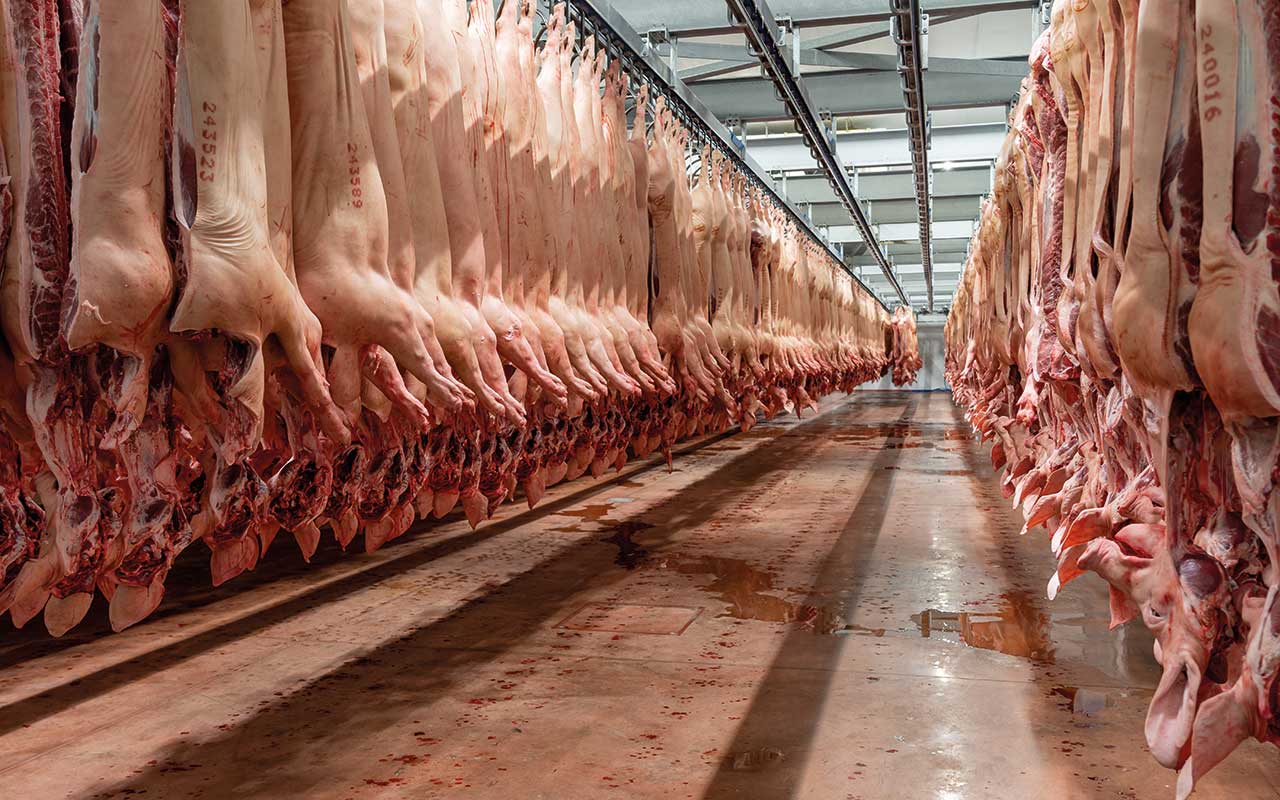
Industry experts have estimated that 10,000-15,000 pigs could be coming onto the market without a buyer each week during the autumn and winter.
Contract uncertainty
The majority of respondents sell through a marketing group, with two-thirds exclusively using a marketing group, 12% going through a combination of a marketing groups and direct to processors, and the remaining 20% selling direct to the processor.
Just over two-thirds had written contracts, although only two-thirds of the people who had written contracts had seen them.
The responses were submitted a few weeks ahead of the August 13 FDOP deadline, when all pig contracts must be in writing and compliant with conditions set out in the regulations. Nonetheless, they highlighted that there was still some way to go, with only 6% of respondents saying they had an FDOP-compliant contract in place.
Nearly two-thirds said they were aware of the regulations but did not have a contract in place, and 22% said they were ‘not very aware’ of FDOP and had not discussed it with their customer.
The answers to a question about the options being considered in response to the downturn were also illuminating. A total of 14% said they were considering exiting the industry, while 20% were considering or had already reduced pig numbers.
A small number said they were ‘considering culls’ or depopulating and then repopulating the unit in the hope the market had improved by that point. About 12% said they expected to be selling on the spot market in response to losing contracts.
Stark picture
NPA public affairs manager Tom Haynes said: “We wanted to gather a fuller picture of what is happening in the marketplace and the effect of the FDOP regulations.
“The responses painted a stark picture, confirming our worst fears about the likely disruption coming in the autumn and winter, when thousands of pigs will hit the market without a contracted destination.
“They highlight the likelihood that we will lose more producers only a few years after the latest industry contraction, raising further questions about the long-term sustainability of the independent pig sector.
“The answers show concerns about the sector’s readiness for the FDOP regulations coming into full effect in August. We will use the results to reinforce our lobbying efforts with government and discussions with the supply chain, as we seek support for the industry at this incredibly difficult time.”
The NPA has called on Defra to deliver a support package for the pig sector and helped to organise a roundtable event in the first week of September for independent pig producers to explain the situation to the Agricultural Supply Chain Adjudicator.
Pig farmers suffer heavy Q2 losses
UK pig farmers lost, on average, over £20/head in Q2 as pig prices plummeted and costs of production soared, according to AHDB’s latest net margin estimates.
The estimated full Q2 economic cost of production increased by 9p on the Q1 figure to 201p/kg deadweight, driven by a 4p hike in feed costs to 119p/kg, a 3p rise in finance and miscellaneous costs and a 1p increase in the cost of labour.
Meanwhile, pig prices, as measured by the SPP, fell by 9p to 179p/kg. This resulted in an average margin of -22p/kg, equating to a loss of £20.44 per slaughter pig, down from a loss of £4/head in Q1.
The SPP has remained steady since the end of Q2, although cereal prices have risen, which will affect Q3 feed costs.
Contract complexity
The picture with written contracts in the context of the FDOP regulations is mixed. There are people who have compliant written contracts in place and those whose contracts are still being developed and negotiated, while it appears that a number of producers have opted out. As the survey shows, there are some producers who have little awareness of the new requirements.
Where pigs are sold through a marketing group, contracts are often negotiated by the marketing group with the processor and, in a separate negotiation, with the producer.
According to one industry figure close to this sort of negotiation, in some cases, finalising these contracts is taking longer than expected. “Often, there will be bits in there that the processor doesn’t like and bits that the producer doesn’t like, so it gets passed back and forth and it can take a long time to get it over the line,” he said.
Noting that some producers had chosen to opt out of the FDOP regulations, he expressed concern this could leave them vulnerable in future when processors prioritise where to make changes to their supplies.
Some producers may be concerned that FDOP contracts could result in them being penalised when they miss contracted numbers, although there is some flexibility within the regulations on this issue.
There is a great deal of uncertainty within the industry about how the next few months will pan out. While there is plenty of evidence that some producers are reducing their herd size or leaving the sector, the industry figure said others are maintaining their herd sizes. “They are still considering their options and hoping for the best. That might be storing up trouble for later,” he said.
Longer term, he pointed out that as the productivity of the UK pig herd continues to improve, producers will need to adjust sow numbers if optimum production levels are to be maintained.
Processor comments
Speaking before the FDOP regulations came into force, a Cranswick spokesperson said: “Some of our supplying farmers have chosen to opt out of the policy, but where they are remaining in, we will be fully compliant.”
A Sofina Foods spokesperson said: “We are on track to ensure compliance with FDOP regulations coming into force.”
Commenting at the British Pig & Poultry Fair in May, Fabio Brancher, Pilgrim’s Europe operations director for agriculture, said the company was working hard to ensure all contracts were compliant by the deadline.
Sow slaughterings up 8% in first seven months of year
There has been an 8% rise in UK sow and boar slaughterings across the first seven months of the year, according to monthly Defra statistics, summarised by AHDB.
In July, sow and boar slaughterings were up 12% year on year to 19,200 head, showing the rate of herd reduction is picking up.
Sow and boar throughputs were 4.8% higher year on year in England in the year to July, and a massive 45% higher in Scotland, at 14,300 head, while the July figure in Scotland more than doubled to 2,900 head.
UK clean pig slaughterings were up by 5.8% year on year in July, and 3% higher over the first seven months of 2026. Pigmeat production was up 5.1% in the first half of 2026, driven by higher throughputs and higher carcase weights.
In the year to July, clean pig slaughterings were up 4.1% in England and Wales and up 5.4% in Scotland, but down 2% in Northern Ireland.