


The UK meat sector has welcomed news that the UK and EU have agreed a draft SPS (sanitary and phytosanitary) agreement, which it says will help free up trade for exporters.
However, port health authorities have responded by urging the government to ensure the closer relationship with the EU does not lower our barriers to potentially infected food imports.
Reports on Tuesday said a 200-page draft text for a deal was circulated to EU nations in Brussels ahead of a meeting today. The intention is for the deal to be formally agreed at a summit in Brussels on November 20.
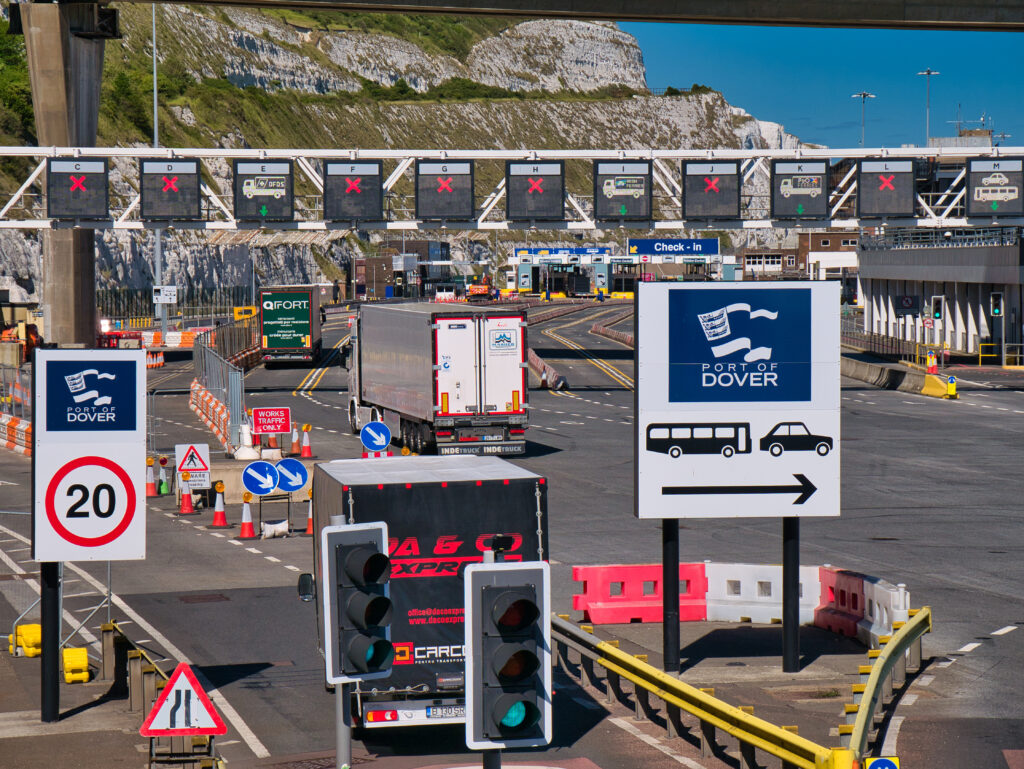
The deal would see the removal of many of the current barriers to trade that have been in place since Brexit, saving the UK economy more than £5bn, according to the government.
In return, there will be ‘dynamic alignment’, requiring the UK to follow EU regulations on animal and food standards.
The prime minister said a UK-EU deal could add up to 0.4% extra on GDP, and, according to the BBC, the government has highlighted various potential benefits, including:
- Exports to the EU of fresh sausages, burgers, shellfish from domestic waters and seed potatoes could resume
- The removal of the need for £200 Export Health Certificates.
- Ending the need for £25 Phytosanitary certificates, which show that plants or plant products are free from pests and diseases
- Removing inspector fees, organic certificates, some port fees and other checks for exports and imports.
Major opportunity
The British Meat Processors Association (BMPA) said the draft deal ‘represents a major opportunity to remove unnecessary trade barriers, rebuild exports and boost growth across the British meat industry’.
Chief executive John Powell said: “There’s a fundamental misconception that leaving the EU freed British businesses from having to follow EU rules.
“The reality is that if we want to sell our products into our biggest and closest export market, we have to meet its standards. We already do. What Brexit changed was that we now have to prove it with a mountain of costly paperwork, certificates and checks.
“Five years on, the promised alternative markets have come nowhere near replacing the EU trade we’ve lost. A well-designed SPS agreement offers a real opportunity to reverse that damage, particularly for smaller processors who have effectively been priced out of exporting.”
BMPA is also urging negotiators to ensure that the transition to the new arrangements is practical and does not create fresh disruption for businesses.
Jason Aldiss, the Association of Independent Meat Suppliers (AIMS) executive director, said: “The day Brexit’s certification barriers took effect, vets tightened the garrotte around our industry. I opposed Brexit and have fought this strangulation ever since.
“Hundreds of millions have drained into certificates for British food exports to the EU. Where standards are aligned, I see not one shred of added animal or public health value in this paperwork.
“I am ashamed when my profession defends it. Our industry’s lifeblood must not fuel practice owners’ luxury cars.
“Ministers must deliver this agreement before the last abattoir falls silent and the profession discovers that a carcase cannot pay for yet another gleaming limousine.”
Port health concerns
Anthony Baldock, executive board chair of the Association of Port Health Authorities, welcomed the efforts to remove unnecessary trade friction and make it easier for businesses to trade with the EU.
“But removing a check does not remove the risk it was designed to manage,” he said. “The test of any new agreement is whether it delivers those benefits while maintaining effective protection for public health, animal and plant health, and the UK’s food supply.
“This is a matter of national significance. Defra’s own guidance makes clear that the agreement extends well beyond border paperwork into food law, official controls, animal and plant health, food standards, pesticides and biocides. Its implications need to be understood across the whole system.
“The questions government needs to answer are straightforward: where does responsibility for assuring food safety move to, who pays for it, how do we detect problems, and what happens when something goes wrong?”
He stressed that if this protection and assurance moves away from the border, there must be clear responsibilities, effective surveillance and enforcement, and sufficient funding and expertise to make the new arrangements work to protect public health.
“It is also important to be clear about what the agreement will deliver. Sanitary and phytosanitary controls are only one part of the border. Customs and other requirements will remain,” he said.
“Fewer certificates may be good news. Fewer safeguards would not be and we simply cannot allow the mistakes of the past to be revisited. Businesses and the public need confidence that simpler trading arrangements will be backed by a robust, properly funded system of protection.”