


The UK pig sector can no longer afford to remain on the back foot and let others, including activists and NGOs, tell its story.
It needs to be proactive and take steps to seize back the narrative, according to leading farming industry communications experts and farmers determined to play their part in spreading the positive messages. So, what are the best ways to achieve this?
How big is the problem?
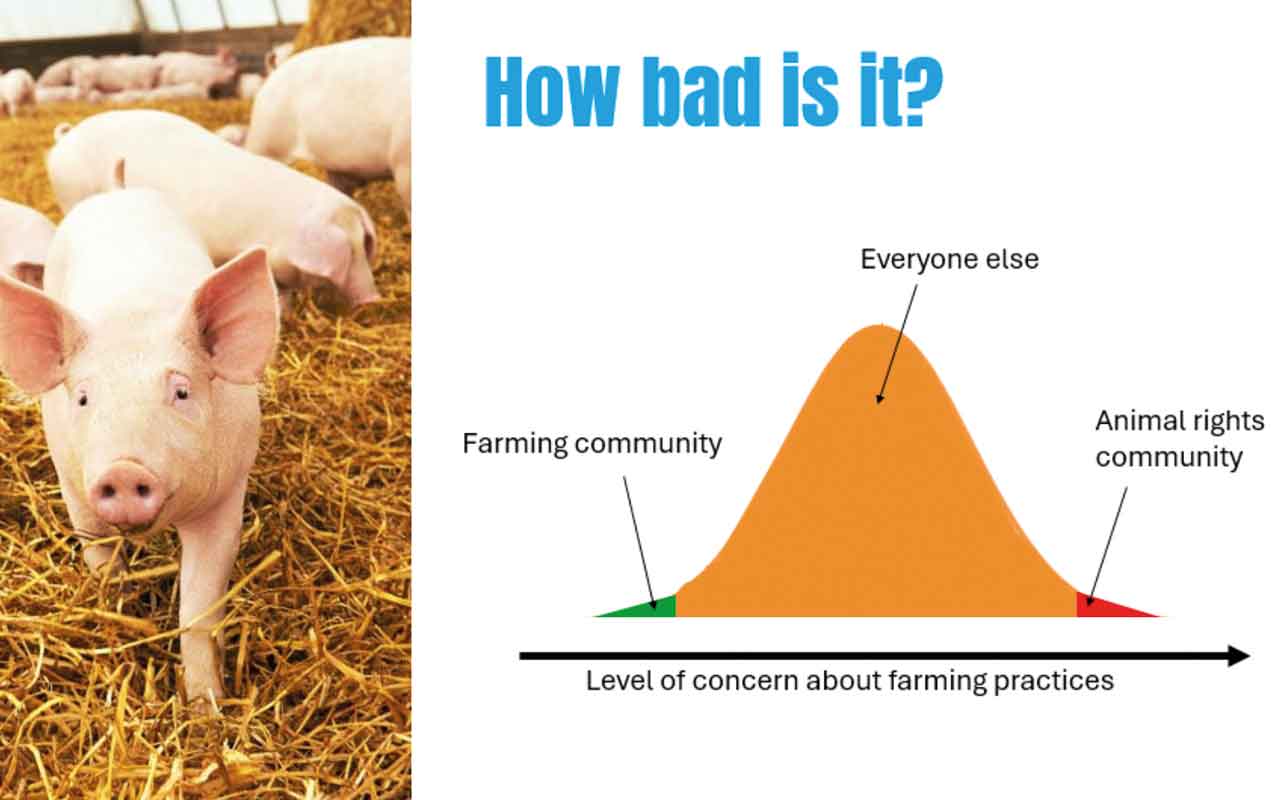
The opening gambit from Amy Jackson, of Oxtale Specialist Communications, was to question how big the problem posed by activists and NGOs really is.
Illustrating the point with an effective graphic (right), she pointed out that it is only ‘a very, very small minority of people’ who are actively opposed to pig farming, on a similar scale to those in the pig sector, itself.
“And then there is this whole other big group of people, the general public, who actually don’t know much about this,” she said. “They don’t think about it from day to day. They’re not motivated like these activists to be against us.
“But we find ourselves spending so much time obsessing about this tiny animal rights community that we just lose the opportunity to influence other people.”
She highlighted the many positives the pig sector could be talking about, including its high welfare systems – outdoor and straw-based indoor – its environmental credentials and phenomenal progress in reducing antibiotic usage.
She noted how the recently published Pork Environmental Roadmap is transparent about the challenges and what needs to be done to address them. ‘Owning’ our problems then setting out a clear ambition to address them builds trust, she said.
Amy has worked on some of farming’s most challenging communications stories, including the rise of large farms, the horsemeat scandal and antibiotic usage in the farming industry.
She discussed how the pig sector successfully changed the narrative on antibiotic use, which 10 years ago was a hot topic for NGOs and rarely out of the headlines, by first accepting action needed to be taken, then working collectively to reduce usage – which in turn gave it more credibility to push back against misinformation.
To help manage the narrative on antibiotic use across farming, Amy developed a single website bringing together all relevant science, facts, news and best practice case studies, so the public had a ‘single balanced and legitimate source of factual information’ and the industry had somewhere to direct people. Within a few years, the negative stories had reduced dramatically and even the chief medical officer was fulsome in her praise for UK farming’s efforts.
She stressed that industry organisations do a good job in getting some pig sector information out there. “There is a level of honesty and accountability. But where is the traction? We have a great story to tell, so why is it not being heard?” she asked.
She identified a number of reasons, including the ‘fragmented’ nature of information from many different sources, and the fact that the industry is often reactive in responding to pressure groups, including on farrowing crates or carbon dioxide (CO2) stunning, rather than proactively leading the agenda. “Also, we tend to communicate quite rationally – factually, technically – against emotional debates, and it doesn’t land,” she added.
Amy acknowledged that farmers are understandably reluctant to ‘put their heads above the crowd’, but stressed that the public ‘trust other people more than institutions’. “In this age of social media, people expect transparency – and they want to see farmers telling their story,” she said.
The way forward?
Amy listed the building blocks of trust, as outlined in a 2020 academic paper on good governance by Beshi & Kaur:
- Accountability resets the relationship and generates respect
- Transparency builds belief, shares challenges and shows nothing is being hidden
- Action demonstrates a commitment to making things better.
“It all helps to build trust and that means the public gives you more of the benefit of the doubt when things go wrong,” she said.
She stressed that there is ‘good news here for the sector’. “There is lots of good stuff to report. And people really trust farmers. We know what people want – good welfare in terms they can understand and knowing farmers care for animals and the environment, and produce healthy products. They don’t necessarily want perfection, but they want to know we’re trying. And people still love pork, especially bacon.
“So, what if we did it differently and were more accountable about our challenges? And what if we do it all with one voice? So, we just have one site – let’s c Pig Facts – with different layers of information, like technical papers, academic research, but also social media soundbites and infographics people could share,” she said.
She highlighted how effective it could be, for example, to have all the information on CO2 stunning in one place – ‘the pros and cons, limitations, challenges and what we are doing about it’. “And what if we expressed how we do things – not just as dry, technical information, but in ways people can relate to and share,” she added.
She stressed that this can only work if the industry delivers high standards on welfare, including ‘zero tolerance’ for bad practice, sustainability, staffing and more.
“We can be more accountable, and if we make these changes, we stand a chance of getting the initiative back,” she said.
Engaging with the public
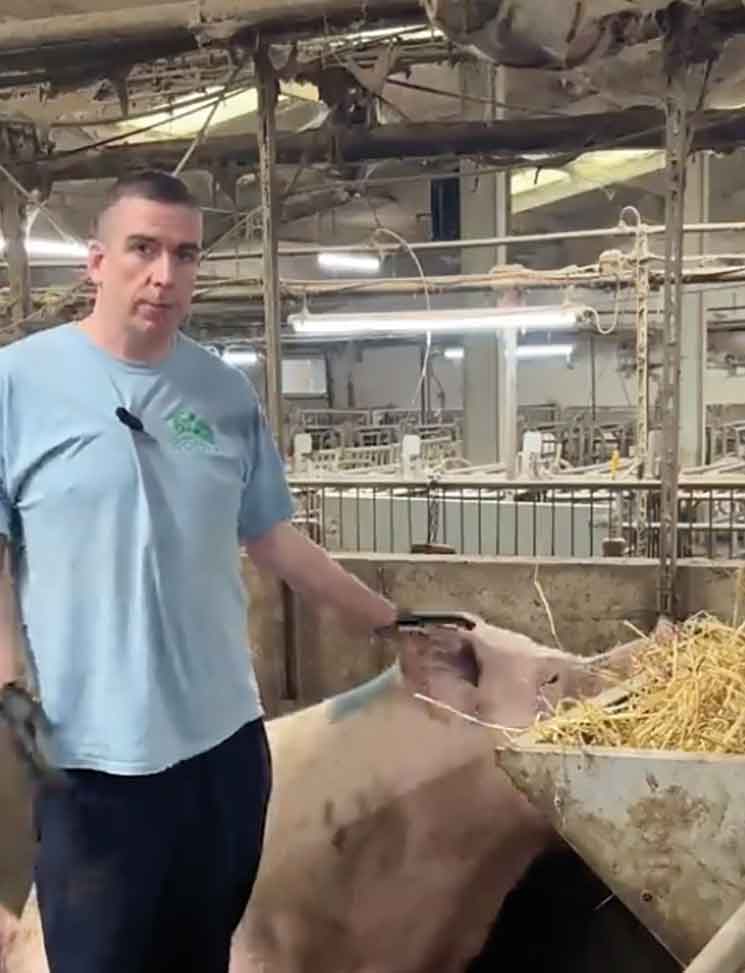
One farmer who is prepared to put his head above the parapet is Shane McAuliffe, who is part of a family pig business in County Kerry, Ireland, among other industry and academic roles.
“We need to engage with consumers and hear their thoughts as well. We need to be honest and transparent and talk about the challenges, as well as our successes, because we want consumers to trust us,”
he said. He outlined the lengths he goes to in engaging with the public:
- Collaborating with industry organisations The farm does a lot of work with Agri Aware, Ireland’s agricultural food trust, which works to bridge the disconnect between the public and farmers. This includes a webinar, broadcast 25,000 times to students, and farm visits for university students and secondary schools.
- Social media Shane regularly posts on Facebook, Instagram, X and, increasingly, TikTok. This includes instructive ‘short and snappy’ one-minute videos, explaining what happens on farm in ‘simple, transparent terms’ – for example, about the benefits of enrichment on a fully-slatted unit. The positive feedback from these videos vastly outweighs the negative, he said.
- Engagement with local schools As well as visiting schools and hosting visits, Shane is a member of the Farmer Time network, active in Ireland and the UK, which enables farmers to connect with primary schools from their farms via their phone.
- Community engagement This is crucial, particularly when it comes to planning. The farm actively supports the local football team, for example, and is heavily involved in local environmental projects.
- Other media The farm regularly appears on national television and is currently hosting an RTE film crew following the lives of farmers over six months.
- Non-farming awards Entering and – as they have done – winning national business awards, for example, can help spread positive industry messages.
- Farm website The farm has recently launched its own website, which helps raise the profile, control the narrative and can lead to opportunities.
“You have to realise that if we don’t tell our story, someone else will want to tell it for us,” Shane told the audience.
Connecting farmers and the media
Anna Jones is uniquely placed to understand the complexities of the farmer-media relationship. Having grown up on a farm, she joined the BBC, covering farming and rural stories, including working on Countryfile and Farming Today.
“When I started in 2006, it was just so easy to go on to farms, hear a farming story and film it. Then we started to see this rise in activism, this increase in public scrutiny, and it became much, much harder,” she said.
Anna, the author of a book, Divide, detailing the urban-rural divisions, observed that some farmers felt the BBC was ‘giving a platform to vegans and had a pro-green, anti-farm agenda’.
But this, she stressed, was ‘absolutely not true’. “We’re trying to tell stories that are in the public interest, and they’re not always comfortable stories. There is scrutiny, but we’re not anti or pro anything. We are pro- story,” she said.
While the media, in her experience, does not take sides, it will ‘always give the protagonist who is making the case the first word’. “Farmers, as they have retreated behind industry organisations over the years, have often, found themselves on the defensive, and in a reactive position,” she said, stressing that it is much harder to tell the real story on the back foot.
Anna travelled the world as part of a Nuffield scholarship, completed in 2018, to try to understand what was driving this ‘barrier to communication between the media and farmers’. She found the ‘disconnect’ depressing.
“But I didn’t just want to come back and serve out problems. I thought there has to be a positive solution, or at least something I can do,” she said.
She realised that to make the industry’s case, it needed to provide real case studies – ‘the authenticity of the people on the ground producing the food day in and day out’.
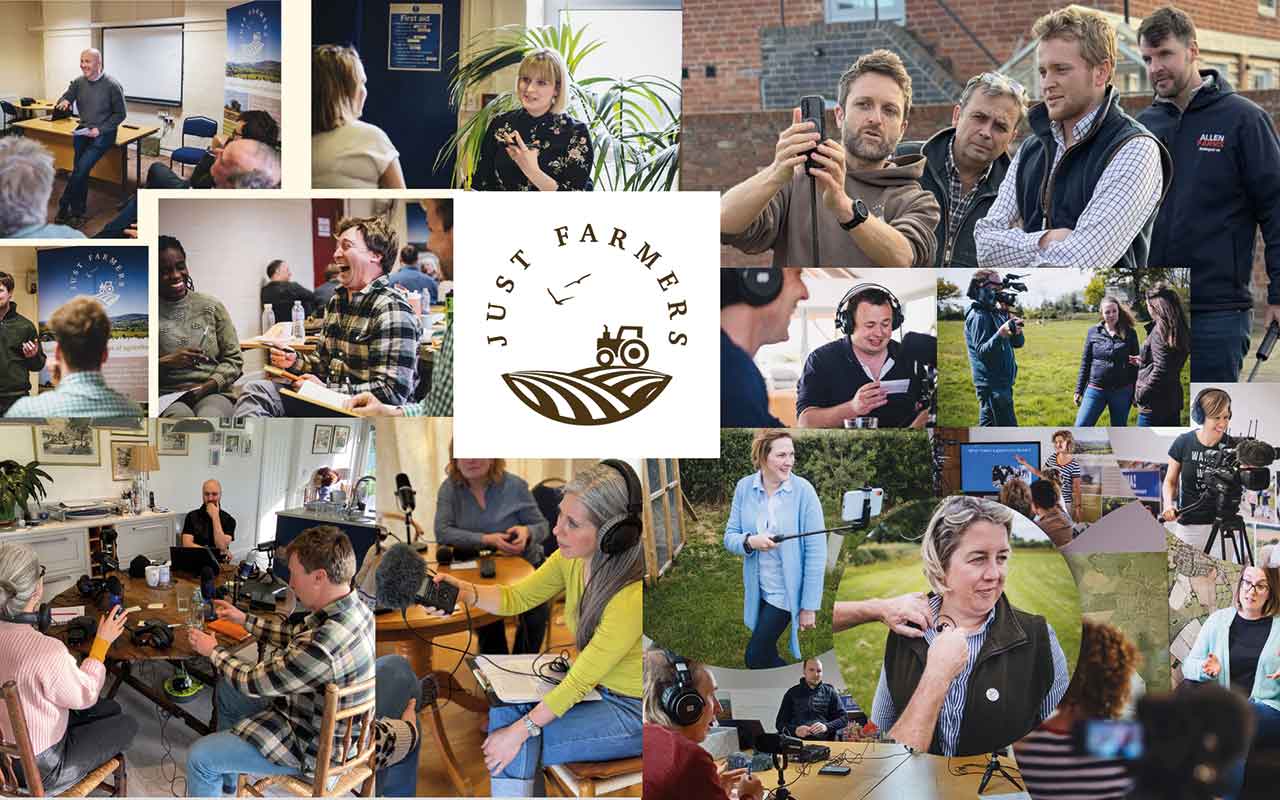
After quitting her job, the outcome was Just Farmers, which, thanks to funders and grants, brings together farmers from all sectors and all systems to undertake free, fully funded free media education.
“There are 12 in each cohort. They can learn to feel comfortable in front of microphones and cameras, how to develop their own personal story and how to pitch it to the media. They have a go at creating podcasts, making content on their smartphones, at radio, television, creative writing, social media and surgeries to help them look out for their mental health online,” Anna said.
“We’re helping in that whole communication space, and, crucially, creating networks of support and friendship.”
Having just completed the 13th workshop in Yorkshire, Just Farmers has now trained 156 farmers. “And they are all wonderful,” she said.
In return, the farmers have their profile placed on the Just Farmer’s website, where registered members of the media can find them when they’re looking for an independent case study.
Farmer dilemma
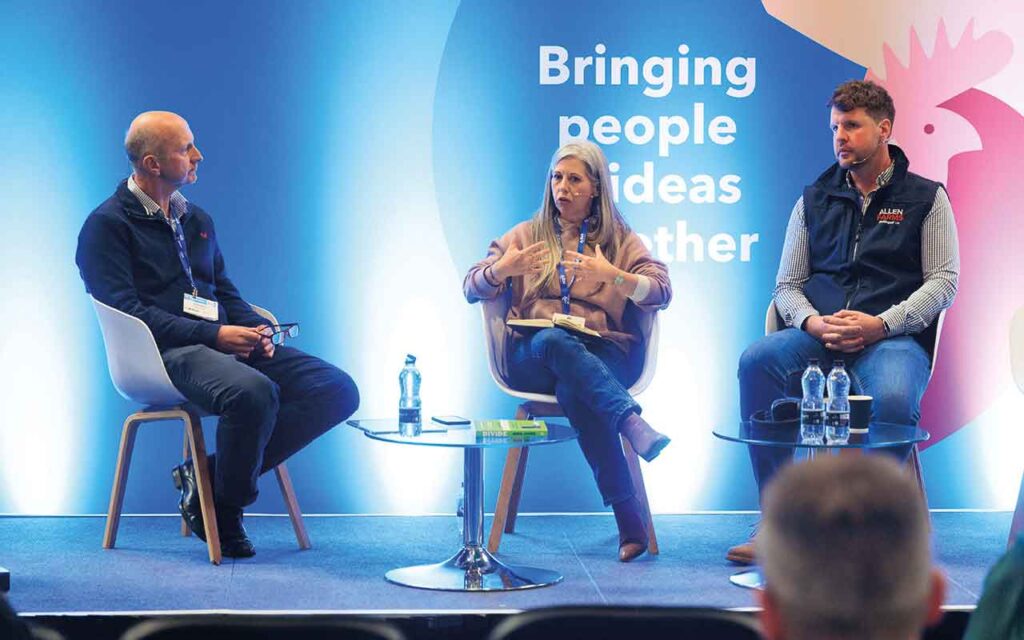
Anna noted that the hardest slots to fill are always pigs and poultry. One pig farmer who has stepped up recently to join the network is Nottinghamshire producer Fred Allen.
He came back onto the family farm in 2015, after a period abroad, since when it has transitioned from an outdoor to an indoor system.
“I don’t think the biggest challenge in our sector is production – I think it’s perception,” he said. “We need to change the narrative that we’re a negative industry, and we’re not doing good things. We all know that the opposite is true.”
He highlighted the dilemma many pig producers face – being proud of what they do and wanting to shout about it, but being afraid of the potential consequences, including being targeted by activists or even losing contracts for saying the wrong thing.
“We’re often too nervous to explain why we do what we do, such as our move indoors, and the reasons behind the processes and the decisions that we make. I wasn’t really confident to talk about it.”
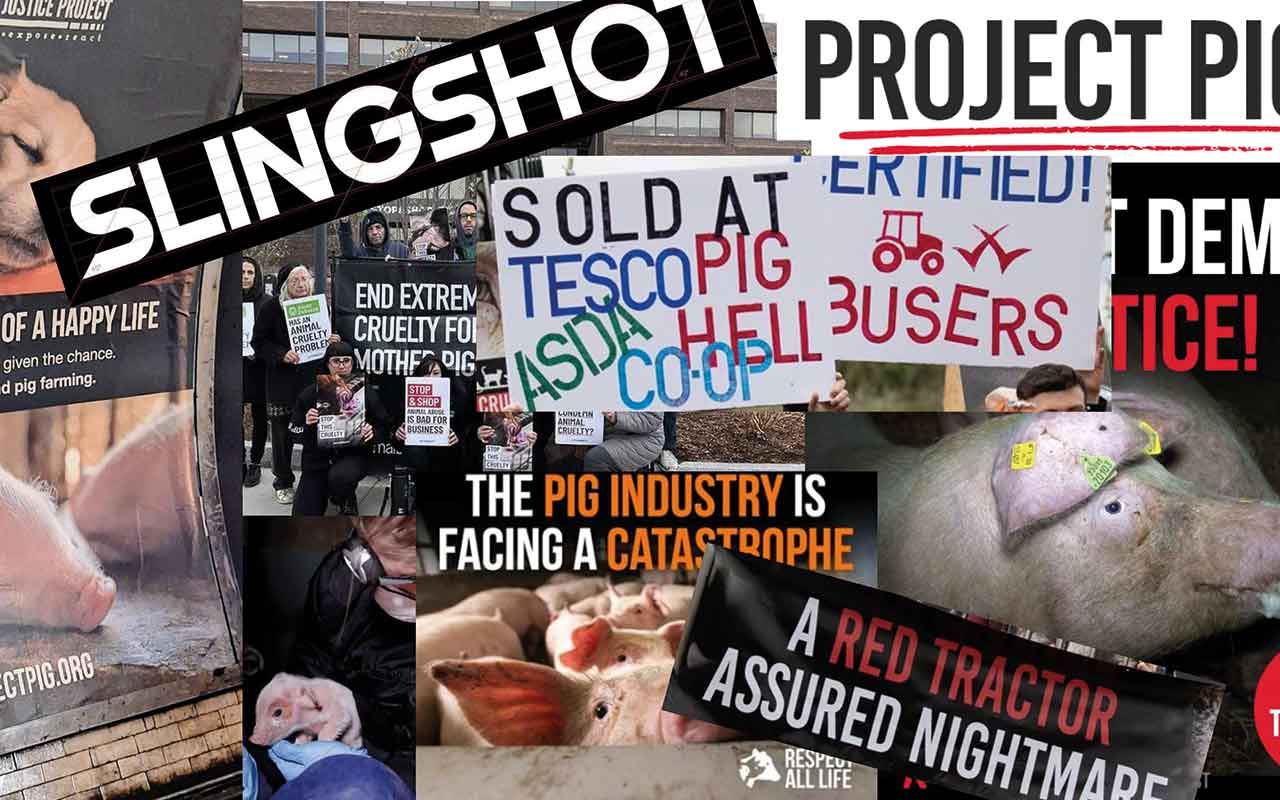
He believes that showing people the reality of pig farming – for example, via short videos – will, on balance. make a positive difference to public perceptions.
“I’m in a position where I would love to take a leap of faith and go there. But I also know the risks. I know there are many people here today who share the same passion and have great stories to tell, probably better ones than me, but aren’t telling them.
“But we need to have the confidence to tell our own story. It’s a real challenge, but that’s why I’m here on this stage – I’m trying to get other people to do exactly what I’ve done, to get involved in this amazing network, to enjoy telling your story and be proud of what you do, because you should be proud.
“I just don’t think we can afford to do nothing. We need to be proactive and take that leap of faith.”
Anna described Fred as an ‘inspiration’, alongside all the other ‘brave farmers who, understandably, felt the fear and did it anyway’. She stressed that the farming world is ‘pushing against an open door, because people love the food that we produce and love real people’s stories and farming characters’.
While some consumers may be ‘a bit uncomfortable’ about some production practices, they are more resilient and open-minded than many farmers believe.
“There is a huge opportunity for the sector – let’s meet consumers and have the conversation with them,” she said.