


The key message from a recent Pig World webinar on preventing and preparing for African swine fever (ASF) is that there are effective, practical steps all pig businesses can take now to reduce the risk of the virus getting past their farm gate and causing an outbreak.
The reality is that the risk of ASF is not going away – it is increasing – as it continues to move ever closer to the UK, having, on a number of occasions, jumped hundreds of kilometres to reach different countries, including Belgium, Italy, Sweden and, most recently, Spain and sometimes within affected countries, including Germany.
The Animal and Plant Health Authority (APHA) currently assesses the risk of the ASF virus entering Britain in live animals and products of animal origin from affected countries, as medium (occurs regularly).
However, the risk of ASF entering from the human-mediated pathway and the movement of porcine products of animal origin is considered to remain high (occurs very often), given the ongoing risk posed by vehicles illegally bringing pork meat into the country from EU regions affected by ASF.
The ASF virus is highly likely to already be present in the UK, given its presence in 14 member states and the vast volumes of illegally imported meat products coming through our borders undetected, according to NPA chief policy adviser Katie Jarvis.
With volumes seized increasing – including 14t in a week at the Port of Dover – she stressed that the NPA continues to push the government to up our national biosecurity.
However, the clear advice is that there is a lot that can be done now to strengthen routine biosecurity practices and, if ASF does enter the country’s pig population, to plan and prepare for it, reducing the risk and potential for disease spread and the devastating effects of the virus.
Workshop in a box
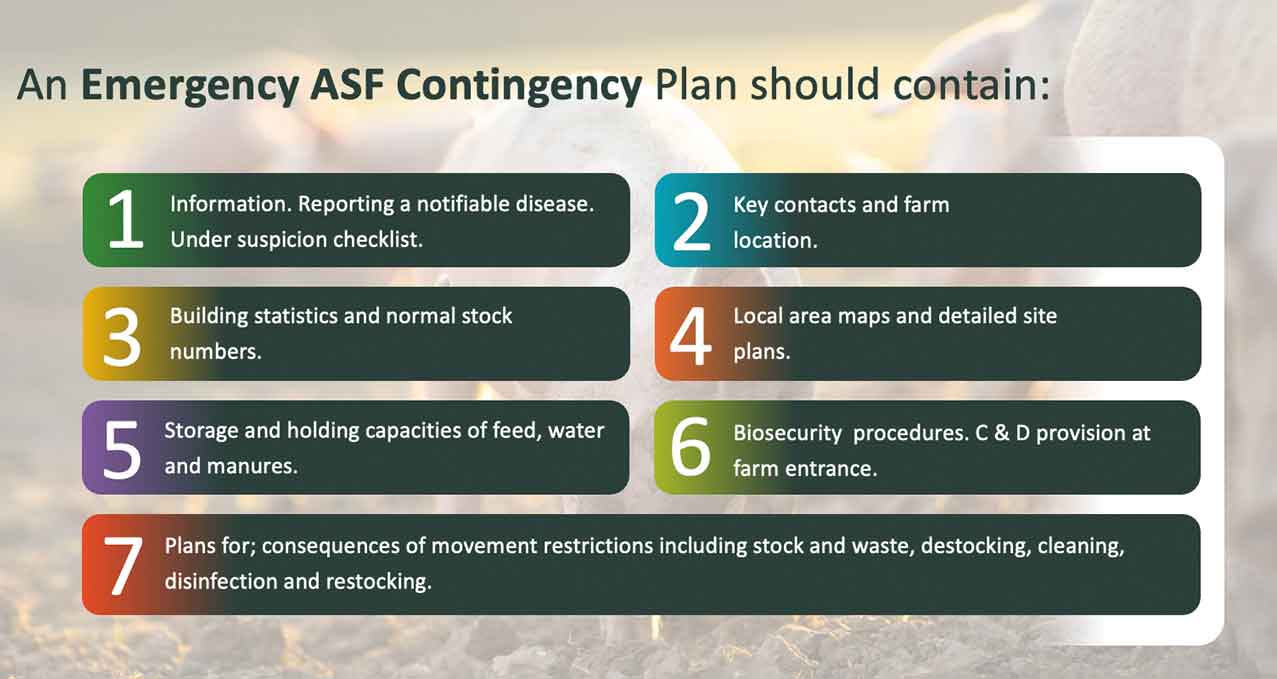
Producers can get more guidance and put all their farm information in one place to create a farm-specific contingency plan using the ASF ‘Workshop in a box’, available online.
Communication and awareness
AHDB’s Miranda Poulson highlighted how much work has already been done, much of it behind the scenes. AHDB and NPA have built strong relationships and levels of engagement with Defra, APHA and the Food Standards Agency to ensure as much of the supply chain is as well prepared as possible over the past couple of years.
This work has focused on a range of areas, including communications and the nature of the controls that would be in place. There is now a well-established cross-sector communications group with representatives from across the supply chain to ensure that, during an outbreak, everyone hears the same information at the same time.
She also highlighted the success of a series of workshops run by AHDB, NPA and Livetec, in association with veterinary practices, offering practical advice on ASF.
“We believe that there are many things we can do to keep ASF out and, if it does get into our pig population, to keep the industry going during an outbreak while work goes on to eradicate it,” Miranda said.
Livetec biosecurity adviser Paul Talling reiterated the importance of communication, having had first-hand experience on farms dealing with avian influenza. “One of the things that goes wrong and causes a lot of stress is poor communication,” he said. “If we can do anything to reduce the stress involved, we must.”
In other countries, there are many good examples of where biosecurity is keeping ASF out of pig herds, but they are mainly indoor herds. One of the challenges for the UK is the number of large outdoor pig population, which can be harder to protect, he pointed out.
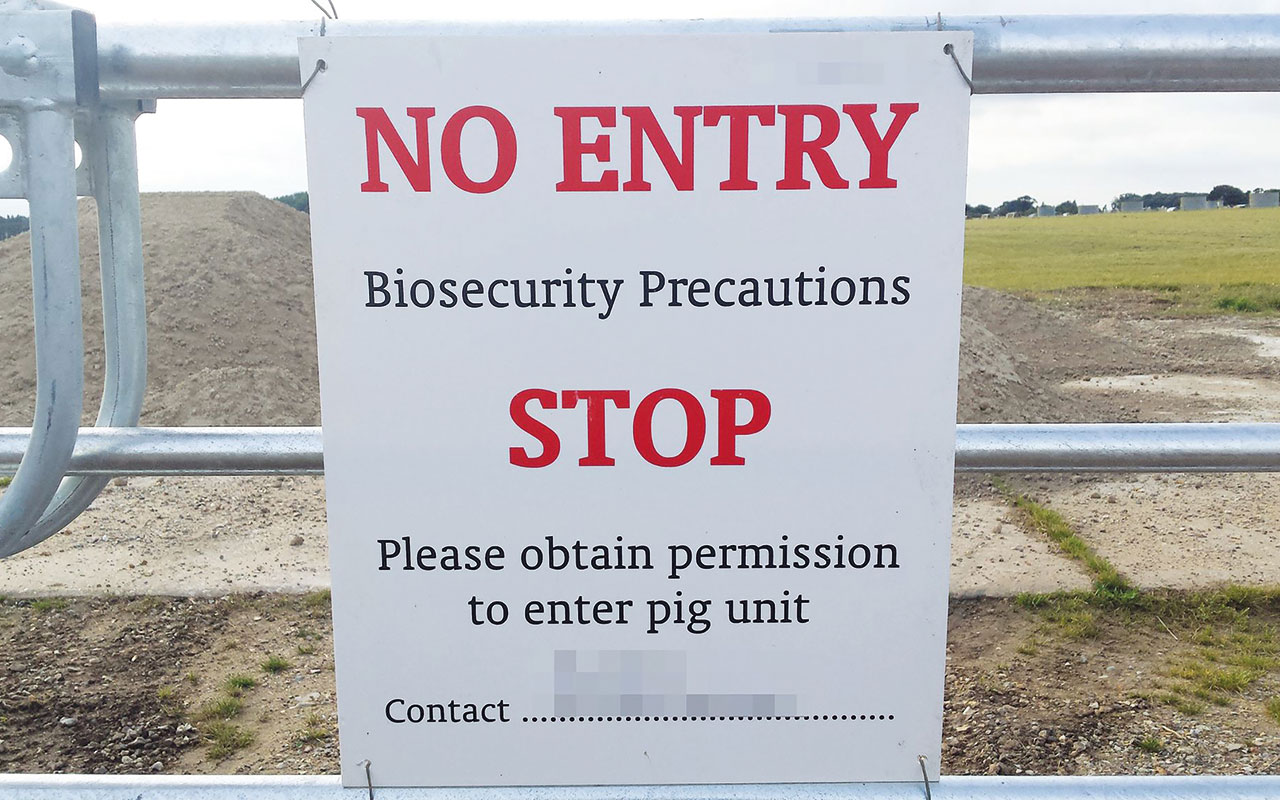
There are key steps producers on both indoor and outdoor units can take, including making sure staff and visitors do not bring any pork products on to the unit, while signs can be put near footpaths to help inform the public.
Another important action producers can take now is to grow their awareness of the ASF situation, attend workshops and find out more about how to prepare. “Every chance you get to engage with the topic is really worthwhile,” said Paul.
He suggested that pig industry biosecurity standards are now behind those on poultry units, as avian influenza has refocused poultry producers’ efforts to improve it. Pig producers need to be proactive about reviewing biosecurity and avoid ending up in a similar position where an ASF outbreak drives improvements. “We don’t want to be shutting the door after the horse has bolted.”
Contingency planning
Paul emphasised that it is better to think logically about contingency plans now, in ‘peace time’, rather than when under stress. People naturally struggle to think straight in the middle of an outbreak.
It is important to work with the government to comply with all legal processes and restrictions on farms during an outbreak. “Everything is done for a reason,” he said. “Movement restrictions are particularly difficult, but they must be complied with, which is another reason to plan ahead.
“Ask ‘what can we do to help ourselves and the authorities’? There are templates available online, or you can make your own.”
You can still register for and view the webinar. Search ‘ASF webinar’ on the Pig World website for details.
Key practical steps
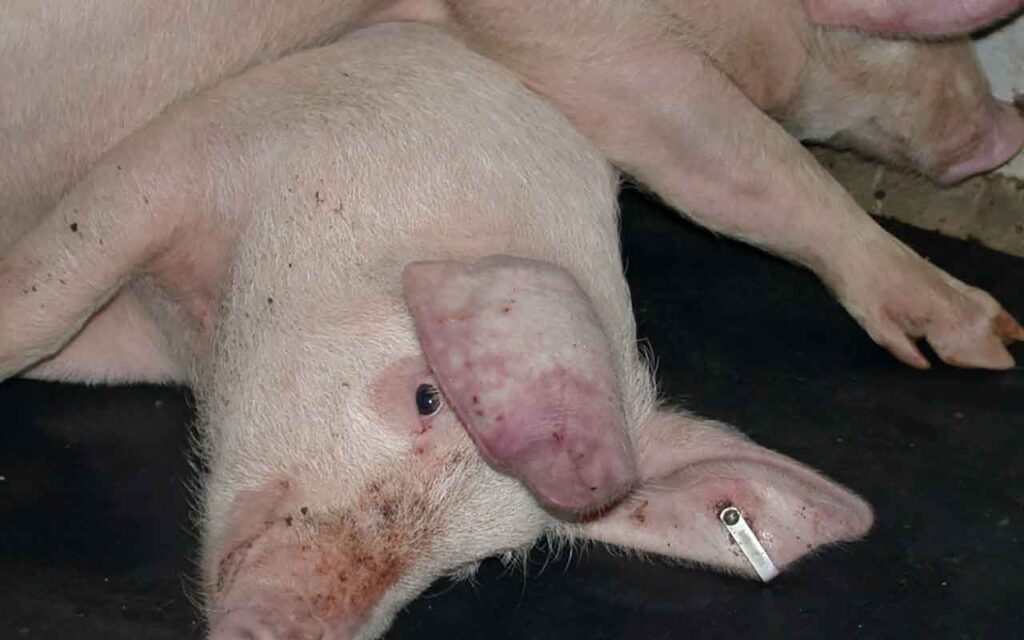
1. Know the symptoms
ASF symptoms can look like many other pig diseases, but it is important to keep the possibility of ASF in mind when looking at signs of illness and considering the diseases it could be.
The speed at which ASF is identified makes a huge difference to how well it can be controlled.
If an outbreak began on a breeding unit, for example, it could spread very quickly, with weaned pigs being moved off regularly. There are a lot of pig movements now in what is a more vertically integrated industry.
2. Define boundaries
The first step towards improving biosecurity and being prepared for an outbreak is to map out the farm and define its boundaries. This includes both the external boundaries, entrances and boundaries between where pigs are kept, the farmhouse and areas relating to other enterprises.
Also, a lot of stress is caused during an outbreak when the farmhouse or other enterprises get caught up in the disease restrictions.
In Paul’s experience, the realisation that family members might need a licence for every time they go off the premises and the emotional effect of an outbreak is often more powerful for producers than the direct impact on the business.
3. Visitor sign-in and disinfection
APHA will want to know details of all visitors in the event of an outbreak, and it is important to get used to recording these routinely now, including where individuals have been previously and the reason for their visit.
“Producers already do this for assurance schemes, but we still find people without a full set of records,” said Paul. “The sign-in book needs to be as close to the entrance as possible, or you can use QR code systems to sign in online at the gate.”
This ties in with the importance of defining boundaries and entrances, especially on outdoor units with multiple access points. Producers should try to organise things as well as possible now, making it clear where to sign in and what the biosecurity protocols are.
They should also make sure they are able to fund and provide cleaning and disinfection at every entrance, which is required during an outbreak. “Ideally, just have a good level of cleaning and disinfection at all times,” Paul added.
4. Wellies and vehicle footwells
A simple but effective route to reducing disease risk is to provide extra pairs of wellies at the entrance. Although wheel washes are really important when vehicles arrive on farms, footwells create a real risk area that is often missed.