


Rattlerow Farms is one of the largest, longest-established, privately owned and fully independent pig genetics businesses in Europe.
For more than 70 years, the company has provided advanced genetic solutions to the UK pig industry. Founded in East Anglia, Rattlerow owns and operates nucleus, multiplication and commercial units across the UK, supplying a broad range of ‘genetically superior’ sire and dam lines to customers, domestically and internationally.
Rattlerow and Klasse AI have a history of completing both live animal and semen exports overseas, and hope to increase their global customer base in the coming years.
Dam lines
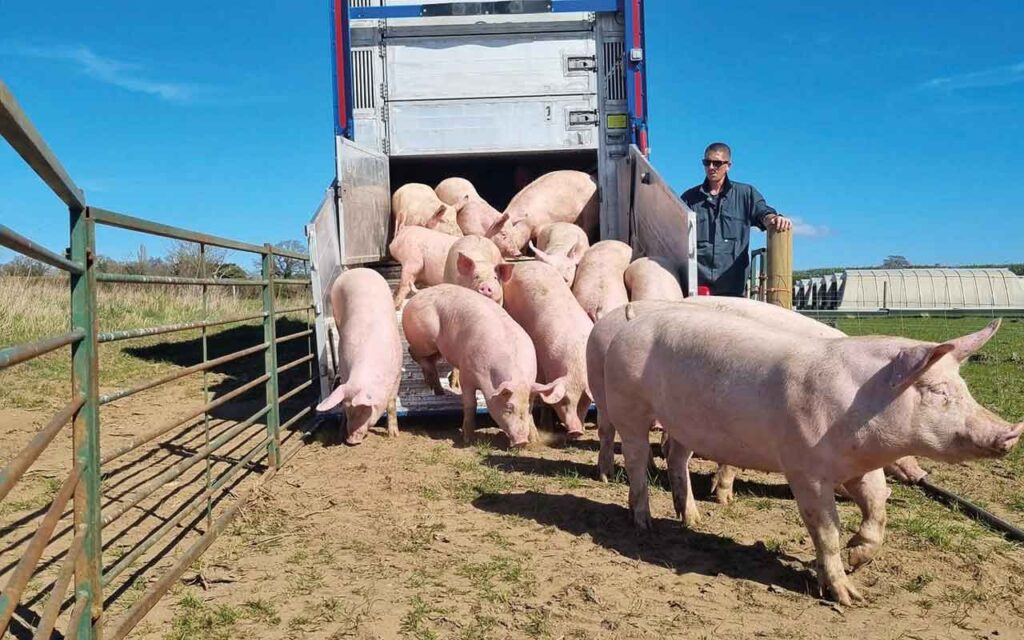
Rattlerow’s maternal lines encompass the Large White, Landrace and White Duroc. The central pillars of its dam-line philosophy are welfare, temperament and robustness.
Large White: Developed since 1954, key traits include:
- Excellent numbers born and reared
- Calm temperament; mothering ability
- Regular breeding and good longevity
- Good growth and feed efficiency
- Uniform, vigorous piglets.
Landrace: Known for its temperament and productivity, key traits include:
- Excellent mothering ability
- Outstanding numbers born and reared
- High feed intake
- Reliable breeding
- Good lean growth and feed efficiency
- Robust, uniform piglets.
White Duroc: Thriving in more extensive systems. Key traits include:
- Robust, viable piglets
- Strong heterosis
- Enhanced eating quality
- Easy to breed and manage
Terminal sire lines
Rattlerow, in partnership with Klasse AI, offers a diverse portfolio of terminal sire options. Alongside Rattlerow-bred sires, Klasse AI houses and distributes semen from a carefully selected range of boars from leading global genetics suppliers.
“We mutually benefit from strong working relationships with both Danbred and Hendrix Genetics, housing Danbred Duroc and Hendrix Danish Genetics Duroc boars.
“Carefully selected intakes from both companies are brought into Klasse studs regularly, following rigorous health testing, to ensure a constant flow of genetically superior animals through the stud for our customers, said Helen Webb, Rattlerow’s head of sales and technical.
“We assess other breed options on a continual basis for inclusion in our product line-up, in order to help us best serve our customer’s requirements.
“Not only does Klasse offer arguably the largest range of terminal sire line products in the UK, we pride ourselves on going above and beyond the AHDB standard of 1.8bn cells per 80ml dose of semen.”
RR OMX: Described as a robust, fast growing sire line producing lean, well balanced carcasses that processers love.
RR IMFD (intramuscular fat Duroc): An eating quality animal with optimum layers of intramuscular fat while still grading well.
Gilts
WhiteLand gilts: Optimised for productivity and hybrid vigour, it combines the hyperprolific Large White and Landrace lines. Key traits include:
- Excellent mothering ability
- Consistent breeding performance
- Feed-efficient progeny.
WhiteRoc gilts: Maximising heterosis through integration of all three Rattlerow dam lines, it combines Large White, Landrace and improved dam-line Duroc, and is described as a ‘versatile, well-balanced breeding female’. Key traits include:
- Hardiness
- Ease of breeding
- Carcase and eating quality.
Technology
Rattlerow has implemented EID tagging at nucleus level, enabling precise, data-driven selection through recording of birth weight, teat numbers, weaning weights, growth rates and IMF and P2 ultrasound scan results.
Breeding goals
Ian Gillies, Rattlerow’s head of genetics, said the company has always taken a holistic approach to breeding, balancing productivity, efficiency, welfare and sustainability.
Economic and environmental sustainability remain key drivers, with selection focused on feed conversion ratio, feed intake and daily liveweight gain in terminal sire lines. For dam lines, the focus is on numbers born alive, numbers reared, reliability and ease of rebreeding.
“Welfare-linked traits, such as robustness, calm temperament and reduced aggression, have long been embedded in Rattlerow’s breeding philosophy,” he said.
“The UK’s reputation for high welfare standards is supported by genetics that produce hardy, even-tempered, vigorous progeny. Ultimately, good welfare and sustainability are inseparable. Healthier, calmer livestock are more productive, and productivity forms a fundamental pillar of sustainable agriculture.”
