





Tackling porcine reproductive and respiratory syndrome (PRRS) and swine influenza (SIV), two of the pig sector’s most damaging diseases, has long been a headache for the industry, globally.
There is growing optimism, however, that exciting new technology could provide a significant breakthrough in how these diseases are diagnosed, thereby offering support to efforts to minimise its spread and reduce its impact.
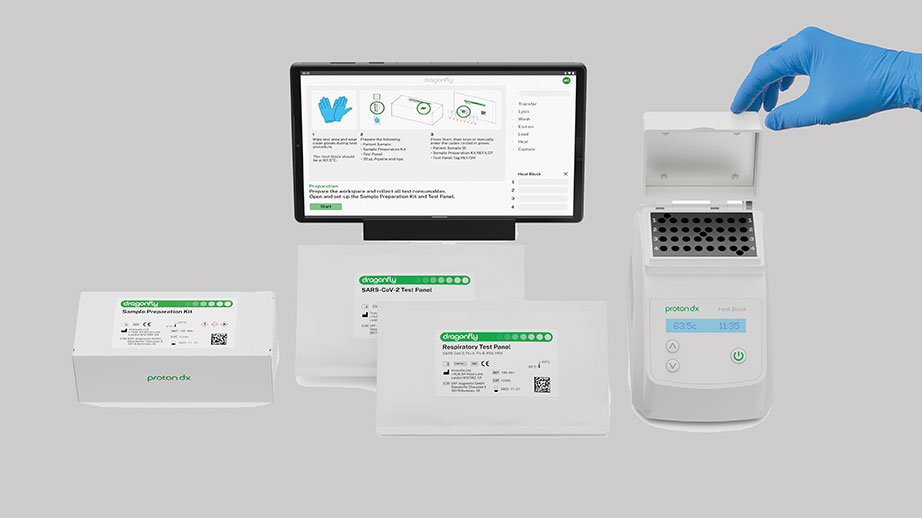
ProtonDx’s Dragonfly platform, described as a ‘portable, rapid and highly accurate diagnostic tool’, was recently named as the winner of the 2025 Tesco Agri T-Jam competition. This annual prize recognises pioneering start-ups that can support the retailer’s agricultural suppliers with innovation in farming and food supply.
The people behind ProtonDx believe the Dragonfly PRRS/SIV test panel does exactly that. “Our team sought to create a lab-quality, truly portable diagnostic tool that addresses the limitations of typical portable tools,” said Dr Jesus Rodrigues-Manzano, ProtonDx’s co-founder and chief scientific officer.
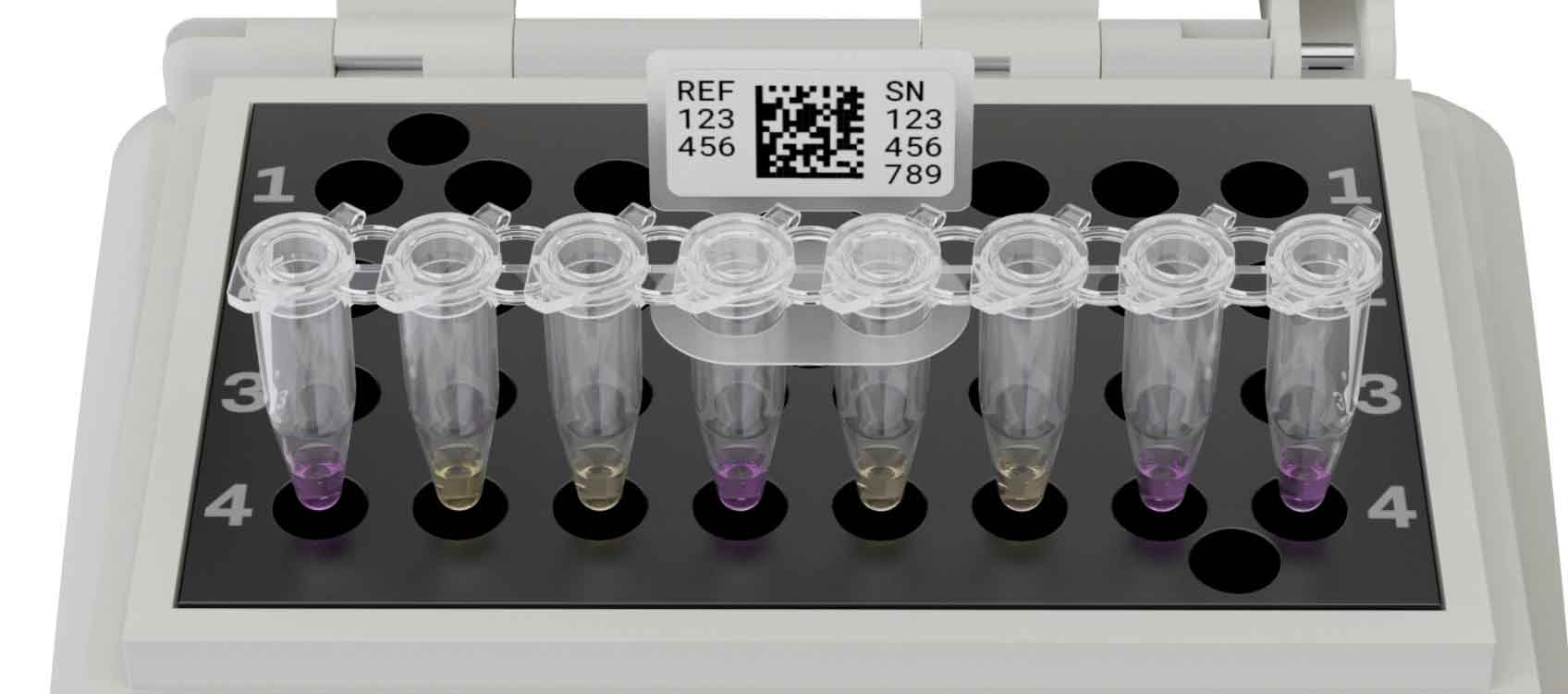
Dragonfly works by extracting what is known as a ‘high-quality nucleic acid sample’, a process that can take ‘as little as three minutes with no electricity’. It then allows users to run a multi-pathogen molecular diagnostic process on a clean RNA/DNA sample that can be completed in about 25 minutes.
“Users can identify the presence of up to six pathogen targets in a lab-quality system that can be taken anywhere,” Dr Rodrigues-Manzano added.
World-leading expertise
ProtonDx emerged out of Imperial College London in 2020 and was founded by Dr Rodrigues-Manzano, Prof Pantelis Georgiou and Dr Nick Moser.
It was built on ‘world-leading multi-disciplinary academic groups’ bringing together expertise in molecular biology, infectious disease, antimicrobial resistance, electrical and electronic engineering and mechanical engineering.
Initially, Dragonfly was created in response to the Covid pandemic and the company has completed a number of studies using it in animal and human health, as documented in peer-reviewed journals.
“In the animal health arena, where we are launching our first offering, we executed a feasibility and workflow study in the UK with leading swine vets,” Dr Rodrigues-Manzano said.
There have also been two North American studies – one in the US and one in Canada – with large, integrated pig vet groups, which helped to refine the product.
In human health, the company has had two studies published this year in the prestigious Nature Communications. One showed Dragonfly’s effectiveness in diagnosing Mpox, which has been designated a public health emergency of international concern by the World Health Organisation.
Another paper in Africa, where malaria is endemic, showed the company’s technology to be ‘the first field-deployable molecular diagnostic method that offers a sensitive, scalable solution to support test-and-treat strategies for malaria elimination across Africa’.
While the technology for Mpox and malaria is ready for commercial use on a research use-only basis, the company is actively gearing up the commercialisation of its first animal health diagnostic tool with the Dragonfly PRRS/SIV test panel.
Discussions are advanced with several major pig vet groups and producers across the UK. One of the benefits of winning the Tesco Agri T-Jam competition is that the PRRS and SIV tests will be rolled out to ‘numerous farms, in conjunction with one or more suppliers to Tesco’.
“We are thrilled to see Tesco’s commitment to farmers and suppliers as it seeks to provide tools to ensure use of vaccines and antimicrobials in a more effective and precise way, thus promoting animal welfare, reducing mortality, lowering production costs and providing a more consistent and quality product,” Dr Rodrigues-Manzano said.
“The recognition that our tests provide an innovative solution to help Tesco producers improve the health and welfare of their suppliers’ livestock is an important distinction that has already brought major UK producers to interface with us. Tesco will help us roll out our tests within the UK at an initial scale and speed that would be difficult for us to achieve without this partnership.”
Tesco has also actively supported the company’s interaction with dairy and poultry producers, with a view to developing tests in those sectors.
Vet backing
Dr Rodrigues-Manzano said the company has received enthusiastic support and feedback from swine vets and their related colleagues. “In addition, we have been fortunate to establish a relationship with key APHA experts, who have provided meaningful support and insight,” he said.
The company has been awarded two Innovate UK Farming Innovation Programme projects for a feasibility study and a large R&D partnership, as it develops sample-to-result diagnostics for porcine infections on farm.
These projects are led in partnership with well-known industry names, animal health company Ceva and Pilgrim’s Europe.
The benefits
Dr Rodrigues-Manzano said the core benefit of the technology is the ability to accelerate the time it takes to receive diagnostic results.
“Dragonfly cuts the timeline from mailing livestock samples to a centralised lab for analysis to a system in which key infection results can be analysed and accessed in minutes,” he said.
“Our portable, rapid, easy-to-use diagnostic test within the UK would bring major benefits to pig health, farm productivity, welfare and biosecurity, as well as more economical production. As the use of point-of-need diagnostics increases, their use in surveillance and for on-farm disease prevention will help farmers and producers even further.”
He went on to stress the wider benefits of tackling PRRS, which is ‘particularly devastating’ because the virus destroys key immune cell, leaving pigs severely immunocompromised and more susceptible to other infections such as Mycoplasma hyopneumoniae and swine flu.
“By effectively controlling PRRS, pigs would experience fewer respiratory and secondary infections, reduced mortality and overall better growth performance. Improved health standards would also support compliance with the UK’s high animal welfare regulations and consumer expectations for ethically produced pork,” Dr Rodrigues-Manzano said.
“PRRS is one of the most costly diseases affecting pig production globally, so cutting PRRS and swine flu incidence would directly improve farm profitability by lowering mortality rates, reducing the need for antibiotics and improving feed conversion efficiency.
“Reducing the burden of PRRS and swine flu would support more stable pork production and supply chains in the UK. Healthier pigs mean more efficient feed use, lower environmental impact per kilogram of pork produced, and improved food security at a national level.”
Other diseases
The company has plans to expand the technology as a means of rapid diagnosis of other diseases. “We are actively developing new assays to apply to our Dragonfly platform,” Dr Rodrigues-Manzano said.
“Additionally, we are expanding our sample preparation breadth with an innovative and portable homogeniser that will allow Dragonfly to expand greatly in agricultural fields.”
He explained that, in the near term, the company plans to release a ‘wide variety’ of pig-focused pathogen panels, some of which are being supported by the Innovate UK grant. “Specifically, we are actively creating a porcine respiratory complex panel that includes a mix of key bacteria and viruses. We are also creating differentiated PRRS and differentiated influenza panels,” he said.
“Moreover, we have initiated field testing of diagnostics for other species, including birds, for which an influenza panel has been tested.”
Barriers
Dr Rodrigues-Manzano acknowledged that there are potential barriers to wider take-up of the technology, however. “This is a disruptive technology and will change the way tests are used within the animal diagnostics industry.
“Our users, whether they are vets, stockpersons or technicians, currently send tests away to labs rather than running it themselves, so we will have to train and educate them to ensure they are comfortable with the technology and have confidence that such a device can deliver reliable, lab-quality results.
“We will also have to demonstrate the robustness of our tests in a field-based environment, addressing all variables, including extreme weather.
“Our tests have been designed to be very simple to use and have been run successfully in austere conditions, including 300 miles north of the Arctic Circle at –30˚C and in the heat of Sub-Saharan Africa, so we are confident robustness will not be an issue, as demonstrated in numerous field activities,” Dr Rodrigues-Manzano said.