



July 6 marked World Zoonoses Day, providing an opportunity to raise awareness about zoonotic diseases – those infections that are spread between humans and animals.
This date also commemorates the first successful administration of the rabies vaccine by Louis Pasteur in 1885 as an important milestone in disease prevention.
Numerous animal and human health organisations marked the date across their various platforms, drawing attention to the promotion of their One Health objectives and the importance of collaboration between the animal, human and environmental health sectors in the prevention of future disease outbreaks, and management and protection of global health.
Reflecting on our role as custodians of animal health and welfare, I was drawn to thinking about how we can successfully balance this with human health and safety in the context of zoonotic disease.
What should we be considering when managing or treating pig diseases so that we, and our colleagues, have limited risk of infection in the environments in which we work?
It is well promoted that farms can be unsafe environments. Organisations such as NFU, FCN and the Farm Safety Foundation have a wealth of information available on their websites (see box below), but understandably this mainly focuses on physical health and building mental resilience.
Infection risks appear less tangible than those posed by equipment or machinery and they can vary considerably between farms.
Disease profile
Understanding the disease profile of a herd and, within that, what infections present a potential human health risk is an important starting point.
Linked to this is the interaction with other animals – for example, rodents – that can carry and spread disease around the farm environment in which we work.
Pathogens with zoonotic potential associated with pigs include bacterial infections caused by salmonella, streptococcus and erysipelas, commonly acquired through direct and close contact.
Urine contamination of water and soil by rodents is a recognised transmission risk for leptospirosis; very pertinent when considering the management of wallows in outdoor herds during periods of hot weather.
Limiting animal/human infection risk relies primarily on observing good hygiene practices. This includes:
- Provision and use of correct, unit-specific PPE, including gloves, facemasks and eye protection, as appropriate.
- Ensuring access to clean and well-maintained toilet and handwashing facilities.
- A clean facility to store and consume food during break times with a policy to prevent contamination from animal areas.
- Keeping any open wounds, cuts and grazes properly covered will limit access for infective material
Observing good internal biosecurity measures to break infection cycles and minimise vermin will reduce challenge from the environment to both pigs and people.
Infection risk can be greater for certain people, such as the elderly or very young, immunocompromised and during pregnancy. These categories should be considered when conducting risk assessment for potential zoonoses.
Human-to-pig risk
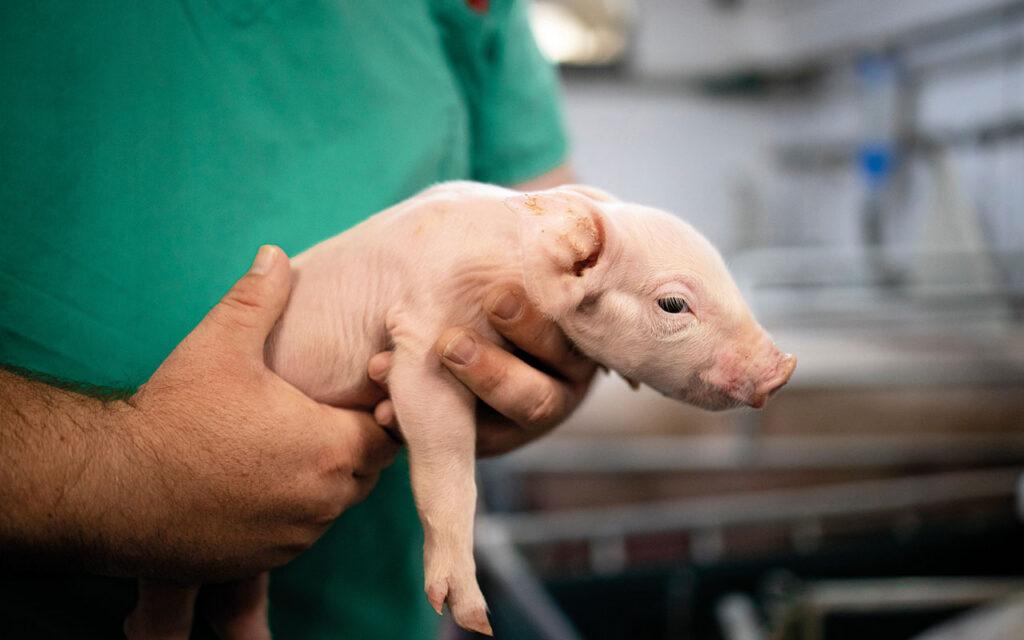
It is important to remember that zoonotic disease can work in both directions. Not only can animals share diseases with their human caregivers, but we can transmit infection to the pigs we care for.
This is the reason why visitor records require declarations regarding absence of symptoms of influenza and vomiting and diarrhoea.
An example of this is the influenza virus. Both humans and pigs are involved in the transmission of influenza viruses, but it is often hard to determine either visually or audibly if a person or a pig with respiratory signs actually has ‘the flu’. Seasonal flu vaccination offers a proactive option to mitigate infection risk for those working with pigs that can benefit both people and pigs.
My intention is not to engender fear of zoonotic diseases, but rather to start a conversation about proactive actions to improve hygiene practices, strengthen internal biosecurity protocols and include potential zoonotic infection in risk assessments for the protection of all those working with pigs and for the health and welfare of the pigs themselves.