



Electronic identification (EID) of pigs has many benefits, yet uptake generally remains low in the UK, particularly compared with some of our EU competitors, such as the Netherlands.
Barriers include cost, uncertainty among some farmers about how to use the data, appropriate equipment at abattoirs and, according to consultant Dominic Charman, who has worked on EID on a number of UK farms, a pre-occupation with breeding herd performance above that of finishing.
“The vast majority of UK producers are paid for kilos on a hook, not pigs per sow per year,” he said. “The reality is, however, that breeding herd metrics do not, by any means, always translate into kilos of meat sold.”
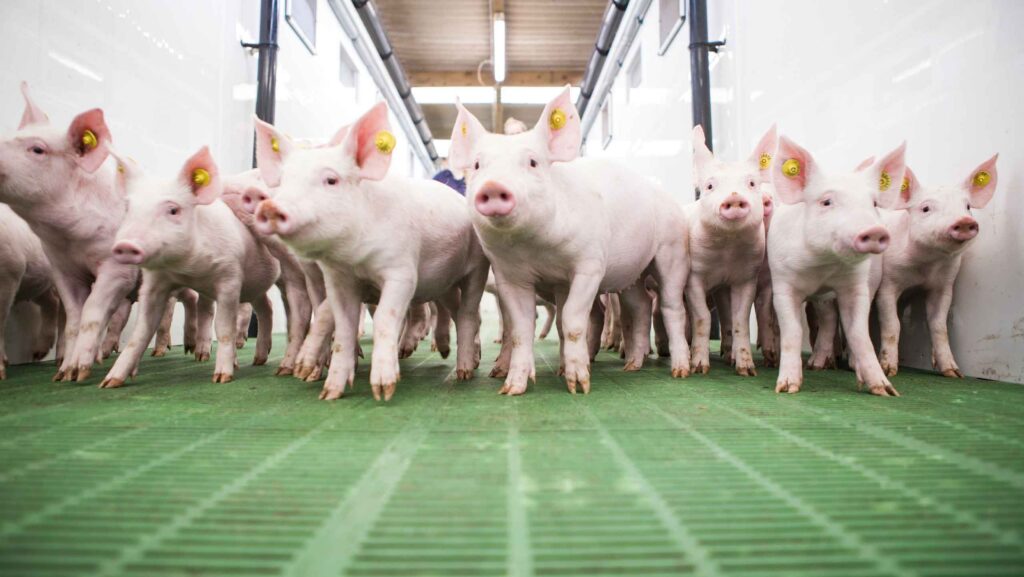
EID, in the form of a tag at birth that can be read throughout a pig’s life up to the abattoir, if it has the appropriate equipment, can record a pig’s weight at various stages and link back to an individual sow, informing future management and breeding decisions.
“EID offers producers proper oversight of sow performance. Gross metrics can tell us the kilos of meat produced per farrowing place, but I want to see which sows are making positive contributions and which ones are bringing the numbers down,” Dominic said.
EID also has clear benefits in movement recording and could provide full individual traceability – for example, in the event of an African swine fever outbreak, particularly where growers have been moved to new sites and mixed with pigs from other sources.
It could also help, as it is doing in some EU countries, processors to precisely feed premiums back to the right farm for delivering on welfare – for example, intact tails or flexible farrowing – or sustainability.
“A slap mark simply cannot deliver that same level of traceability at the speed required when lines are running at full speed,” Dominic added.
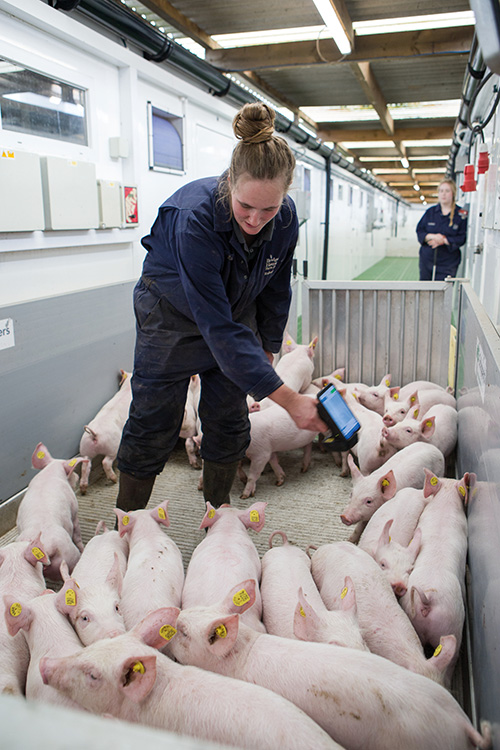
Among the farms he has worked with is Bridge House Farm in Northamptonshire, run by Charlie Thompson. Every pig is individually tagged at birth using ultra-high-frequency radio-frequency identification (UHF RFID) tags, which are integrated with scanning and weighing technology and can also log health information.
The data is driving business decisions and helping improve genetic selection, Charlie explained in a Pig World interview. The system has benefited pig performance management and improved the process of extensive recording and health testing involved in exporting breeding pigs, saving labour and removing human error.
Producing insights
“The challenge with regards to data, however it is collected, is to produce insights,” Dominic added.
“Simply collecting numbers is not helpful. In fact, data overload is often touted as a reason to not engage with a more in-depth programme. Most of the data you collect or get back from the abattoir is pointless.
“Insights into which sows are productive and which aren’t and how effective your latest batch of semen is need a very simple mathematical formula – not some giant data centre or expensive subscription to some nonsensical ‘cloud-based’ solution.”
Dominic highlighted an example of how EID can deliver clear insights when a producer noticed ‘a slight uptick’ in finisher mortality. “When we investigated the individual data, we saw two whole litters from two different sows had died after weaning,” he said. “Because of fostering, they had been weaned at different times by other sows.
“The link to those sows would have gone unnoticed with batch recording, but this stuff is happening on farms every day. EID is making a real difference, where it is used.”
The cost
There is, of course, a cost associated with tagging pigs with EID, but systems have evolved, meaning the time involved in recording is reduced, he added.
A standalone RFID reader costs about £1,100, and most units already have scales that can be linked into the system, and use a sow-recoding system that will print QR codes on farrowing cards to make identifying sows easier, he added.
“With weighing and tag-reading systems integrated into farrowing trolleys and processing loops, you take the pig out, scan it, and its EID and individual weight are automatically captured. You can do the same thing at weaning,” he said.
“However, our critical data capture points are birth and slaughter – which sow, which piglet, what weight, what date, what carcase, what date and how much money.”
He explained that a leap forward in technology in the UK has come from increased adoption across genetics and other industry businesses. For example, health company Ceva’s EASI injector reads UHF RFID tags. “This means we can link a reading into the iron jab at birth or into the vaccination point,” Dominic said.
“There are lots of clever things that can be done here. You lift the pig from the box at processing, jab it and read the tag in one movement, and the system captures the weight of the individual pig automatically. No extra time, all the extra data.
“You can capture everything in-between should you wish, including medication, which could be streamed into the electronic medicine book for pigs, and mortality – your vet can help analyse the data. But the key things are birth date, birth weight and dam.
“An important change recently is the ability to read tags in the abattoir. We have a portable UHF abattoir reader, which can be positioned next to the line. It’s still being tested, but is 90% of the way there. The barrier now is getting it into the abattoirs.”
An EASI way to collect data
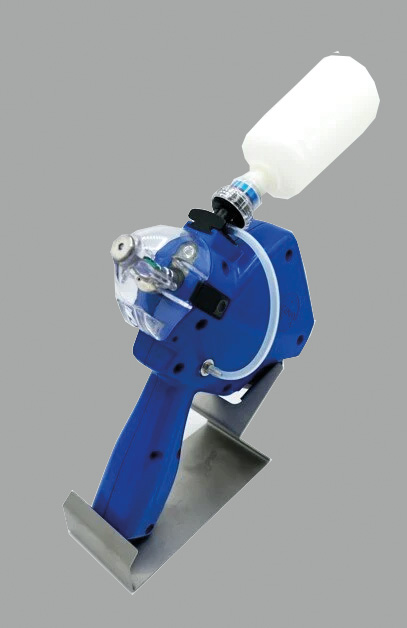
The EASI Swine Injector is Ceva’s smart, open, treatment injection device designed to improve accuracy, safety and traceability during piglet treatments and vaccination sessions.
EASI allows for a range of data collection: farm ID and operator, product used, date of treatment/vaccination and number of animals.
More detailed data can be recorded, including batch number, age of animals, building, room and pen location, the number of vials, product batch and expiry date.
A key feature is the opportunity to record individual animal ID via ultra-high-frequency ear tags. This provides detailed insights on variation and individual performance, both in terms of growth and health profile.
Key performance measurements can also be recorded with regards to the administration of the vaccination or treatment.
Breaking the circle
Pig industry analyst Mick Sloyan said AHDB and others have been encouraging UK pig producers to use kilos of meat per sow as a key metric to inform business decisions for many years.
Despite some excellent examples seen across the industry, uptake on EID is still relatively low, partly because of the cost of the tags and associated technology, he said.
“The key challenge is the integration of data capture and turning that into a financial return,” he said. “Where this system falls down in the UK has been when it gets to the abattoir. As we don’t have automatic grading (which needs RFID tags in the gambrel), linking individual pig data to weight, grading and health condition scoring is impossible.
“It’s about where to break into the circle. Farmers may get some benefit on farm, but they won’t get it all until the abattoirs invest in data capture. And the abattoirs may be reluctant until they can be guaranteed a steady supply of EID pigs,” he said.
Craig Lewis, genetics company PIC’s commercial director for the UK, highlighted the value of EID to capture important individual data on its breeding farms, particularly when paired with other technology – for example, to measure feed intake.
“Commercially, I am more cautious when it comes to return on investment – it really depends on what other technology you pair with it to drive value,” he said.
“I believe, however, that EID is only a bridge. Our new tech can read tags visually, so the need for digital tags becomes less, as just having video read the tags will be more cost-effective. Further into the future, we can start to think about things like facial recognition, which will leave tags redundant.”
Dutch project shows huge variation in meat per sow
Dutch company Arca Intelligence has highlighted how linking individual piglet data to lifetime growth and slaughter performance can produce a valuable measure of kilos of carcase weight per sow per year.
A study observed differences in lifetime daily liveweight gain between litters of up to 100g/pig/day. Within individual litters, differences can be considerably greater.
“Interestingly, a sow producing fewer piglets can ultimately generate considerably more carcase weight than a sow producing more piglets,” said Arca Intelligence’s Bert de Jong.
The average calculated meat production in one group of sows studied was about 2,618kg/sow/year, but it ranged from around 2,026g to 3,182kg.
One sow produced 1.5 fewer piglets/sow/year than another sow, but still produced 325kg more carcase weight per year, equating to about £32.50/sow/year, or £1/weaned piglet.
The company said this raised the question as to whether it is always economically worthwhile to increase the number of piglets weaned, or whether better health and greater uniformity among existing piglets deliver a higher return.
Arca is developing an integrated system for collecting individual data on health treatments and potentially feed intake and environmental control, as well as growth and production performance. This will create opportunities to investigate links between birthweight, health, treatments, feeding, growth and slaughter results.
“Piglets weaned per sow remains an important measure, but on its own it says little about the economic performance of their offspring,” Bert said. “The ultimate aim is not to collect as much data as possible, but to understand why some pigs and litters perform better than others.”
He explained that electronic identification is not yet widespread in the Dutch market. “But the development is moving quickly now, and more and more of the slaughterhouses are adopting it, including our own system, which is also used in Germany,” he said.