

There are many implications of the larger litter sizes typically seen across the pig sector these days, including how much space they take up in pens.
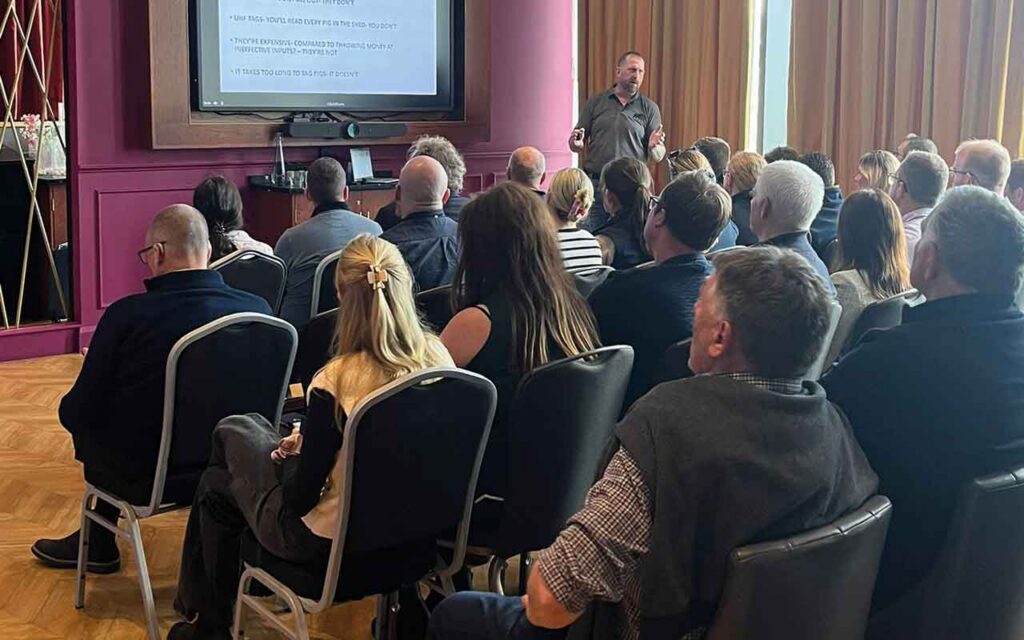
Opening a discussion, hosted by Ceva near the NEC in Birmingham the afternoon before the British Pig & Poultry Fair, Alan Stewart, senior pig lecturer at Harper Adams University, shared insights from ongoing analysis of production data from large litters. He highlighted the challenges and opportunities associated with increasing litter weaning weight.
Harper’s award-winning indoor unit averaged 13.4 piglets born alive/litter in 2014. A decade later, the figure had increased to 16.5 piglets/litter, with the number of pigs weaned/litter increasing from 11.7 to 14.8. Litter weaning weight increased from 96.2kg to 126.9kg during the period, with piglet weaning weights up from 8.2kg to 8.6kg.
Using image analysis technology, Alan demonstrated how piglet occupancy at weaning can be accurately measured.
Images from a recent batch showed that 13 piglets with a combined weight of 152.9kg occupied 1.8sq m when lying down, while 16 piglets weighing 160.1kg required almost 2sq m when standing. Despite only a modest increase in total weight, the larger litter required considerably more space.
These findings prompted discussion on whether current housing systems are keeping pace with rising litter sizes.
EID benefits
Dom Charman of CharmanAg explored how electronic identification (EID) technology is helping producers gain a better understanding of individual pig performance.
While large amounts of data are often collected in breeding herds, relatively little information is routinely captured on finishing pigs, despite them generating the majority of farm income.
Using examples of live dashboards and EID-enabled systems, Dominic demonstrated how individual animal data can reveal variations in growth, health and performance that are often hidden by herd averages. These insights can help producers make more informed management decisions and target resources more effectively.
He also highlighted how EID technology can support health monitoring programmes. Using Ceva’s Lung Program as an example, he showed how abattoir health assessments can be linked with production data, enabling respiratory health indicators such as lung lesions and pleurisy scores to be analysed alongside performance records.
By combining production, health and slaughter data, producers and vets can identify trends, assess interventions and make more informed decisions to improve herd health and productivity.
Dr Carla Gomes of Animal Health Ireland (AHI) provided an overview of the Irish pig sector and the collaborative initiatives helping producers meet current and future challenges.
A key focus was the partnership between AHI and Teagasc, which brings together animal health, research and advisory expertise to support industry improvement. Carla outlined AHI’s mission to promote sustainable farming through better animal health and welfare.
By working closely with producers, veterinarians, researchers and industry stakeholders, AHI and Teagasc are helping improve health, welfare and productivity while strengthening the long-term resilience of the Irish pig sector.
Precarious sector
Concluding the meeting, Pig World editor Alistair Driver highlighted the challenges and opportunities facing the industry.
He emphasised that the British pig sector remains innovative, adaptable and well placed to build on its strengths through strong collaboration across the supply chain.
But he also highlighted the precarious nature of pig production, with so many factors entirely out of producers’ control.
Alongside worsening market pressures, the full extent of which were starting to become clear, he pointed to ongoing disease threats, particularly African swine fever, concerns around border biosecurity and illegal meat imports, and a range of legislative challenges relating to farrowing systems, emissions and environmental regulation.
With increasing scrutiny on the pig sector, he also highlighted the need to do more to promote the positives in animal welfare, health, responsible antibiotic use and sustainability, including initiatives such as the Pork Environmental Roadmap.
The meeting provided an excellent opportunity for producers and vets to share experiences, discuss emerging research and consider practical approaches to current industry challenges. Delegates left with plenty of food for thought and fresh perspectives on the future of the UK pig sector.