



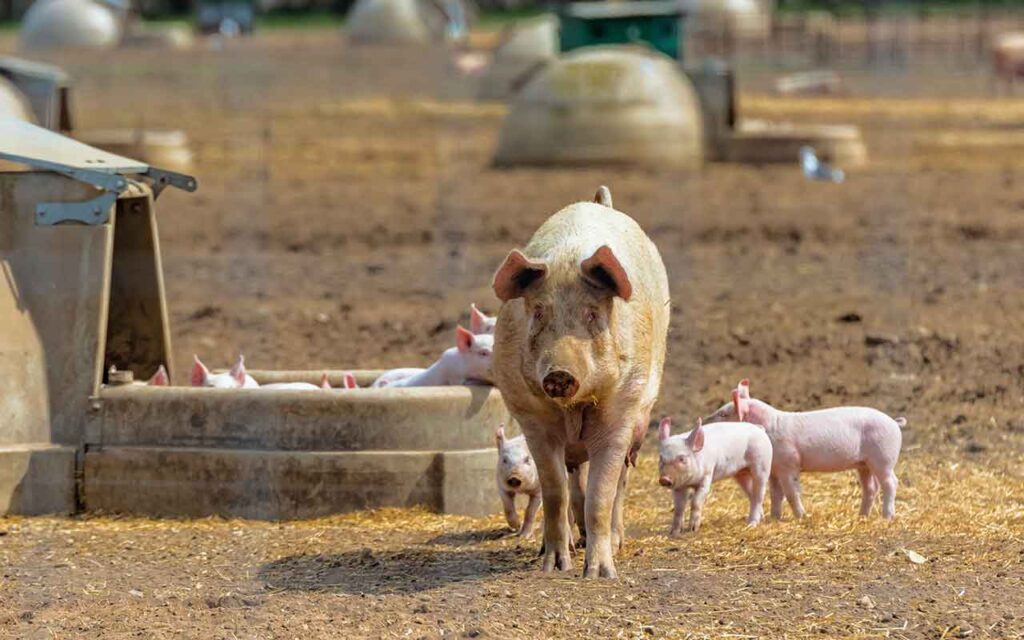
Outdoor-bred pigmeat (ODB) has become a mainstream choice for shoppers, attracting 18.3 million shoppers and accounted for almost 12% of total pig meat volumes in the year to June 14, according to data from Worldpanel by Numerator.
Analysis of the data by AHDB shows that, although ODB remains a smaller part of the pig meat market, nearly two-thirds of households buy ODB products, giving the category a reach similar to lamb.
AHDB’s definition of ODB has been expanded this year outdoor-bred, outdoor-reared, free-range and organic pig meat products.
Further data from AHDB/YouGov data confirms that consumers also see outdoor production as a sign of quality, with around 30% shoppers saying outdoor-bred and outdoor-reared production are important when buying premium pig meat. This ranks alongside British provenance, animal welfare and meat appearance as key purchase drivers.
“The results show that shoppers recognise and value outdoor production methods, giving the category a strong base for future growth,” AHDB retail and consumer insight analystCharlotte Forkes-Rees said.
The Worldpanel research showed how the perception of ODB pigmeat as a higher-quality choice helps the category command a higher price. On average, ODB products sell for £11.18/kg, compared with £7.43/kg for pigmeat overall.
Even so, a quarter of consumers say they always buy, or try to buy, ODB products, while only 13% think they are too expensive.
“Price remains important for many shoppers, but ODB’s success shows that many people are willing to pay more when they believe a product offers better quality, animal welfare or production standards,” Ms Forkes-Rees said.
Processed products
Much of ODB’s success comes from processed pork products, which make up most of the category’s sales volume, account at 66.6 million kg, considerably higher than any other category and compared with 10.3 million kg for primary products, the Worldpanel data showed. Within the processed category, sausages account for 35% of total ODB sales volume.
Ms Forkes-Rees said there are also opportunities beyond processed products, which for the total pigmeat category are finding it harder to attract shoppers.
“More people are becoming concerned about ultra-processed foods (UPFs), with 71% saying they are trying to avoid them.
“This can be a challenge for processed pork products, as they use ingredients to help with curing, texture, flavour and moisture. As a result, their ingredient lists can look longer and more complicated,” she said.
“As a result, at a total level, processed pig meat products are declining in volume, while demand for primary pork cuts is growing. This could create challenges for some ODB products, but it also brings new opportunities.
“As interest in primary pork increases, there is scope to grow demand for ODB pork cuts alongside the category’s strong performance in processed products.”
She stressed that the wider food landscape provides further reasons for optimism for ODB. “As consumers continue to recreate restaurant-style experiences at home and trade up into premium food and drink for special occasions, the category is well placed to benefit,” she added.
“ODB has already demonstrated that shoppers are willing to pay a premium when they perceive a meaningful difference in quality. Maintaining these credentials, while broadening appeal beyond its traditional shopper base, will be key to sustaining momentum.
“With strong household penetration and opportunities to attract new shoppers and grow across more product types, ODB is well placed to continue growing within the wider pig meat category.”
You can read AHDB’s full analysis HERE