




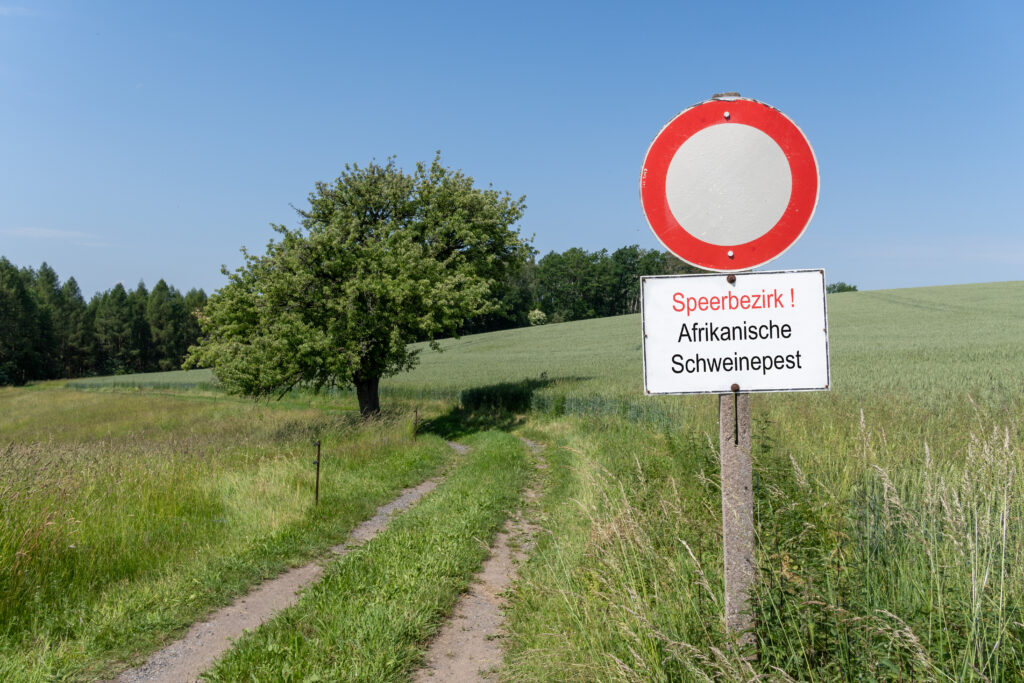
The number of African swine fever (ASF) outbreaks in Germany declined significantly in the first half of 2026 – but a new case in Brandenberg highlights the continuing disease threat.
From January to June, 623 cases of ASF were registered in wild boar nationwide – around 60% fewer than the 1,623 cases recorded in the same period in 2025, according to the mid-year report on the disease situation. The outbreak continues to be limited exclusively to wild boar, with no outbreaks detected in domestic pigs so far in 2026.
The main hotspots of the disease are currently in North Rhine-Westphalia and Saxony, whereas last year, Hesse was the most affected state.
With 517 cases, North Rhine-Westphalia had, by a distance, the highest number of confirmed cases nationwide in the first half of 2026. It was followed by Saxony (86 cases), Hesse (35 compared with 1,557 in the first half of 2025), Brandenburg (8 cases), Rhineland-Palatinate (3 cases) and Baden-Württemberg (1 case).
Setback in Brandenburg
Brandenburg had largely brought ASF under control in recent years through intensive control measures. In February 2026, the last restricted zones in the districts of Oberspreewald-Lausitz and Spree-Neiße were lifted and transformed into disease-free areas, with only the protective corridor along the Polish border remaining in place.
However, in early July, ASF was detected again in two wild boars in the Uckermark district, representing the first cases since May 2025. The animals were found were within the existing restricted zone II near the German-Polish border.
The authorities said, adding that they assume the virus was introduced by migrating wild boars from infected areas in Poland, Reuters reported. The Uckermark district has immediately stepped up all necessary control measures, authorities added.
Positive picture
The mid-year results for 2026 are ‘predominantly positive’ from the perspective of animal disease control, German pig industry body ISN said.
“The number of ASF cases in wild boar has decreased significantly compared to the previous year, and the disease remains confined to the wild boar population,” it said.
It said the ‘massive decline’ in Hesse demonstrates the ‘decisive effectiveness of established protective and consistent control measures – from searching for carcasses and fencing to hunting’.
“Even though the overall statistics are declining, the continued detections in North Rhine-Westphalia and the renewed findings in Saxony and Brandenburg clearly demonstrate that the risk of introduction remains high. Vigilance, consistent control measures, and high biosecurity standards therefore remain crucial to prevent future spread to domestic pig herds,” ISN said.