



f the pig sector is going to meet the targets of a 30% reduction in emissions by 2030 and net zero by 2050, it will be essential to change the narrative surrounding emissions reduction.
This was the key message to delegates at the recent ‘Time To Take Control’ event, hosted by Trouw Nutrition.
To develop a more sustainable industry, speakers stressed that we must balance the three pillars of sustainability – environmental, economic and social. It is important to appreciate that while not everyone individually will be able to meet net-zero targets, collectively the industry can, they concluded.
An overarching theme was that to help increase the rate of progress, it is important to talk about efficiency and financial viability as drivers of environmental sustainability.
We must also never shy away from talking about profit. If businesses are not making money, they will not be successful or sustainable.
But by focusing on farm efficiencies, delegates were told, it will be possible to deliver economic and environmental sustainability, as more efficient businesses will cut emissions while improving returns.
A need for metrics that can drive reductions was identified, alongside the need to ensure that the huge quantities of data produced are fully used to identify opportunities to improve.
Feed focus
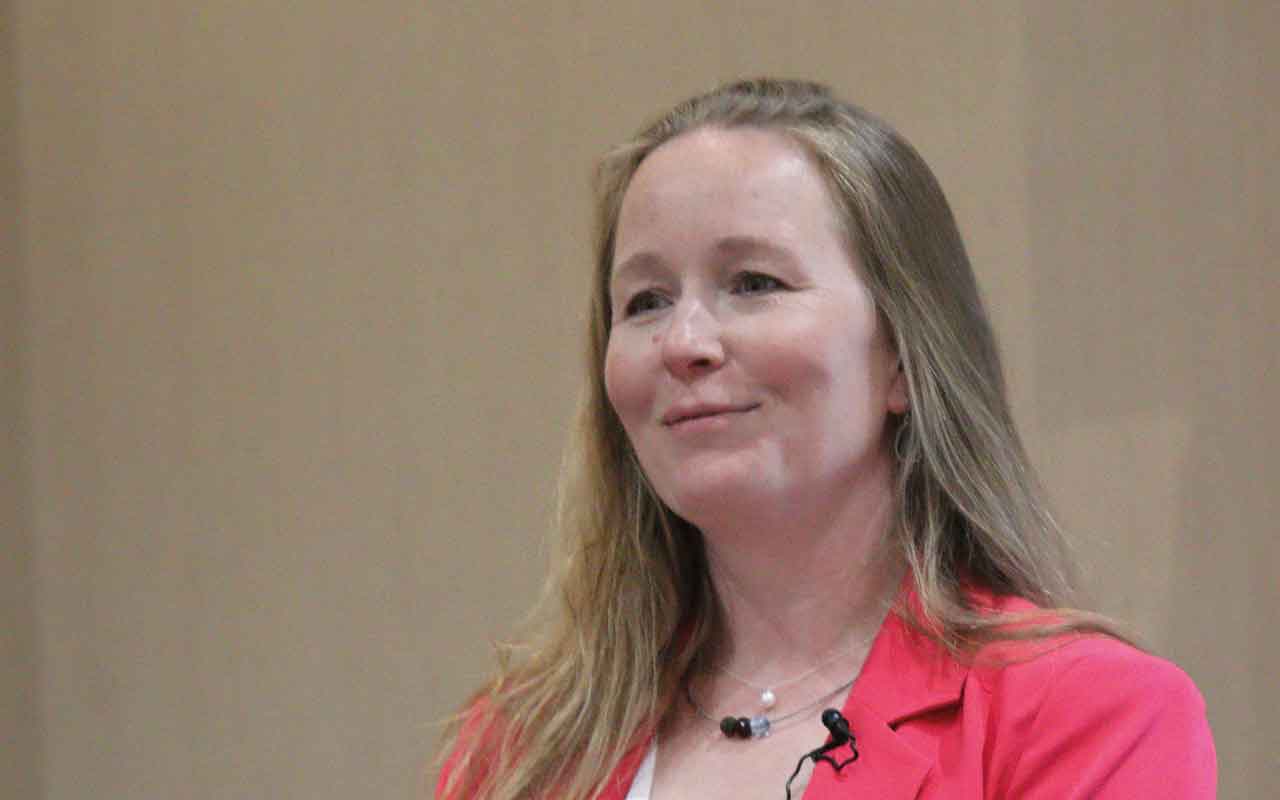
Evelien van Donselaar, Trouw Nutrition’s pig technical sales manager, said the pig sector is to be congratulated for having already made significant advances in reducing emissions. However, to meet the challenging targets, action needs to be stepped up across the complete supply chain.
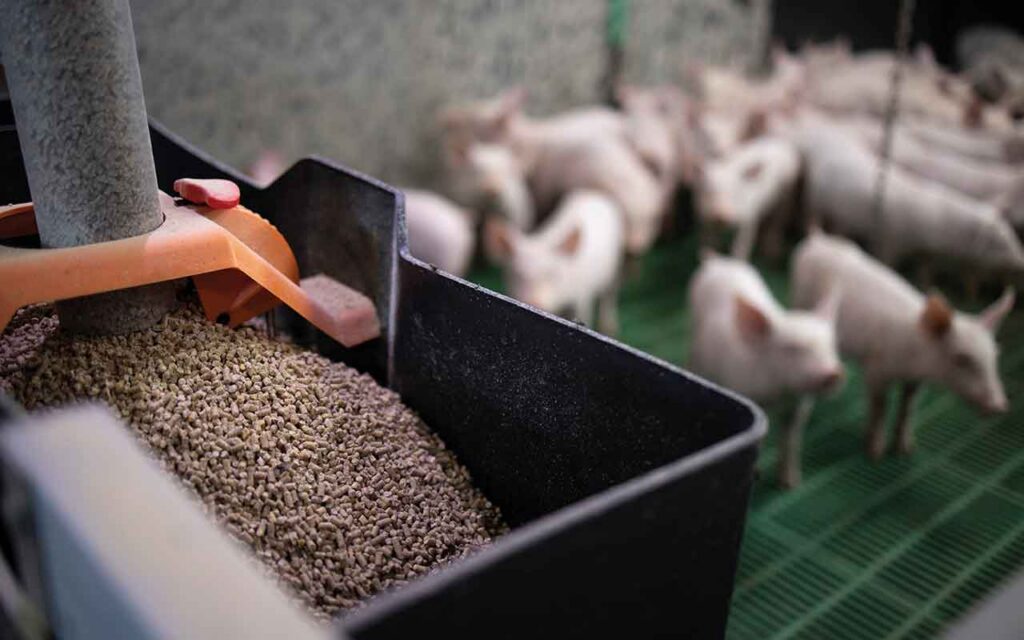
“Feed is still an area where focus is needed,” she said. “If we look at the life of a pig, 11% of total emissions are produced in the pre-weaning period, with 54% of these coming from sow feed.
“The nursery phase contributes 9% of total emissions, with 28% coming from feed, while the growing phase produces 80% of the total carbon footprint, with 48% of this attributable to feed.
“If we can gain efficiencies through precise nutrition and management, there will be a direct reduction in emissions and also an increased financial return, creating value through emissions reduction. This starts in the pre-weaning period, where we want to secure high early feed intakes, setting the animal up for the rest of its life,” Evelien said.
“There are still many areas where we can make progress. We need to look closely at the sources of all ingredients, and there could be scope to include more co-products in diets to reduce carbon footprint.”
She stressed that good gut health is ‘non-negotiable’. “We need to protect the gut and make it more robust. It will pay to review stocking density and the consequences for health challenges,” she added.
“There is no silver bullet, but there are lots of opportunities we can still explore.”
Carbon index
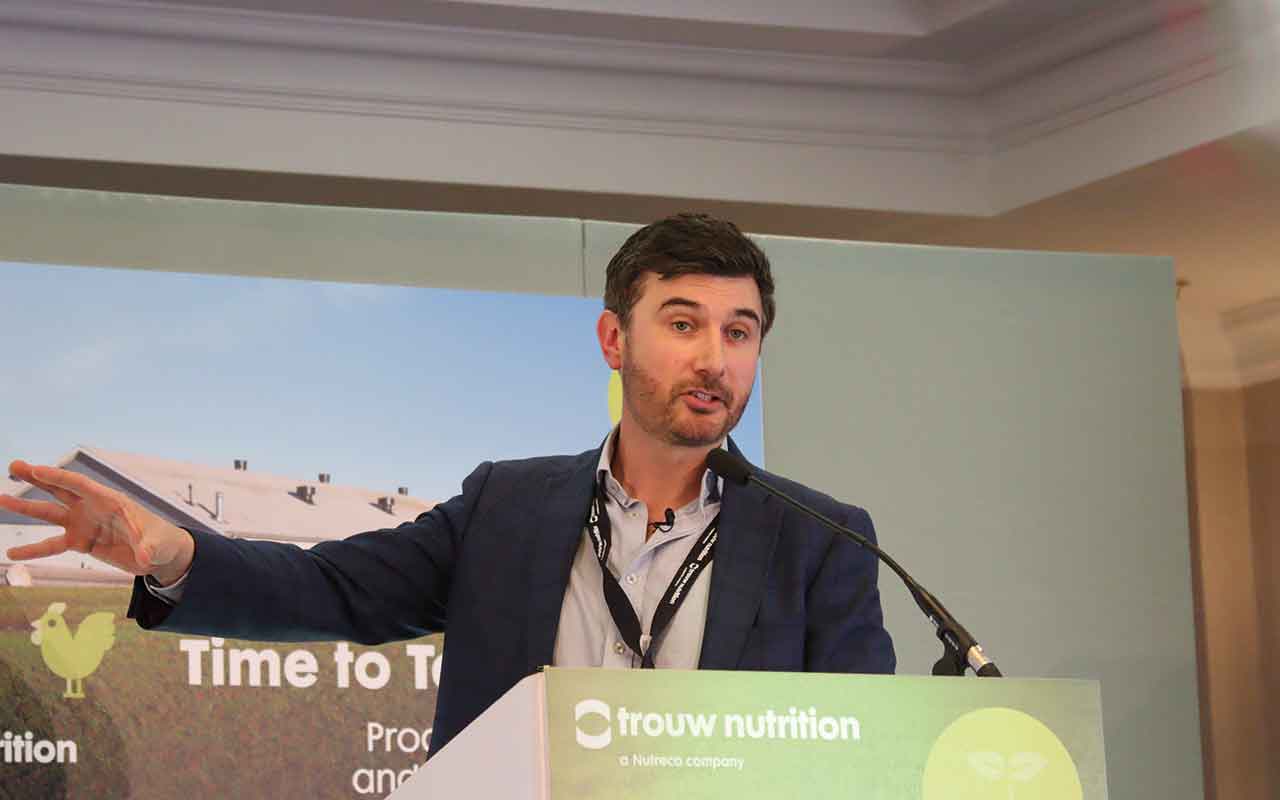
Robin Lawson, managing director of Rattlerow Farms, told delegates a carbon index for pigs would have the potential to help select for reduced emissions. He warned that current selection parameters based on production may mean farmers are selecting against carbon footprint, and he advocated a more balanced approach.
“As an industry we need to appreciate that if customers see sustainability as important, we need to react to this. However, if we are asked to do something, the cost and value must be shared, which requires a high level of trust and openness with customers,” Robin advised.
Summarising, Trouw Nutrition’s Dr Liz Homer reiterated that the cost of reducing emissions and the additional value created must be shared across the supply chain.
“Everyone can contribute to meeting the targets,” she said. “The more who engage, the faster progress will be made, and sharing value will be key to making this happen. Central to this will be focusing on efficiency first, as environmental sustainability will flow from this.
“Underpinning industry change will be data, the collection of which has to stop being seen as a burden.
“It is only by improving the interpretation of the data collected across the supply chain that decision-making will improve, allowing progress against the three pillars of sustainability and the maximum value to be realised from reducing the carbon footprint of pig products.”