



 Founded in 1982 in East Yorkshire by John Sykes Rymer, JSR Genetics began as JSR Healthbred, supplying robust boars and gilts to local farmers, and soon expanded into international markets.
In 2015, it partnered with Topigs Norsvin, described as ‘the global leader in high-tech and data-driven pig genetics’, including genomics, CT scanning and artificial intelligence (AI)-based phenotyping, with an R&D budget of €37m/year.
Following its acquisition by Cranswick at the start of 2025, the company has continued to supply top-quality genetics to a broad customer base.
Genetic offerings
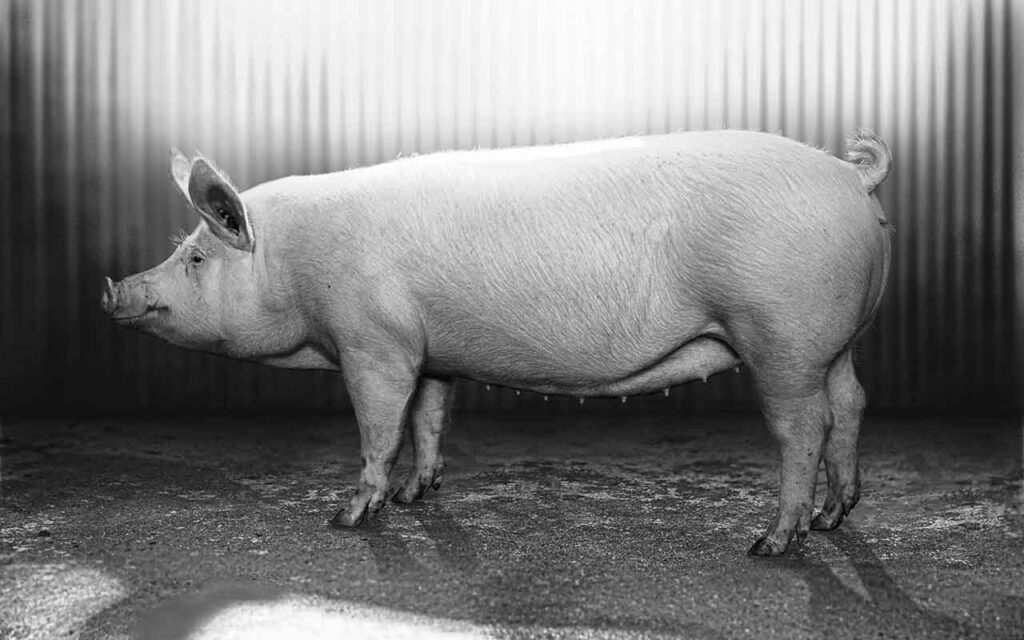
TN70: A hybrid based on Norsvin Landrace (L-line) and Topigs Large White (Z-line) genetics, it is bred for high lifetime productivity and suitability for modern systems, including group housing and free farrowing. Key benefits include:
- Excellent mothering and milking capacity
- Robustness
- Minimum 14 teats (86% now have 16+)
- Easily managed
- Sow longevity with high feed intake
- Strong, uniform piglets with high birth weights
- Efficient finishers with lean meat.
Terminal boars
Topigs Norsvin’s terminal boars benefit from stringent selection at the company’s Delta stations using advanced tools like CT scanning and machine learning models to optimise carcase and primal yield and meat quality, while maintaining feed efficiency and robustness.
TN Tempo: A Large White-based sireline, it has a strong focus on growth, feed conversion and robustness. Key benefits include:
- Strong piglet vitality
- High carcase quality
- Exceptional growth
- Large, strong litters at birth
- High appetite without affecting efficiency
- Low costs of production.
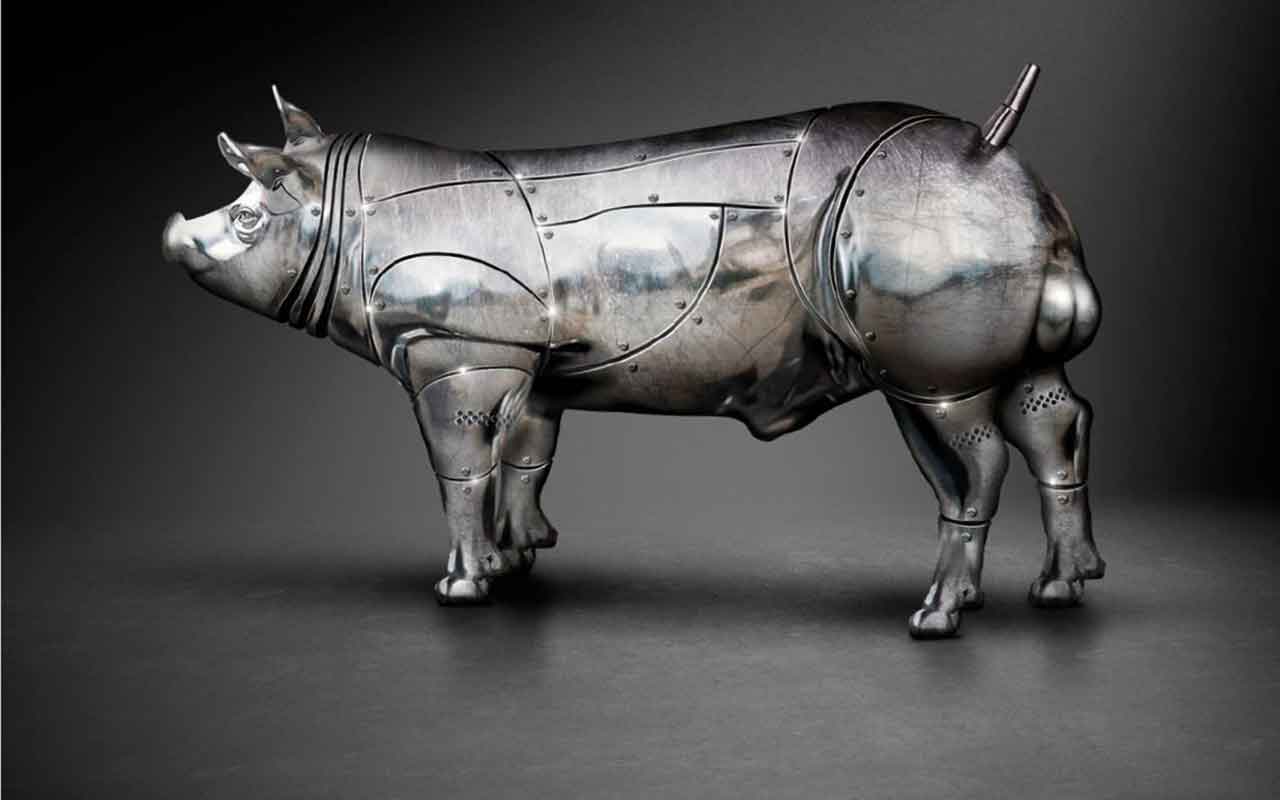
JSR 400: The Hampshire-based sireline is sourced from stock raised without antibiotic growth promoters since 1986, breeding progeny with improved immunity and high feed intake, leading to lower mortality and good growth rates. Key benefits include:
- Strong, fast-growing piglets
- Minimal medication requirements
- Consistently good eating quality.
Damline AI
L-line: In addition to its maternal ability, the pure Landrace line is unique in the productivity, efficiency and carcase quality of the slaughter progeny, and is proven to increase profit in new systems, JSR says.
Z-line: A purebred sow line originating from the Large White, it is known for a strong fertility performance and robustness, showing high-level pure-line performance in finishing and carcase traits.
Balanced breeding
“Topigs Norsvin’s balanced breeding program delivers robust, disease-resilient pigs, sustainable genetic progress, and easy-to-manage animals,” said JSR sales director Giles Christie. “These priorities are tightly connected: the same genetics and technologies that improve welfare and the environment also improve productivity and profitability on farm.”
The company has made robustness a core element of the breeding goal across all lines, aiming for pigs that cope better with disease, climate and feed challenges, while maintaining uniform, efficient production.
“Recent disease-challenge trials have shown tremendous genetic variation for survival and feed efficiency. Selecting from naturally more resilient families allows progress in disease resilience,” he added.
Sustainability
Feed accounts for 50–70% of total pig production costs, and nutrient efficiency is a critical sustainability lever. “About 20% of the variation in feed efficiency is directly genetic, but Topigs Norsvin goes further by researching protein digestibility and nutrient efficiency to improve feed conversion, lower feed cost per kilogram of pork, and cut nitrogen excretion and associated carbon dioxide equivalent emissions,” Mr Christie said.
The company also combines CT scanning with advanced machine-learning models to optimise slaughter results and valuable cuts such as bellies. CT delivers detailed information on lean meat percentage, primal yields, fat quality and skeletal structure, enabling selection for carcases that deliver more value and healthier joints and bones.
Behaviour
AI now allows the company to objectively capture complex behavioural traits at scale, using camera and sensor systems to quantify social interactions and identify genetic social effects, helping selection against negative behaviours such as tail biting and aggression.
In sow herds, AI recognises posture and movement, making it possible to select sows that lie down slowly, giving piglets time and space to move away, lowering pre-weaning mortality.