

The UK Farm Assurance Review (UKFAR) has welcomed progress made by some assurance schemes in implementing its findings but has criticised UK governments for failing to take key elements forward.
The review, commissioned by the UK national farming unions and AHDB, made 56 operational recommendations in its initial report in January 2025.
In its second monitoring report, Dr David Llewellyn, monitoring and reporting commissioner, said the review appears to have acted as a ‘catalyst for change across the farm assurance system’. However, he said it was clear that farm assurance schemes ‘remain at different stages in their adoption of the UKFAR recommendations’.
“The work of some schemes, in particular those in the devolved nations and the progress reported in the Red Tractor (RT) action plan, is welcome,” said Dr Llewellyn, who chaired the original review.
“Certain industry regulators also stand out as having taken the principles of the UKFAR on board and the main farming organisations are also pressing ahead to see that the UKFAR has a lasting effect.
“There is, however, room for improvement in the way in which UK governments see the role of farm assurance as a contributor to the development of the industry.
“Dialogue between the assurance schemes and their respective governments in the devolved nations is taking place, but the picture with Defra is less clear. There was the promise, earlier in the UKFAR, of greater coordination between the UK governments to take account of the system in their policy making and to reduce duplication of effort, but this has yet to see the light of day.”
He said other areas of the report also point to slower progress, such as addressing issues identified by the crops sector and ‘the vexed question of how on-farm environmental measures can be systematically implemented, and fairly resourced, if data from them is to be used by other parts of the agri-food system’.
“Both topics are being investigated and it is hoped that further progress will be made, in consultation with the farming industry, during the course of 2026,” he said.
Reaction
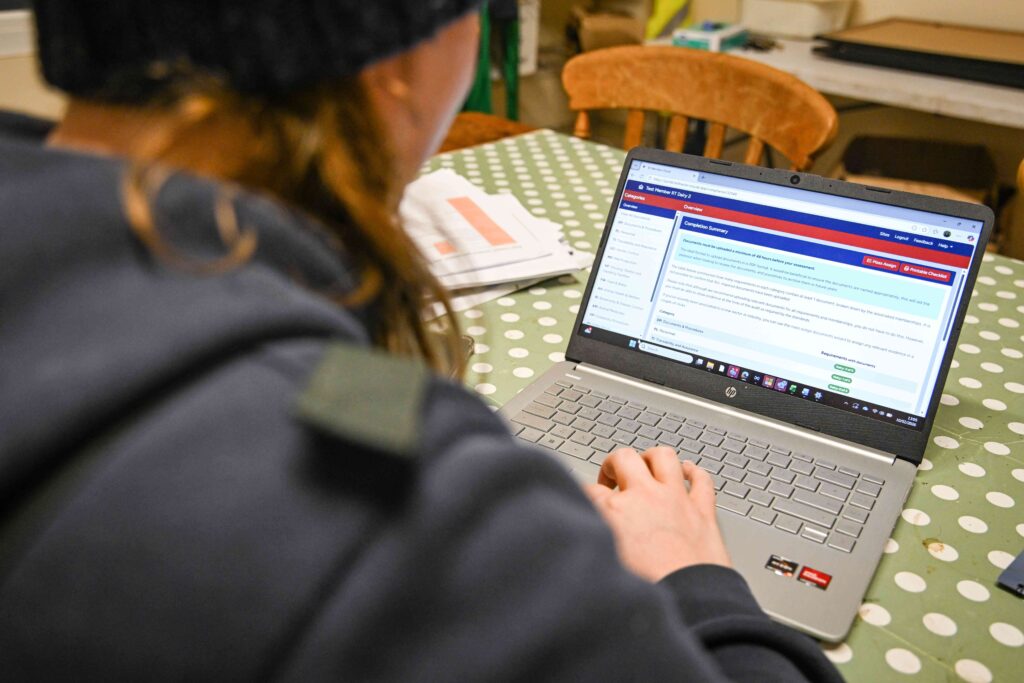
Red Tractor welcomed the report, highlighting how, over the past 14 months, it has introduced changes and improved technology to reduce audit burden, begun a comprehensive reset of standards across all sectors and overhauled how it communicates with farmers.
Red Tractor chair Alistair Mackintosh said: “Our response to the FAR is part of a long-term commitment to ensuring Red Tractor embeds a more transparent approach, particularly for farmers who must feel represented, listened to and informed.”
Stewart Houston, chair of the Red Tractor Pigs Sector Board said the Board has worked with the Red Tractor Team and the other sectors to embrace improvements suggested by the FAR.
“These have included new appointments to the Board and Technical Advisory Committee; starting a full review of the Pig Standards; working collaboratively with the industry to manage reputational risks; and introducing an enhanced welfare module which will help to reduce audit duplication,” he said.
“We’re also increasing our engagement with the industry and were heartened to hear so many positive comments at the Pig & Poultry Fair.”
The four UK farming unions – NFU, NFU Cymru, NFU Scotland and the Ulster Farmers’ Union – said: “Although good progress has been made, several areas highlighted within the report still require urgent action.
“On environmental measurement, we must reach a consensus around an industry-led approach and ensure reporting has a clear purpose, provides genuine value and involves farmers and growers from day one.
“As the report makes clear, government also needs to urgently step up and recognise the value of farm assurance and its role in providing high quality, British food. It must ensure that our farmers and growers are not unfairly forced to compete with imported products that would be illegal to produce here, and establish the fair, transparent marketplace our farmers and growers deserve.”