


The new chief executive of the British Meat Processors Association (BMPA) has highlighted in parliament the huge barriers that continue to hamper red meat exports to Europe and the potential benefits of a ‘pragmatic’ agreement to remove them with the EU.
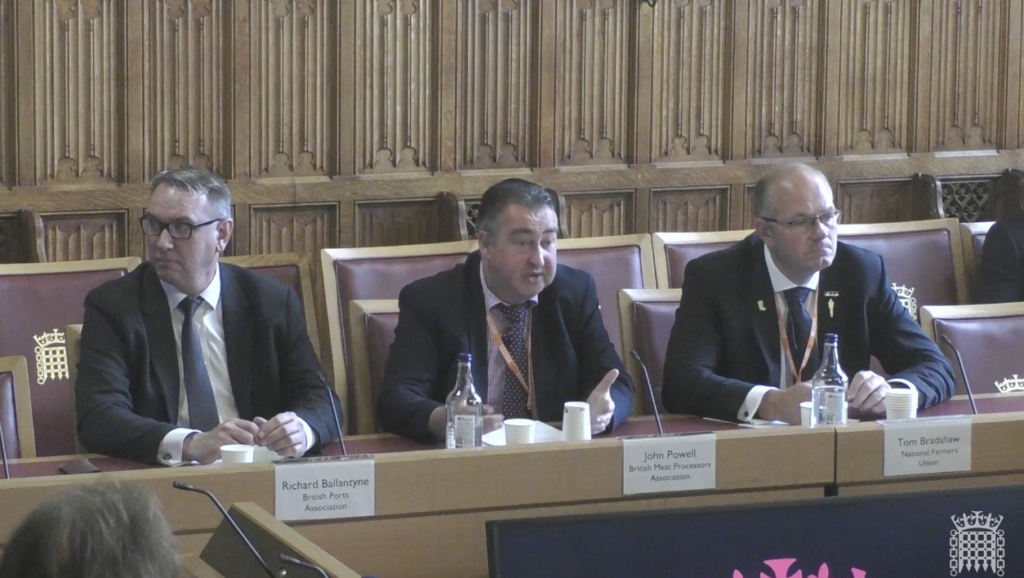
John Powell gave evidence yesterday to the House of Lords European Affairs Committee on the prospective sanitary and phytosanitary (SPS) agreement between the UK and EU.
Giving evidence alongside NFU president Tom Bradshaw and Richard Ballantyne, chief executive of the British Ports Association, Mr Powell said post-Brexit SPS barriers continue to impose unnecessary cost and friction on UK meat exports, despite UK and EU standards remaining closely aligned.
He said the practical impact of export health certificates, veterinary sign-off requirements and border procedures had created significant additional burdens for meat processors and exporters, particularly small and medium-sized businesses, many of whom had either scaled back or ceased exporting to the EU altogether because compliance costs now outweigh commercial returns.
He highlighted how UK meat exports to the EU have fallen sharply since 2019, with beef down over 20%, sheepmeat down more than 15%, and pork exports cut by over a third.
At the same time, businesses are facing escalating compliance costs. Since 2020, the agri-food sector has spent an estimated £289 million on export certification alone, with ongoing annual costs for the meat sector exceeding £50m. For exporters, each shipment can now carry additional costs of £2,500–£3,000 per load, driven by paperwork, inspections, and border delays.
These are described by BMPA members as ‘non-value-added costs’ that do nothing to support productivity or growth.
Mr Powell told the committee that while the industry has adapted to the new trading environment, the current arrangements remain structurally inefficient compared with pre-Brexit trade and continue to undermine competitiveness in EU markets.
Benefits of an SPSV agreement
He argued that the UK meat sector (including primary producers) already operates to standards that are effectively equivalent to those of the EU, and that a pragmatic veterinary/SPS agreement between the UK and EU would deliver substantial benefits by reducing duplication, extra administrative costs and border delays while maintaining high standards of food safety and biosecurity.
While all witnesses agreed on the importance of safeguarding high production standards and improving trading conditions with the EU, Mr Powell stressed the immediate operational and commercial need for measures that reduce export bureaucracy and restore smoother market access for UK meat businesses.
He cited four specific BMPA requests for parliament:
- It should support the Government’s aim of achieving the widest ranging SPS agreement as possible to remove the current friction and costs.
- It should also support a short but flexible Transition Period taking into account certain changes that might take longer to implement but not drawing out the process unnecessarily.
- It should support the government in completing the required parliamentary steps efficiently.
- Post an SPS agreement, parliament should ensures that the government puts in place the necessary transparent structures and resources to engage with the European on new emerging legislative proposals and also industry stakeholders so they can provide the necessary technical and commercial input. Stronger parliamentary scrutiny is needed on all proposed future changes initiated by the EU that the UK would be required to adopt, he added.
A recording of the evidence session can be viewed here.