

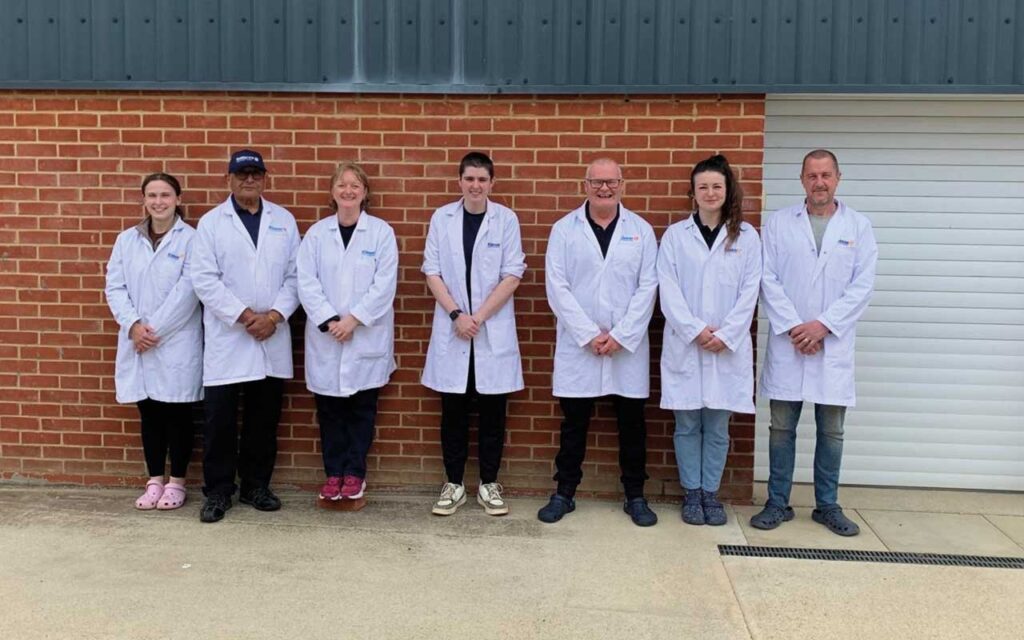
Last month, I was delighted to be involved in an important milestone for the industry, as the teams at Klasse AI and Rattlerow Farms successfully completed the first export of fresh OMX boar semen to the Philippines.
For all of us involved, this shipment represents far more than a box of artificial insemination doses travelling halfway around the world. It shows what can be achieved when genetics expertise, health assurance, operational planning and biosecurity come together to deliver elite genetics to customers around the world.
Robin Lawson, MD at Rattlerow Farms, highlighted to me the hard work from his whole team in the preparation process, planning, marketing, collection and processing to ensure everything was delivered to the required standard.
After considerable effort from multiple teams and successful completion of all the required export procedures and documentation, it was rewarding for everyone involved to receive confirmation that the shipment had cleared successfully, emphasising the importance of teamwork between the exporter, APHA and the private veterinary surgeon.
Health assurance
While the genetics and commercial achievements are significant, from a veterinary perspective this milestone also reinforces how critical health assurance and biosecurity are for the wider pig industry.
Having previously been involved in Britain’s first live pig export to the Philippines in 2018, also with Rattlerow, I recognise the appreciation of both the opportunities and the risks associated with the international pig trade. There are a lot of rules to comply with, but not all the important pathogens are included in the official export or import certificates.
If importing semen into the UK, it is essential to carefully consider and control the disease risks. Viruses that cause notifiable diseases like African swine fever and foot-and-mouth disease survive in boar semen and can be transmitted by artificial insemination.
Non-notifiable diseases are also a threat, with greater risk of transmission than notifiables because the level of control in the country of origin will not be as strict.
Porcine reproductive and respiratory syndrome (PRRS) virus can be shed in semen, which is especially relevant since the introduction of strains exotic to the UK, like PRRSV-2 (American PRRS) or highly pathogenic PRRSV-1 strains (such as Rosalia in Spain) could be devastating to the UK industry. Seneca Valley virus or Leptospira spp. may lurk in some boar studs, threatening fertility.
PRRS control
Defra’s Animal Health & Welfare Pathway (AHWP) is a positive step for PRRS control. This year, Defra proposed mandatory PRRS testing and status declaration for all pig units but, critically, the AHWP does not contemplate controls on imported semen, so an import of semen from another country could threaten the success of the programme.
Key points to consider include:
- Disease testing: Imported semen needs to arrive with a health certificate confirming donor boars are from herds free of certain major diseases. This does not mean semen doses have been tested for all the diseases pig producers worry about most – for example, PRRS (including the North American type), African swine fever or foot-and-mouth disease.
- Source accreditation: Semen can be imported from approved studs and collection centres overseas. While these centres meet the required standards of the import certificate, there is no single worldwide accreditation system.
- Certification and traceability: Each shipment is accompanied by official paperwork from APHA, but semen is grouped within the same broad import system used for many different animal products. Traceability is largely paper-based and may not provide the same level of instant, dose-by-dose tracking producers are used to.
- Post-import monitoring: Once semen arrives in the UK, there is no routine or mandatory programme of random laboratory testing, and evidence of absence of disease is provided by the exporting stud and the certification process rather than on independent testing of imported doses. Many importers carry out their own voluntary tests on the doses before they are used, but not all will be aware of the risks or be prepared to incur the extra cost.
- Veterinary oversight: The NPA promotes a vet-to-vet clearance process, and health control of imported semen doses is referenced in the NPA import
protocols, but this is advisory rather than compulsory. As a result, the level of veterinary scrutiny may vary depending on the importing business and the source of the semen. Non-commercial producers may not be aware of risks or testing options.