



The government is seeking views on proposals to replace carbon dioxide (CO2) stunning in abattoirs with ‘more humane alternatives’, such as argon gas and automated electrical stunning.
The proposals, flagged up last December in Defra’s Animal Welfare Strategy, were published today, Monday, October 26.
The consultation states: “We propose to ban the use of carbon dioxide to stun pigs in the UK following an appropriate transition period to allow slaughterhouses that currently use carbon dioxide to stun pigs to convert to suitable alternative stunning systems, such as inert gas or electrical stunning.
“What might be an appropriate transition period is a key part of the consultation. If the proposal to ban the use of carbon dioxide to stun pigs is taken forward, domestic legislation would be introduced to ban any method using carbon dioxide to stun pigs in slaughterhouses and knacker’s yards at the end of the transition period specified in the legislation.”
It seeks views on the welfare benefits, costs, feasibility and potential timescales for moving away from CO2, ‘recognising businesses will need time to adapt’.
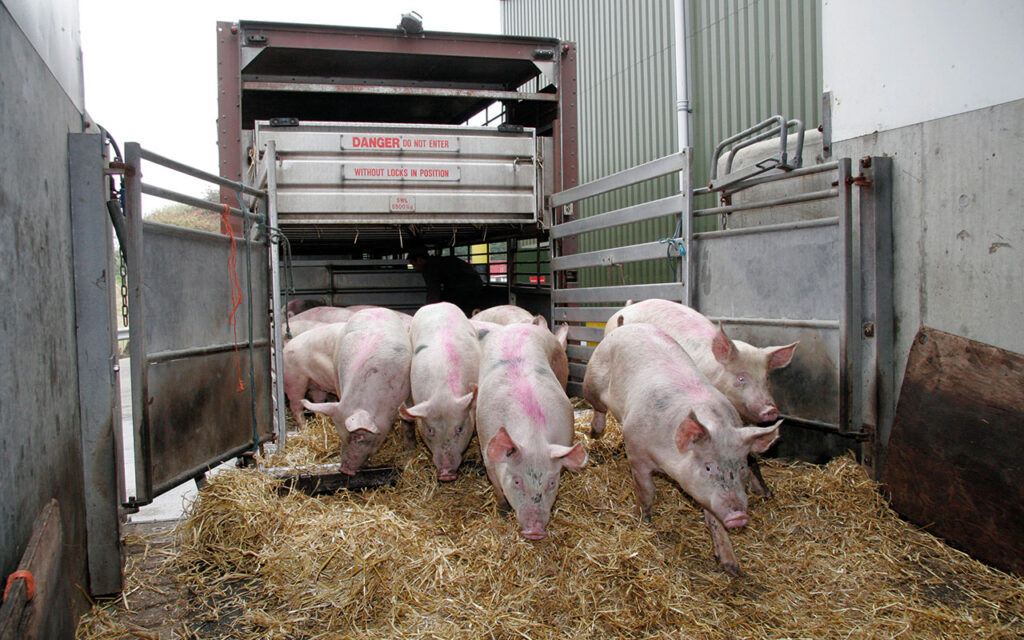
High concentration carbon dioxide is used to stun and slaughter around 90% of pigs in UK abattoirs, but the government’s Animal Welfare Committee has highlighted serious concerns about the suffering it causes animals, including ‘pain, respiratory distress and fear’. In a report, it recommended that CO2 should be phased out within five years.
The government said both argon gas and automated electrical stunning are ‘proven to substantially reduce animal suffering’, an assertion that is disputed within the farming and meat sector.
It said the move would ‘spare pigs unnecessary pain and distress before slaughter’, while also reducing the industry’s dependence on CO2 supplies, which can be affected by international events, such as the conflict in the Middle East.
High standards
Farming Minister, Stephen Morgan said: “We are a nation of animal lovers – pigs are intelligent animals that deserve to be treated with care and respect throughout their lives including at slaughter.
“The public want to know the meat they buy in the shops is produced in a way that supports high standards of animal welfare. These plans will help deliver that and reduce unnecessary suffering.
“We are committed to supporting farmers and businesses make this transition which will bring long-term benefits.”
Madeline Campbell, chair of the AWC, said: “It was the clear view of the Animal Welfare Committee that the continued use of high concentration CO2 when more humane, legally permitted alternatives are available is ethically unacceptable. The evidence-based argument for moving away from the use of high concentration CO2 on animal welfare grounds is incontrovertible.
“I hope that all stakeholders will now work together to overcome the acknowledged challenges for industry which such a move presents and deliver that change within a transition period which is as short as possible.”
The government said it has been working with pig processors, equipment manufacturers, gas suppliers and animal welfare organisations since April 2024 to examine the practicalities of introducing alternative measures and to ensure minimal impact of costs to consumers.
Trials
There have been trials of alternative methods, including argon, which has been shown to be less aversive to pigs but takes longer to take effect.
The meat industry has warned that its welfare benefits remain unproven and that switching to argon would add costs and slow down processing lines, potentially making UK abattoirs uncompetitive versus cheaper imports from plants still using CO2.
NPA chief executive Lizzie Wilsob said: “The NPA acknowledges that the use of high concentration CO2 in the slaughter of pigs presents welfare concerns, and the UK pork industry is actively exploring alternatives that can deliver on animal welfare.
“Any new approach must deliver on improved welfare and be commercially viable to ensure we can continue to provide British pork for consumers and prevent any unintended consequences. So far, research and trials have not revealed any feasible alternative which can provide improved pig welfare at commercial scale.
“We will be communicating to Defra the importance of a reasonable transition period which allows for thorough testing of alternatives, and the importance of a full impact assessment for the transition away from CO2. Defra must also consider the impact on our domestic pork sector of continued imports of pork produced using CO2 stunning.”
- The consultation runs until December 21.