



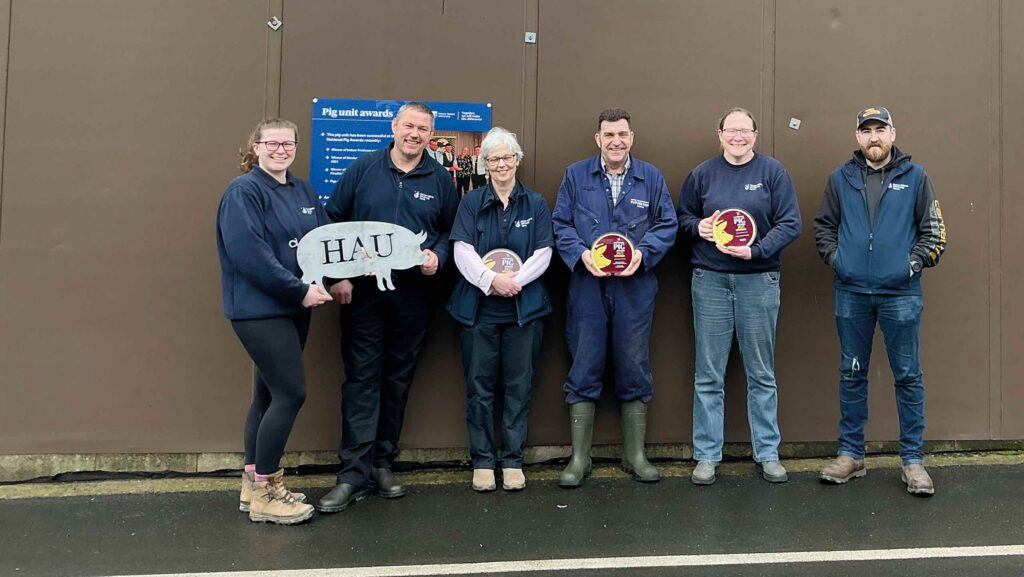
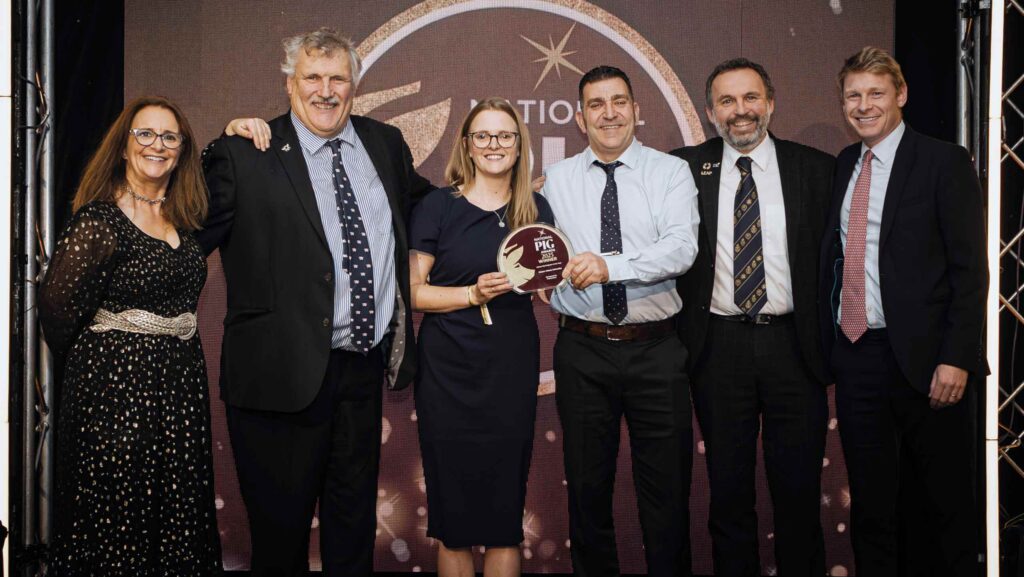
The 230-sow indoor farrow-to-finish herd at Harper Adams University is run by a team continually pushing to learn and improve, delivering fantastic results year after year, as recognised by a triple win at the 2025 National Pig Awards.
Breeding herd performance for 2026 to date has exceeded an average of 37 pigs weaned per sow per year, after the team picked up its third Herd Productivity Award, as well as its second Indoor Pig Producer of the Year award last year – underpinned by unwavering commitment to pig health and welfare.
Matt Swaine, the highly deserving winner of the Unit Manager of the Year award, explained that the university unit must stand on its own two feet commercially, while welcoming hundreds of students and managing numerous scientific research projects.
“Learning from others has always been important,” said Matt. “I started out as a stockperson, learning from senior colleagues, and I’m still learning from others now. None of us has all the answers.
“Everyone in the team is always pushing to find ways to improve on what we’re doing – we don’t settle for ‘good enough’.”
When Harper won the productivity award for the first time in 2022, the herd had achieved a 12-month average of 16.41 piglets born alive per litter, with 14.65 weaned, an average pre-weaning mortality of 10.79%, a weaning weight of 7.9kg at four weeks old and a total of 34.97 pigs weaned per sow per year.
The average figures for the first nine months of 2026 were 17.03 piglets born alive per litter, with 15.53 weaned, an average pre-weaning mortality of 9.21%, weaning weight of 8.5kg at four weeks and an impressive total of 37.71 pigs weaned per sow per year.
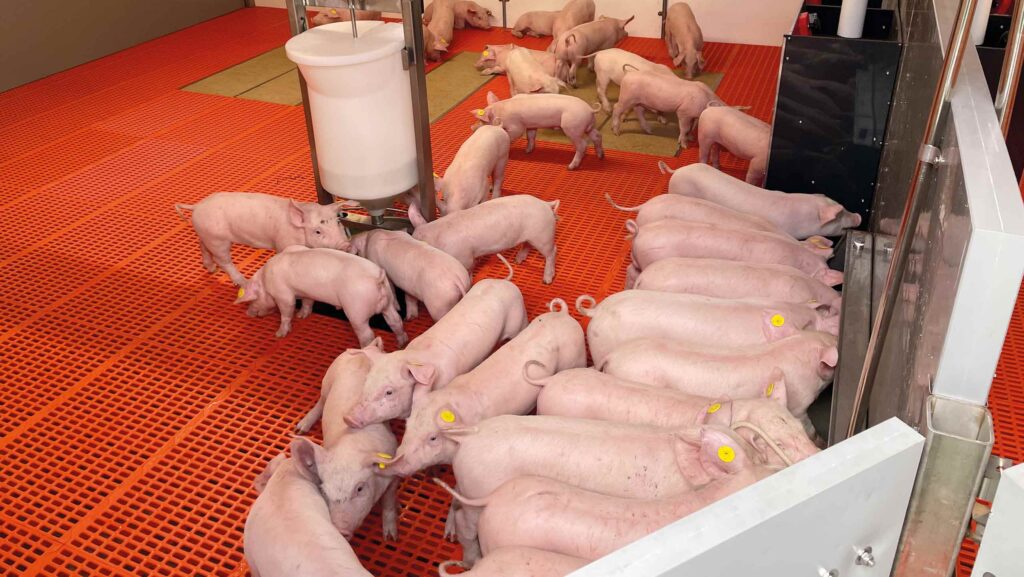
“Pigs like plenty of fuss,” Matt said. “We’re big on humanisation and spend lots of time with the gilts from about 40kg onwards. You can go in any pen on the farm and the pigs are happy to have humans in there. A happy, relaxed animal is a productive one.”
The team continues to tweak routines, especially in the farrowing department, including split-suckling and supplementary milk provision from birth, while they feed different lactation diets to the gilts and the sows, tailored to their needs.
Farm summary
- 230-sow breed-to-finish indoor herd
- Three-week batch system
- Closed herd
- Porcine reproductive and respiratory syndrome and enzootic pneumonia-free
- No zinc oxide used
- Tails left undocked
Coping with extreme heat
Evaporative cooling systems, which were first installed in the farrowing accommodation, have now been put in throughout the unit for dry sows, gilts, nursery and finishing pigs.
There is just one older dry sow house with natural ventilation without the system, so they used a mobile air conditioning unit in there this summer, Matt explained.
“This summer, we haven’t lost a sow or a gilt in gestation or lactation at all. Nor have there been any finishing or nursery pigs lost due to the heat,” he said.
“We have not seen any negative effect on growth or feed conversion ratio [FCR] over the hot summer in the finishers or the nursery, which must also be reflected in overall pig health.
“The nozzles are slightly above the air inlets, so the mist is cooling the air as soon as the fan draws it in. The mist is very fine, so it’s not wetting the environment, but it does help reduce dust a little.
“We’re only going to see more extremes of weather in future. The benefits of the system in managing heat stress are huge – it’s probably one of the best investments we’ve made, simply down to its welfare benefits, with the extremes of heat in summer, but also throughout the year.”
Most of the installation across the unit was supported by funding from the Farming Equipment and Technology Fund, with grants of about 40% of the total cost.
Ceva Academy
Marking the success of Harper Adams University’s pig unit at last year’s National Pig Awards, Ceva is highlighting a new Ceva Academy course in collaboration with the award-winning team.
Maximising Litter Weaned Weights is an exclusive course designed for farm owners, unit managers, field staff, stockpeople and anyone working within the pig industry.
The course combines expert insight from Alan Stewart and Sarah Icely, providing practical guidance on the key factors influencing litter weaned weights and overall piglet performance.
You can sign up for this free course through Ceva Academy to learn from the expertise helping to drive success across the industry.
‘Clear air’ project
After completing an air pollution abatement trial last year in their finishing accommodation for proof of concept, Harper is starting a follow-up project this autumn – partnering with ISCleanair Global Solutions, Ricardo Energy & Environment, the University of Nottingham and Defra.
It is using a filterless, water-based system within the building, and initial findings showed it to be highly effective in capturing pollutants from the air over a four-month period, reducing ammonia by 40%, methane by 34% and carbon dioxide by 22%.
“It’s a modular system that can be used in old and new housing and runs at a fraction of the cost of filter systems,” Matt explained. “The running costs of our previous air scrubber system were high at 0.95p/pig sold.”
Nutrient-rich water from the system can be used as a liquid fertiliser. During the next phase of the trial in the finisher accommodation, they will be monitoring water use, humidity, temperature, ammonia and carbon dioxide.
Soya reduction
An in-house soya reduction trial is also ongoing. Early data from three batches of finishing pigs in the trial have shown no effect so far on growth or FCR, with rapeseed meal and sunflower meal included in the rations as the alternative protein sources.
The trial compared three different diets: a control, a reduced-soya ration and a zero-soya ration. Matt feels confident about feeding reduced- and zero-soya finishing diets and believes it is quite feasible, as long as there is a good nutritionist to make sure diets are formulated to meet the pigs’ nutritional needs.
“The industry has to reduce its reliance on soya,” he said. “Our work is about understanding what we can and can’t do from a performance perspective and what sort of acreage is needed to grow alternative protein sources.”
That is one of the key hurdles for the industry to overcome. For example, an estimated 300 acres of ground would be needed to grow enough rapeseed meal for Harper’s 250-sow herd.
There is also the question of whether a premium would be paid for pork produced with reduced or zero soya.
Once the finisher diet trial data is published, the Harper team plan to start looking at alternative proteins to use in diets for breeding animals.
Farrowing investments
Matt explained that they would like to install flexible farrowing pens. However, space is too limited on the current site to allow for the increased footprint of 7sq m per pen they have calculated they would require, so plans are ongoing to develop the university pig unit.
“Other units are putting in flexible farrowing pens of 6.26sq m or 6.5sq m, but because of our high numbers of piglets born and reared, combined with good piglet weaning weights, we believe we would need 7sq m,” Matt said.
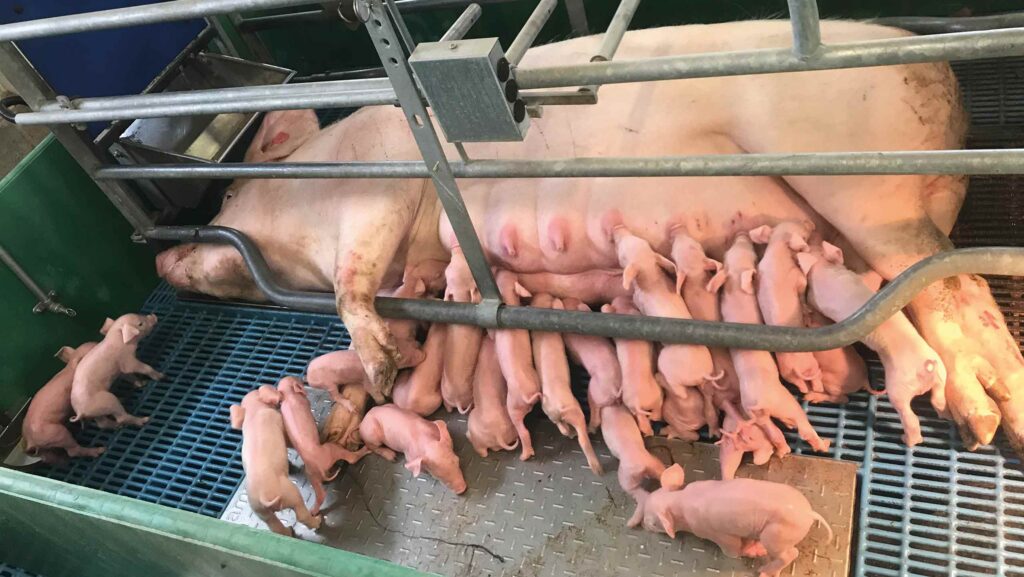
The unit currently has a combination of conventional farrowing pens and Nooyen crates, which have a ‘floating floor’ where the sow’s area lifts up or down when she stands or sits.
Harper’s data shows piglet mortality runs very low for sows farrowing in the Nooyen crates, at 3-5%. The manufacturer offers a flexible farrowing pen that includes the floating floor.
“When the time comes, we’d like to be able to keep the benefit of the floating floor for the first five days after birth, when piglets are more prone to lay-ons. Then, during the period when the pen is open, the floor would be flat.
“Everything we do in the next 10 years will be about future-proofing for even better welfare. In Europe they continue to go further on welfare and our standards have got to be on a similar level or better,” Matt explained.
“The difficulty is the current market. However, we still have to look to invest wherever possible, even during the bad times, because if you don’t, you end up without a business.”
Biosecurity focus
Health, hygiene and biosecurity have always been a focus on the unit. Matt has put in a proposal to install a biosecurity cabin with two showers to give staff the ability to shower in and out of the unit, to further improve biosecurity measures.
“All visitors must be 48 hours pig-free and wear overalls, boots, disposable face masks and gloves we provide. No one who has suffered from a cold or flu in the past seven days can visit. This is as a result of a previous flu breakdown in the herd ‘freshers’ flu’ season.”
This year, Matt has also asked that no students will be timetabled to come onto the pig unit until November, so hopefully that will lower the risk further. It is a closed herd and no livestock lorries are allowed into the unit. “Drivers do not come past the gate, and we don’t go on to the lorry,” Matt explained.
“With African swine fever looming over us, we have to be even more on top of biosecurity, all the time. We always do the basics, such as wearing clean overalls every day, disinfecting wellies before going into different buildings and our rodent control policy. These small things make a big difference.”
Top tips for unit management
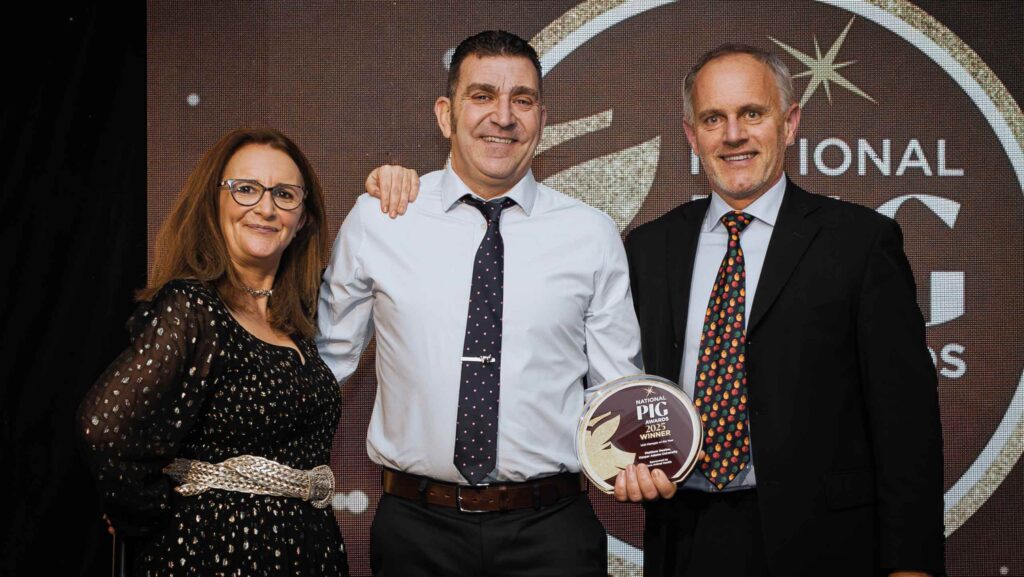
During his 35-year career to date, Matt Swaine has built a great depth of understanding of pig production, on both indoor and outdoor units. His advice for successful pig unit management is centred around consideration for the people who look after the pigs.
1. The team behind you is key
The team you work alongside is essential, whether they are new to the role and you are mentoring them, or it’s someone with the same level of experience.
A manager is only as good as the people behind them, and people are individuals. It’s really important to understand their strengths and look for where team members complement each other.
2. Give ownership and responsibility
Each team member knows what they need to do and I don’t micromanage. It’s more beneficial to give people trust, ownership and responsibility, while leading by example. You have to be on that unit every day, and I won’t ask anyone to do anything I won’t do myself.
3. Training opportunities
We arrange as much training as we can. Our vet does a lot of on-farm training with us during quarterly visits, and new starters are enrolled on AHDB’s stockperson development courses. We all try to go along to as many industry events as possible, including conferences and the British Pig and Poultry Fair, where there are always new ideas we can pick up to try out.
4. Attention to detail
As with any livestock, attention to detail in everything we do with the pigs has a big effect on their health, welfare and performance. We have clear protocols
and procedures that everyone understands to help make sure tasks are carried out correctly and consistently.
I share our pig performance and financial figures regularly, keeping everyone informed, including when times are worrying. We can only focus on what is within our control.
5. Be approachable
As a manager, you have to be approachable. I want people to ask if they are in any doubt and I always say there is never a silly question they can ask me.
Allowing some flexibility is important, too – for example, if someone needs to leave earlier. Having a chance to socialise, such as taking everyone for breakfast, also makes a difference. We have a happy team and that also benefits the pigs.
