

It’s not just the UK. There is uncertainty about the future of pig businesses across the EU at the moment as low prices, regulatory pressures and African swine fever (ASF) take their toll.
But nowhere are producers more under pressure than in Denmark. Pig prices have tanked dramatically in recent months. The Danish reference price (S-grade) has stood at about £1/kg since early August, a loss of 33p since early June and nearly 50p below other major pig-producing countries, except the Netherlands, AHDB comparisons show.
This is partly driven by the problems encountered in the global marketplace for Denmark’s biggest pig processor, Danish Crown, which has been hit, for example, by China’s reduced demand for pork shipments from Europe, at a time when there is already a surplus of pigs in Europe.
But even a desperately low pig price and heavy losses aren’t the biggest talking point in the Danish pig sector right now. Far-reaching reforms proposed by Denmark’s coalition government will, if implemented, transform the country’s pig sector, changing its practices and significantly reducing its scale and role as an exporter of live pigs.
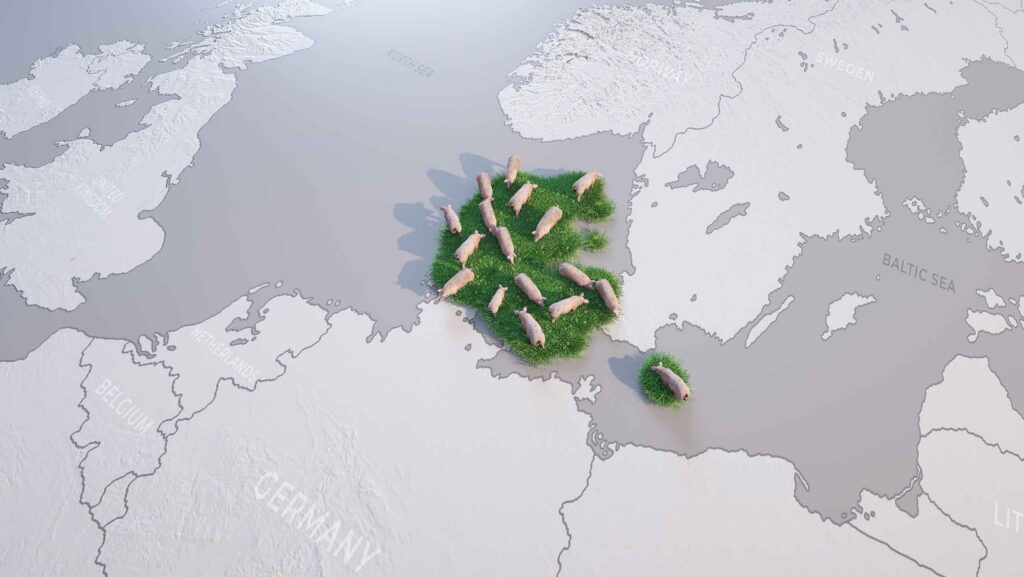
The context is the huge economic, cultural and political importance of Denmark’s pig industry. Its pig population stood at 12 million head in 2025, behind only Germany and Spain in Europe – and double Denmark’s human population.
It produced 32 million pigs last year, with 85% of production exported to more than 140 countries, including large volumes of live pigs at about 30kg going to Germany and Poland. China is a key pigmeat market.
Pig production makes a big contribution to Denmark’s economy, accounting for nearly 30% of its total agricultural value and roughly 25% of its food exports.
However, the intensive pig sector, which leads the way in Europe in productivity, has its detractors, with some NGOs and politicians long raising concerns over its environmental impact and the welfare standards within its intensive pig-rearing systems.
Such is the significance of the debate, this year’s election was dubbed the ‘Pig Election’, as prime minister Mette Frederiksen pledged that her left-leaning coalition would pursue radical reform of the industry.
She was elected for a third time in April and, true to her word, the new coalition government duly made its intentions clear within a few weeks of coming into power, unveiling a programme it describes as a roadmap to create the ‘greenest government’ in Denmark’s history.
This includes proposals for a new pig industry framework that have shaken the sector to its core.
“I hardly dare say it, but we got more than we asked for,” said Britta Riis, the head of Animal Protection Denmark, according to the Guardian. “We made pig farming a top political issue. And we’ve won immediate, and systemic, change.”
The reforms
The most symbolic move, for a country with such a rich farming heritage, was the abolition of Denmark’s Ministry of Food, Agriculture and Fisheries after 130 years of existence. Its responsibilities are to be shared among five different ministries, including a newly established Ministry of Nature and Animal Welfare.
The pig sector is the main focus of the reforms, with a stated aim of shifting away from the export of live pigs. Instead, the government wants to focus on producing higher- welfare, more environmentally friendly, higher-value food products within Denmark for domestic consumption and for pigmeat exports. Policymakers believe this will do more to strengthen the national economy.
There is a big focus on welfare, including:
- Phasing-out pig tail docking by 2030. Financial incentive schemes are already being trialled to encourage producers to rear pigs with intact tails
- Increasing minimum weaning age from three to four weeks
- Banning permanent confinement of sows in individual stalls and ‘full implementation’ of group housing by 2035
- Increasing space allowances
- Reducing long-distance transport of live animals
- Accelerated conversion to organic farming systems
- Further restrictions on antibiotic use.
In September, the government introduced a ban on planning permission being given for new pig units being built or existing ones being expanded for the next 12 months, with longer-term plans being developed to restrict expansion.
Various proposed environmental measures will have a direct effect on the pig sector, including the introduction of a carbon tax on livestock farming by 2030 as part of Denmark’s wider climate strategy.
These reforms include measures to increase land dedicated to wildlife and nature restoration, with about 390,000ha expected to be converted into forests, nature reserves or wetlands.
The pig sector is expected to play a central role in achieving Denmark’s emissions reduction targets, with continued investment in technologies to improve manure management and emissions mitigation likely to be required, according to AHDB.
There is a major national focus on water quality, with far-reaching proposals to cut the legal limit for nitrates in drinking water from the EU-wide standard of 50mg/litre to just 6mg/litre. This could have huge implications for the spreading of slurry on farmland.
This is alongside banning crop protection products in vulnerable areas.
Developing the plan
A stakeholder working group, dubbed a ‘pig quadripartite,’ with representatives from government, agricultural and food organisations and environmental and animal welfare groups, has been put together to develop the radical proposals.
The group has been asked to do so within six months, although there are already questions about whether this is a realistic timetable. If they fail to reach an agreement in that timeframe, the government has reportedly indicated that it is prepared to force the measures through.
Industry anger
The proposals have inevitably prompted widespread anger within the Danish pig sector, which fears for its future competitiveness.
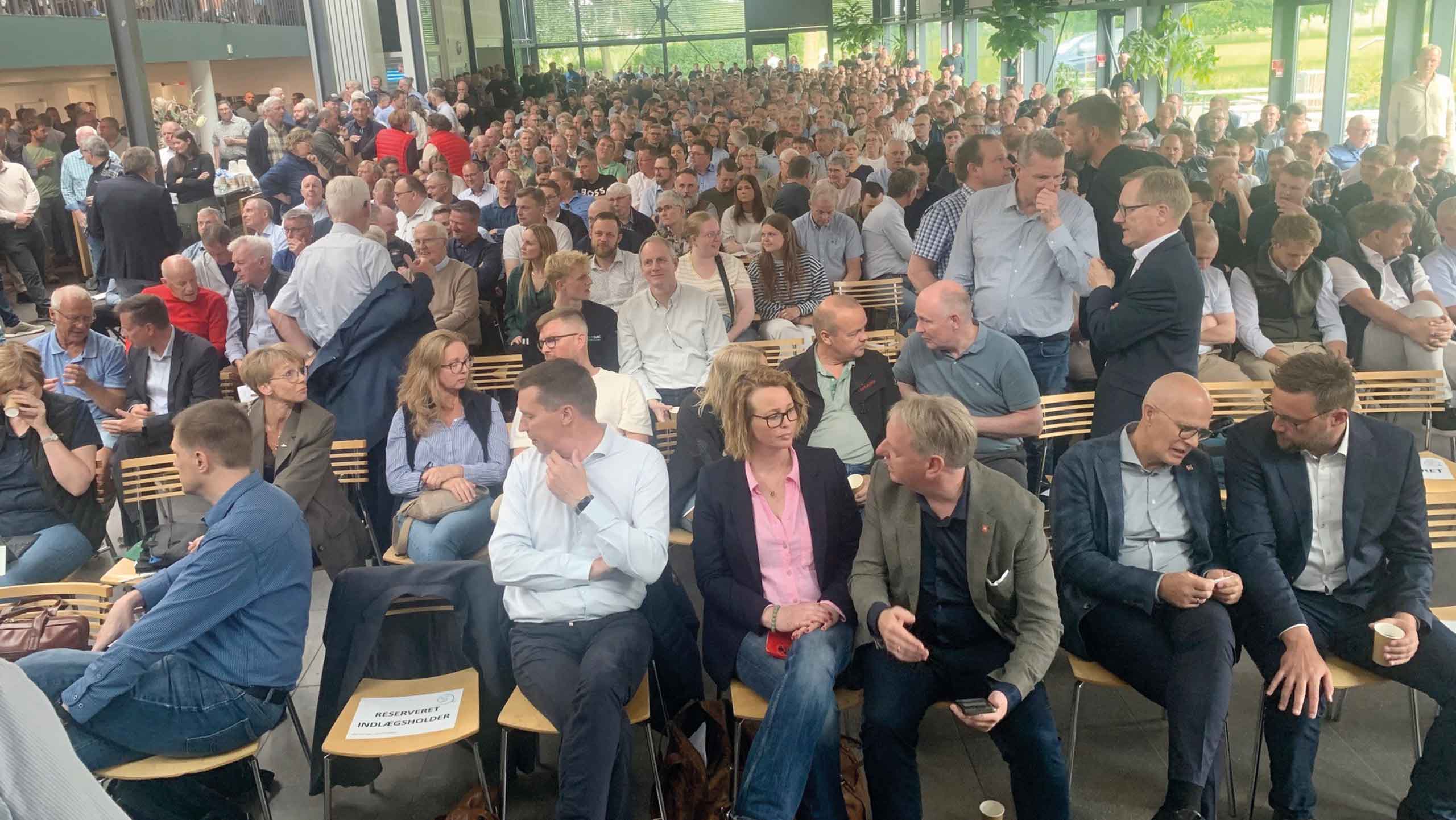
Back in June, 750 people from across the industry attended a crisis meeting organised by Danske Svineproducenter, the Association of Danish Pig Producers, near the town of Horsen. Attendees included the Danish Agriculture and Food Council (DAFC), Sustainable Agriculture and pork processor Danish Crown.
The association’s chairman, Jeppe Bloch Nielsen, described the government’s plans as ‘crazy’. “The fact that there are so many of us today says something about the seriousness of the situation,” he said.
He stressed the importance of ‘a unified industry standing together to make politicians understand that pig production should not be reduced, but instead developed, and the many efforts that are already taking place should be continued’.
Director Per Bardrum said the proposals amounted to a ‘significant restructuring of our production’, including rearing pigs primarily for domestic consumption and halting new expansion. Other speakers warned that the planned framework would push up food prices, an issue, it was pointed out, that opinion polls showed was more important than ‘drinking water and pigs’.
Leif Wilson Laustsen from DAFC urged politicians to ‘consider the consequences for the many jobs and companies that depend on raw materials from Danish agriculture’.
HC Gæmelke, chair of the council’s pig sector, warned that the new policy could lead to lower production volumes, job losses in farming and meat processing and reduced export revenues. However, the organisation has expressed a willingness to engage in dialogue with the government and ‘seek solutions that would modernise the industry without dismantling it’.
Professor of law and former High Court judge Frederik Waage discussed the legal aspects, suggesting that the goal of reducing the export of piglets was ‘clearly contrary to EU law’, while bans on tail docking and establishing new units may also be.
Danske Svineproducenter has since announced its intention to challenge certain elements of the reform and assess their compliance with EU legislation.
Industry representatives have also highlighted how Danish producers are already investing heavily in modern farms, new technologies and improved animal welfare standards, and therefore want to be partners in a reform process.
Organic perspective
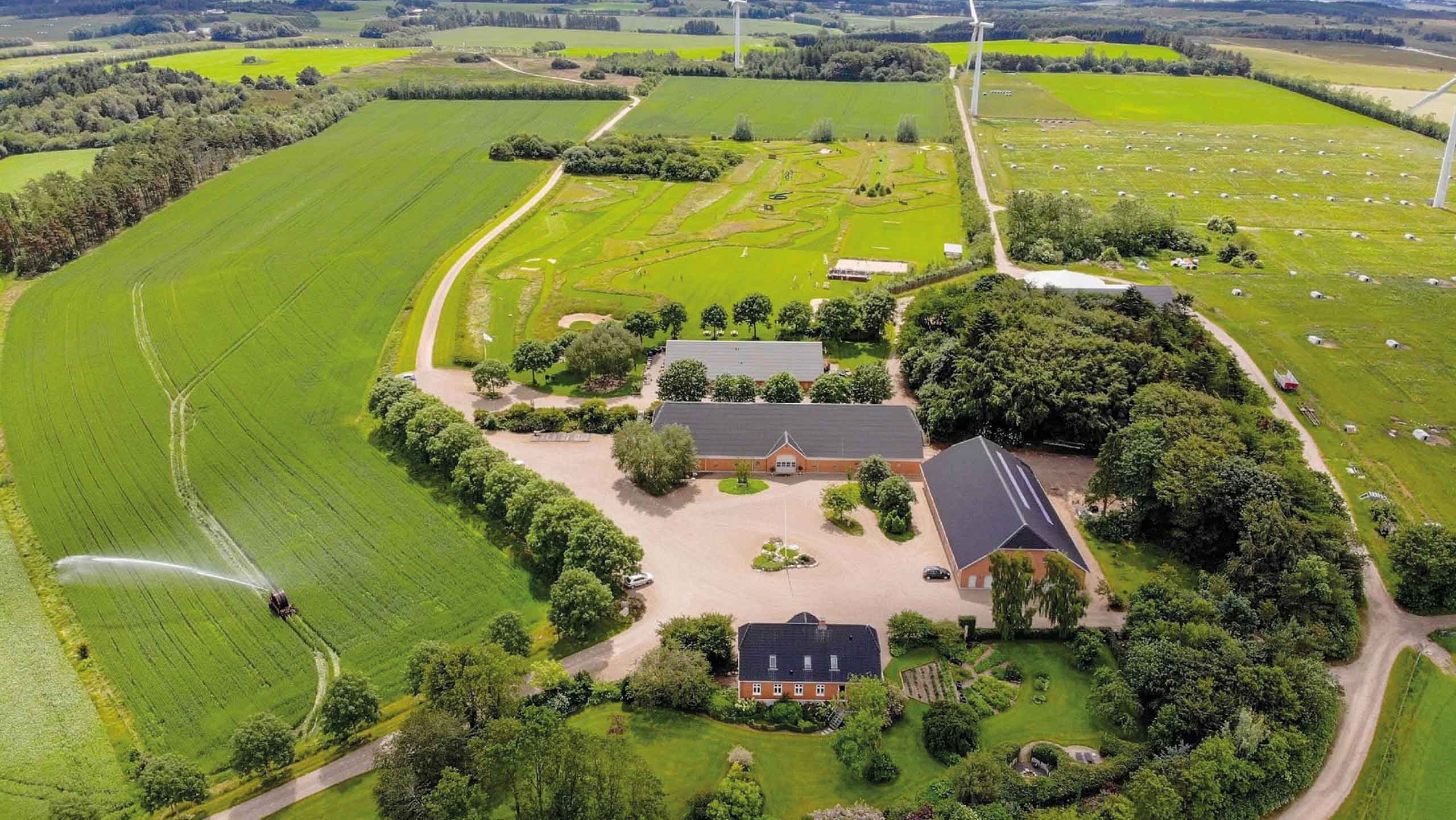
There is a small organic pig sector in Denmark. One of the pioneers is Emil Madsen, who keeps 550 sows producing 16,000 weaners annually outdoors in Northern Jutland.
Emil, who has spent time in the UK, recently bolstered his business with the acquisition of pig arks from Con-Tented, specially adapted to cope with Danish winters.
Farms like Emil’s could be seen as the big winners in all this. But he is also deeply concerned about the effects of the proposed reforms on his business and the wider sector.
He said the ‘biggest threat for all farmers’ was the proposed reduction in nitrogen limits for spreading on land. “Farmers are already doing a lot of good things for nature and water quality, and everyone wants their animals to be happy,” he said.
Danish pig sector
Figures from the Danish Agriculture and Food Council show that in 2025:
- Denmark produced 31.8 million pigs, up from 30.9 million in 2024
- The total pig population grew from 11.61 million to 12.02 million
- Slaughter numbers increased from 14.3 million to 15 million. The rest were exported live
- Live pig and pigmeat exports grew from 1.79mt to 1.88mt, including pigmeat exports of 1.35mt
- 876,000t of live pigs were exported to Germany and Poland
- The number of pig farms fell from 1,949 to 1,706 – compared with 5,000 in 2010
- Pigs produced per sow per year increased from 35.6 to 36.9.

“But we face a situation where the government wants to go in and change the rules for just one country. This could put our farming businesses in a really bad position compared to our European friends, because we can’t provide the same amount of nutrients for the land and find a use for our slurry.”
For indoor pig producers, he said an outright ban on tail docking could be extremely difficult to implement and potentially create a bigger welfare problem. “The conditions now in our stables are not fit for longer tails, as you need a lot of space to prevent tail biting,” he said, adding that German and Polish importers would also be unhappy to receive pigs with intact tails.
Emil said the proposed framework had ‘divided consumers’ and was already having an effect on Danish producers. He predicted it would accelerate the ‘natural decrease’ in pig farm numbers, leaving fewer but probably bigger farms.
While he may see some longer-term benefit, he stressed that the government’s drive to push Danish pig production towards businesses like his are misguided, as consumers are not on board.
“Voters have voted and they called it the ‘Pig Election’ this time – they want something done about animal welfare and the environment. The problem is that they are not buying what the votes say they want.
“The Danish citizen is very price conscious – we don’t like to pay a lot of money. This is being done without creating a market for the higher-value pork produced from systems like mine, which is too expensive for most people in Denmark.”
He pointed out that the Danish pig sector has been built on the export market, with a big focus on efficient production and cheap pork for domestic and competitive export markets, going back many years.
“So, it is not farmers’ fault that what we have now is not meeting some customers’ expectations,” he added.
He said plans from the government to regulate to reduce taxes on organic produce and make it easier to start up businesses as a young farmer should make outdoor and organic pork more affordable. And as people get richer and more conscious about what they eat, demand might start to grow.
“But we need to talk with voters and the consumers, otherwise we will create pig businesses with no market. We need to establish the market before we reform the industry.”
Wider implications
The wider implications of these proposals extend way beyond Denmark, given its position as one of Europe’s biggest pork exporters. More than one-fifth of UK pigmeat imports come from Denmark.
There is, of course, no knowing at this stage how far the reforms will go and the full effect on Danish production.
“Any reduction in Danish pig production and exports could tighten pork supplies within Europe and affect major importing countries, including the UK,” said AHDB livestock analyst Adam Chowdry. “This could create opportunities for UK producers if buyers seek alternative sources of pork.
“However, the Danish government has indicated that the sector will continue to target exports of higher-value products, meaning the effect may vary by product category rather than resulting in a broad reduction in Danish supplies.”
He also suggested that Denmark’s approach may influence the direction of future agricultural policy elsewhere in Europe, as governments increasingly seek to balance food production with climate and environmental objectives.
“Denmark’s experience could provide an important case study of how environmental ambition, animal welfare and international competitiveness can be balanced within a modern livestock industry,” he said.