




Cranswick has published a new report highlighting the contribution it makes to the national economy, including the farming sector, the provision of jobs and the UK’s food security with a wide range of healthy, sustainably-produced products.
The report, ‘Where Great Food Comes From’, sets out how the Hull-based business now supports a total of 49,900 jobs in the UK, while also contributing £3.3bn GDP to the UK economy and generating £850m in UK tax contributions last year.
The business, created in East Yorkshire in 1975, has now grown into one of the UK’s leading food producers, working with over 900 British farmers. The report, published at a time when many pig producers are struggling, sets out the wider long-term contribution the company makes to the farming industry.
For example, it spends over £500 million each year with more than 900 farmers across the UK. The integrated company currently farms around 20% of British pigs and processes more than 32% of British pork. Through its sites and farms in East Anglia, it produce more than 7% of the UK’s chicken, while it also purchases 11,500 tonnes of British grain per week.
Food security
The report highlights Cranswick’s contribution to food security and the provision of healtthy diets through sustainably-produced food.
It notes that Britain currently imports more than a third of the food it consumes each year, including half of the pork consumed, pointing out that 96% of the British pork it produces is for UK consumers.
The report also sets out the health benefits which are associated with pork and chicken. According to analysis carried out by AHDB, buying fresh meat significantly increases purchases of fruit and vegetables, with shopping baskets that contain red meat or chicken almost twice as likely to contain fruit or vegetables.
Cranswick has modelled different ways of creating a balanced meal – comparing the diets recommended by the UK Eatwell Guide and a healthy, balanced meal based on World Trade Organisation (WHO) guidelines. “A protein rich plate, with the largest portion of lean meat, delivered the greatest nutrient and calorie density whilst providing double the protein of the Eatwell Guide and still providing around a third of the recommended fibre intake,” the report said.
The report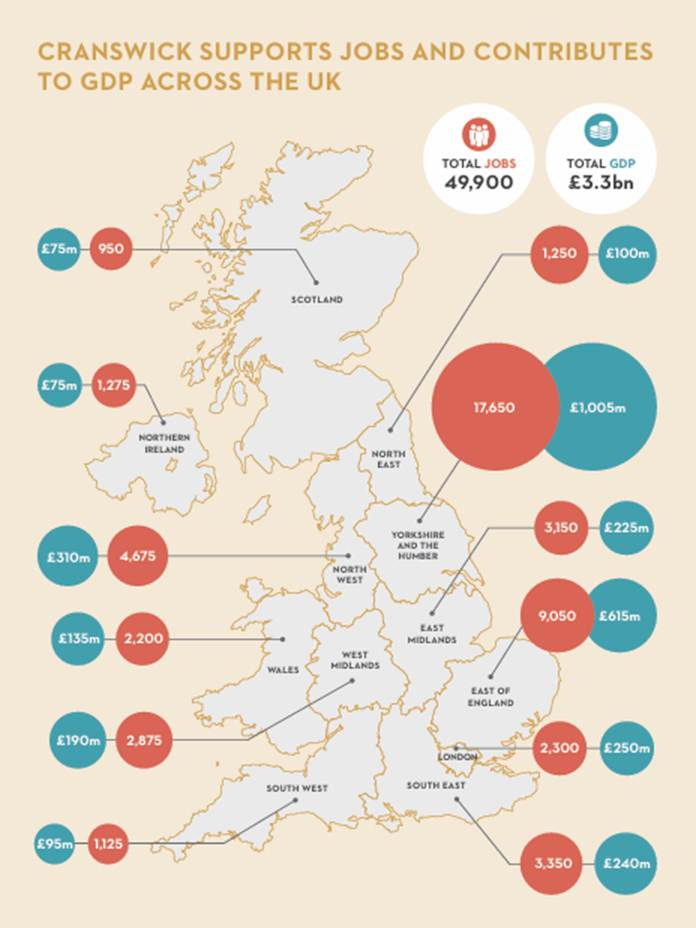 draws on research and analysis carried out by Oxford Economics. Key findings (to the end of the 2025-26 financial year, include:
draws on research and analysis carried out by Oxford Economics. Key findings (to the end of the 2025-26 financial year, include:-
- Cranswick contributed £3.3 billion to UK GDP, including over £1bn GDP in Yorkshire and the Humber;
- It directly employs over 16,500 people and supports 47,600 jobs outside London – including 9,000 across the East of England and 17,650 across Yorkshire and the Humber;
- The company helped generate £850 million of UK tax contributions – enough to pay for a new hospital every year – including £160 million of direct taxes paid to the Exchequer through corporation tax, National Insurance contributions, income tax, business rates, and custom duties;
- It employs over 1,250 young people under 25, including over 300 apprentices; and
- Every year, it aims to reinvest 50% of our EBITDA back into the UK, and in the last five years we have invested over £570 million into its operations.
Driving prosperity
Cranswick chief executive officeer Adam Couch hailed the role of British meat production in driving ‘economic prosperity, boosting food security and creating jobs in nations and regions across the UK’.
“Cranswick was formed in 1975, founded on the entrepreneurial spirit of a group of farmers. We are proud to have become a cornerstone of Britain’s food industry,” he said.
“Today, our products are available in most major supermarkets, helping consumers access high-quality British food that is traceable, nutritious, responsibly produced and affordable. One of the great strengths of the UK food system is the strong supply of food produced right here in the UK.
“This matters for many reasons, and one of the biggest is the lower environmental impact of sourcing meat here in the UK. We have produced this report to show the role Cranswick plays in this food system, and to contribute to a national discussion about the future of food.”