



North Farm Livestock (NFL) is, first and foremost, a family business. But as it continues an upward trajectory that has seen it become one of the UK’s most significant pig businesses, it is determined to stick to the principles that have got it this far, according to Todd Baker, one of its managing directors.
The deserving winner of the 2025 Outdoor and Overall Pig Producer of the Year awards is something of an outlier in the British pig sector, although many of the drivers behind its success are relevant across the sector.
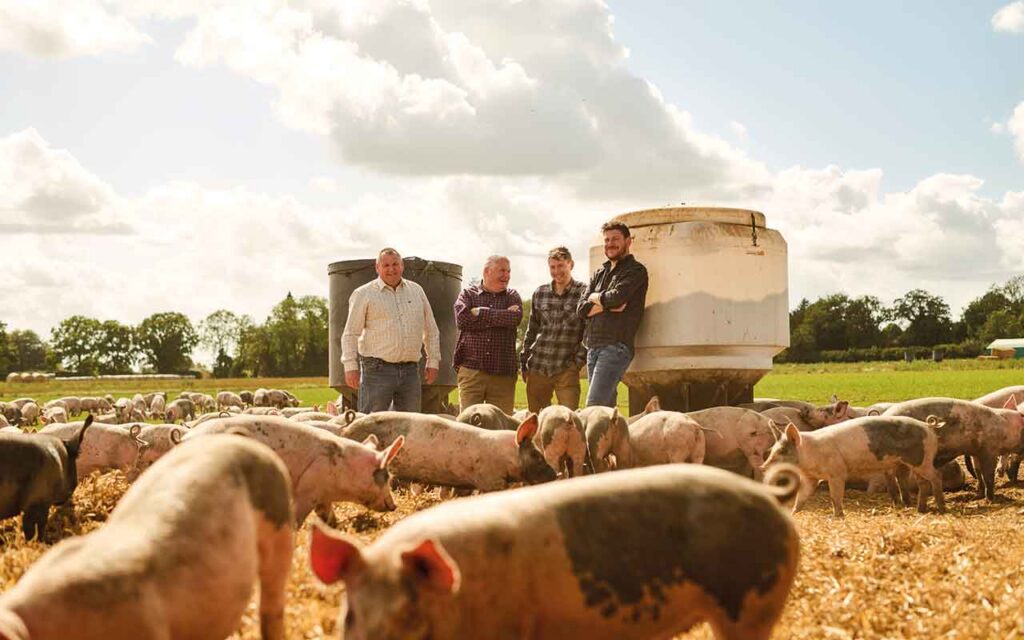
Based in Norfolk, NFL is the UK’s biggest free-range pig business, supplying all its pork, via Pilgrim’s Europe, to Waitrose, which made a ground-breaking commitment in September 2025 to source 100% free-range own-label British pork by the end of 2027.
It is a sizeable operation, having grown from modest origins more than 40 years ago to running more than 7,000 sows today. Recent investment doubled the size of its free-range operation in 2025.
It works with numerous landowners and farmers and employs more than 100 people who breed, rear and finish its pigs.
NFL’s leadership team is made up of two generations of the Baker family – Michael has led the production operation for more than 20 years, while his brother, Ian, who joined after working in Barclays’ agricultural division for more than three decades, is responsible for financial oversight.
The next generation down, Matthew and Todd, have focused on growing the business and driving progress – Matthew in NFL’s procurement and vehicle fleet and Todd in HR and the transition to more environmentally sustainable farming methods.
“As we become a business that continually evolves and grows, it is about making sure we are robust enough to operate at a much bigger scale without losing the core character and values that made us successful in the first place,” Todd said.
NFL – in summary
- UK’s biggest free-range pig producer
- Supplies Waitrose via Pilgrim’s Europe
- 7,000 sows across six owned and agisted single-parity breeding herds
- Employs about 100 people
- Works with about 50 farmers and landlords
- Averages 28 pigs weaned/sow/year
NFL structure
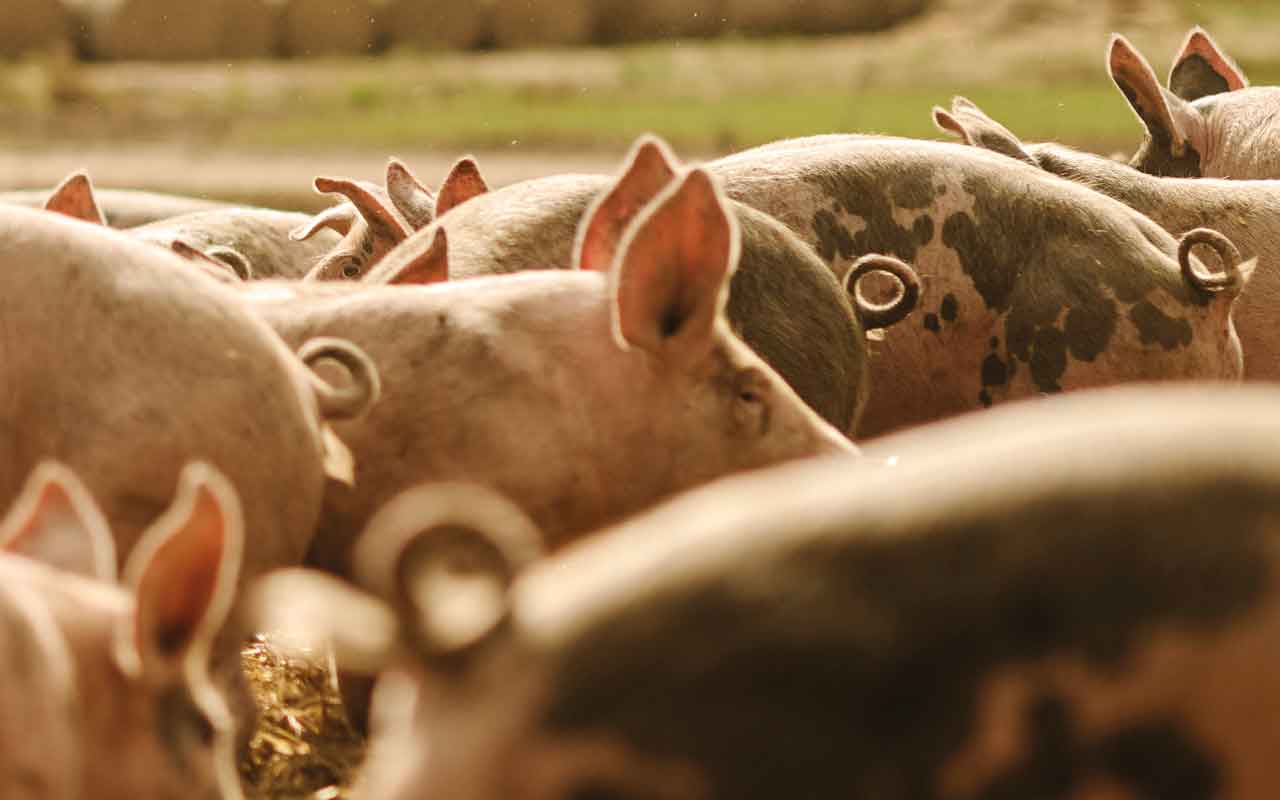
NFL’s gilt mating unit, which uses PIC Camborough 22 genetics, supplies six single- parity outdoor breeding herds, four of which are staffed by NFL employees and two that are agisted.
A further two herds, run by another former National Pig Awards winner, Richard Mellor, will be coming into that system on an agister basis.
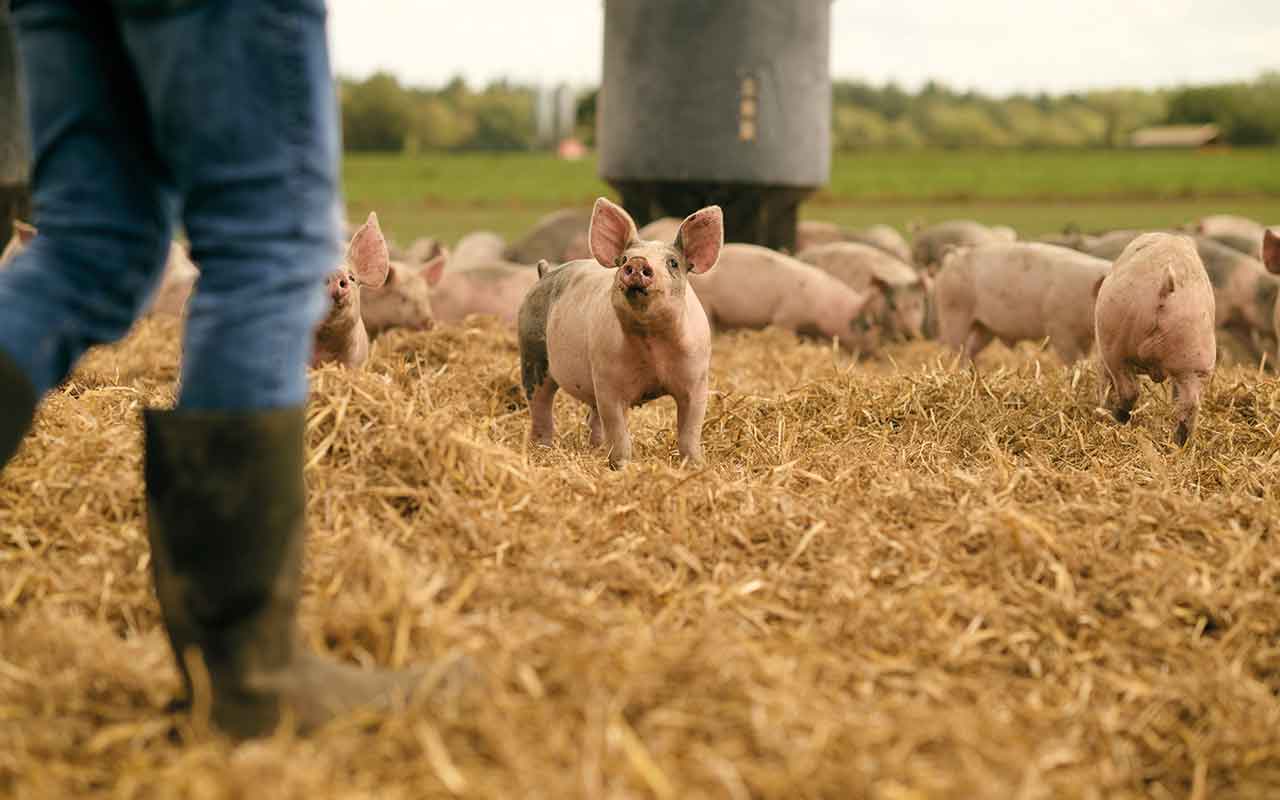
“It’s an all-in, all-out system. We fill the finishing site, close the door and grow them all the way through,” Todd said.
NFL has been working with some landowners for decades. For the past 18 months, as Waitrose’s growing commitment to free-range has driven NFL’s expansion, the business has been looking for new landowners, generally arable farmers who want to add pigs into the rotation, from large estates through to small family farms.
It has recently added more land in its core area in north Norfolk and to the west and south of the county, as well as moving into Lincolnshire and Suffolk.
“We take anywhere between 50 and 200 acres in a rotation. We’re there for two years on a free-range site or two-and-a-half years on a breeding farm before we move to a new site in that landowner’s rotation.
“We alternate the paddocks. We set up a field in a checkerboard system where you start on the ‘A’ paddocks. When those pigs go off, we move the kit to the ‘B’ paddocks, so paddock A rests and the grass we have drilled re-establishes,” Todd explained.
“On most of our farms, we are effectively renting the field from a farmer – it’s our staff, our kit and our inputs. In some cases, the farmers prefer to manage the stock, although we will still provide housing and equipment.
“A big focus for us is making sure the landlords we have worked with for 30 years know we’re still a family business and that we are still at the end of the phone to them, even if we’re now working with more than 50 landlords, rather than five.”
Team strength
Todd stressed that the success of the business is based on the strength of the team. “Plenty of the family members are involved, but we’re really fortunate that, around that, we have a core of skilled and committed staff,” he said.
Among those are Eddie Clarke, the 2025 Stockperson of the Year, who has been with NFL for 25 years, and finishing director Ashley Hewitt, who joined NFL at 17 without any pig experience and worked his way up to lead this part of the business, after being mentored by Michael.
“While we want to keep the family feel of the business, we are also showing that there isn’t a ceiling on aspirations as we grow as a company,” Todd said.
Last year, well-known industry figures Rob McGregor, who has managed outdoor units, and Steve Furniss, formerly of PIC, joined the company.
Todd acknowledged that recruitment can be a real challenge, but said NFL had generally been successful in increasing staff numbers to build its teams over the past 12 months, including bringing in ‘some really good young people from a range of backgrounds’.
Training and investment in people are key, with staff usually doing some of the AHDB courses, alongside internal training from long-serving staff members.
“We try to introduce a baseline skill set to ensure new starters reach a level where they can move on and work more independently within the team structure. Our business is, in many ways, unique, so that internal training is essential,” Todd said.
Refining good practice
Another key to NFL’s success is continual improvement – ‘marginal gains’ over many years. “Michael has been refining this outdoor production model for the best part of 25 years,” Todd said.
“A lot of what we’re doing is the practice of, again and again, refining it and finding out what works so we can drive efficiency in simple things such as the position of the water troughs or feed hoppers in the paddock.”
Warming to the point, Michael highlighted NFL’s approach to weaning. “They’re weaned in the morning and in our finishing units, sexed and vaccinated, about four hours later. That is a really key thing. If you can do it all in one day, it’s going to result in less stress and better health.
“The free-range finishing team focus on getting the first three weeks of a piglet’s time on the finishing farm right, giving them everything they need and looking after them.
“Get that right and we can reduce the finishing period by up to 10 days. We give smaller piglets their own pens, so we can give them a little bit more creep feed and electrolytes in the water to help them thrive.”
Challenges
One reason why free-range production remains relatively unique in the UK is the challenges for livestock and staff presented by the UK’s increasingly varied weather, something those rearing pigs indoors do not face.
“Exposure to the elements is getting more extreme. Freezing winter days mean more work, for example, in terms of water pipes freezing and in getting around the site while, at the same time, trying to lessen our impact on the land,” Todd said.
Michael added that the extreme heat presents a greater challenge in terms of looking after the pigs.
“We always say the best stockman is a proactive one, so getting your wallows ready and getting your ventilation right is key to coping and ensuring the pigs keep growing. We participated in a Pilgrim’s Europe research project on pig shades and have now started rolling that out across all our outdoor breeding farms.”
Todd said: “But it’s a trade-off – we firmly believe that, overall, this is a high-welfare system that does right by the pigs.”
Linked to this is the challenge of keeping costs down and producing pigs kept outdoors for their entire life efficiently. “Historically, there is a perception that outdoor pigs are less efficient. But, from our own evidence, we would say that is not necessarily the case. Our figures would be very competitive with some indoor farms,” Todd said.
To highlight the point, NFL is currently averaging 28 pigs/sow/year as a rolling average across all its herds, with 12.14 pigs weaned/litter – impressive enough for any business, let alone a free-range operation.
Figures have improved across the board since the awards entry nomination, including a 4% year-on-year improvement in the free-range system’s feed conversion ratio and improvements on the previous average daily liveweight gain figure of 803g.
Sustainability
There is a big focus within NFL on sustainability and looking after the land, including grass seed planting, resting paddocks between batches and setting up farms to encourage biodiversity
“We are very conscious of making sure we are a positive asset for the landowner. We work hard to manage rotations to get the best out of the land, but we also focus a lot on peripheral services like making sure gateways are being maintained and we are keeping mud off the road,” Todd said.
“When we come off those fields, we have full-time employees whose sole role is to level the land ready to go for the next rotation. We have an environmental survey done, which gives us a sense of how we need to set up the paddocks to manage surface water.
“For example, we might need to leave a buffer strip or drill grass if there’s a slope, before we go onto the field.
“I’m very proud of what we do, but we’re still looking to add those extra marginal gains. It is a constant evolution. We firmly believe there is a way you can have outdoor pigs farmed sustainably in a high-welfare system that works for all.”
Waitrose commitment
Another reason free-range production remains relatively small-scale is limited demand for pork produced in this way, sold with a premium. This is where Waitrose has put ‘clear blue water’ between itself and other retailers.
“They believe their consumers are very conscious of where the food they’re eating comes from and have an appetite for that level of animal welfare commitment,” Todd said. “Historically, those consumers put a lot of faith in Waitrose to do the hard yards. Clearly, they believe there is a commercial benefit to them.”
The long-standing contract with Pilgrim’s Europe covers a range of factors, including cost of production, and helps to deliver long-term certainty to the company.
While NFL’s free-range business model is unique, Todd believes its ‘positive long-standing relationship with Pilgrim’s Europe and Waitrose’ is something that could be replicated more widely across the pig supply chain.
“It’s given us the confidence and the ability to push on and deliver growth. We’re very aware that while we’re on a trajectory as a business, that is quite an anomaly within the sector at the moment.
“And that’s because Waitrose has made a commitment to free-range and we are able to support it in delivering it. We’re committed to doing everything we can to make sure that continues and our growth is sustainable and done in the right way.”
Michael added that NFL’s current position is underpinned by many years of hard work to develop and refine systems, with single- parity breeding herds to maintain pig health and get the best growth out of the free-range finishers.
“We try to get those marginal gains every year and keep pressing forward.”
Industry reputation
Todd said the company goes to great lengths to maintain good relations in its core production areas – for example, by sponsoring local shows – and is keen to work with the wider sector to promote the industry in a positive a light.
“Every part of the sector has a part to play in supplying pork for different sections of the market,” he said. “I think we need to come together across indoor, outdoor-bred, free-range and the rest to figure out how we tell the positive story of the sector as we go forward. Something like 70% of the farmers in the UK are over 55.
“We need to attract the next generation by telling a positive story and showing it as an industry they want to be a part of. Yes, there is a lot of pressure on the sector to improve in certain areas, and it needs to be the next generation that drives that.”
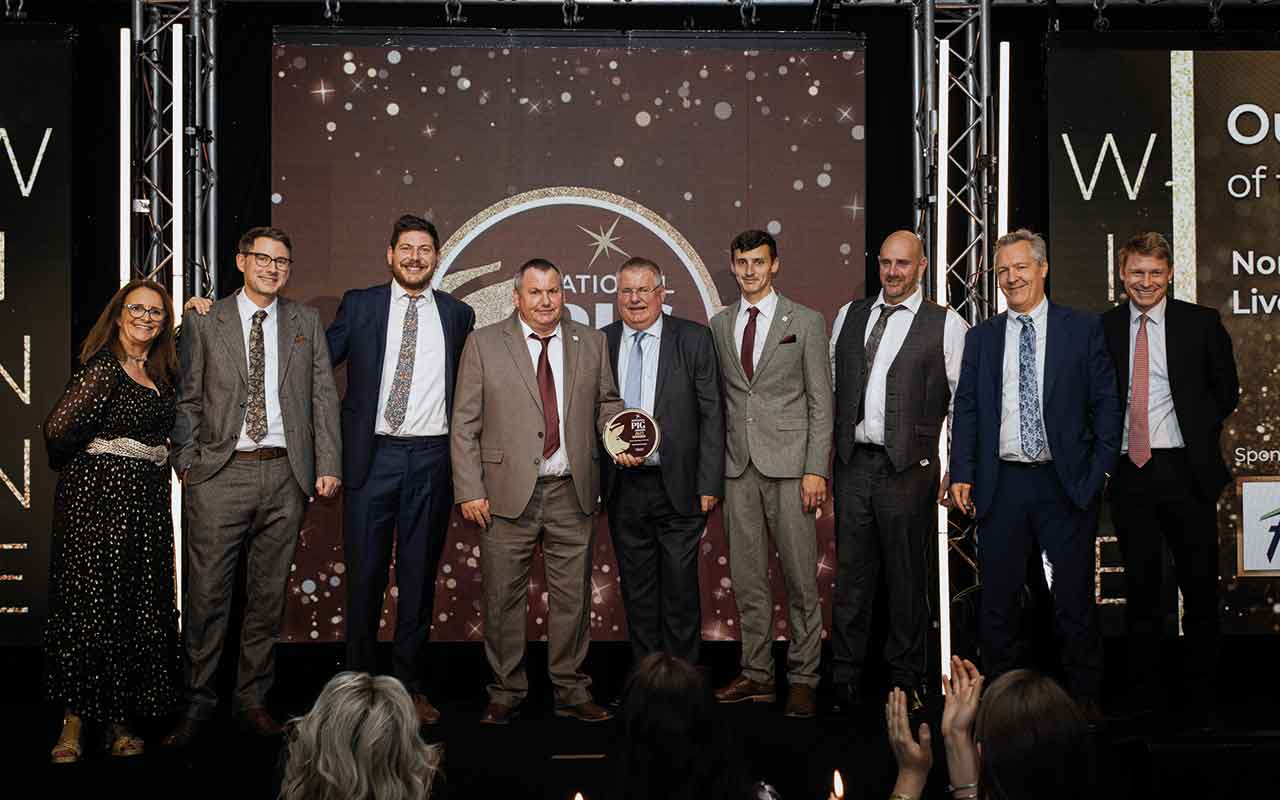
He said winning the award was a ‘big boost’ for the company. “There were 20 of us there. It’s a reward for everyone within our team for all the hard work they do. It’s nice for the team to be recognised for what they’re doing, not just by us, but also by the wider industry.”.