



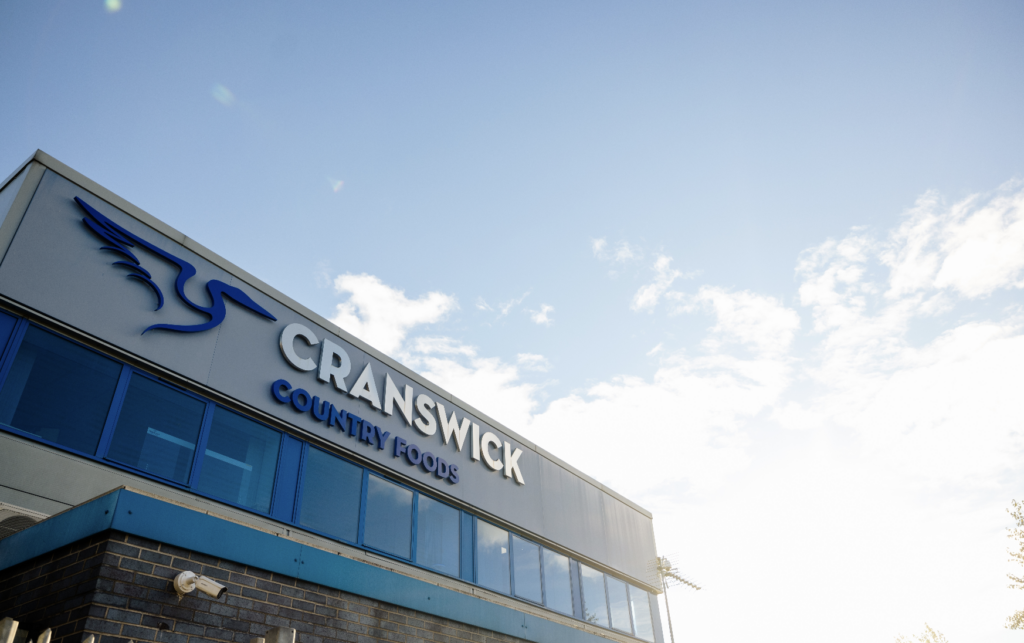
Cranswick grew its pig herd by 6.5% in the last financial year, as it delivered another strong financial performance, driven partly by the performance of its fresh pork products.
In the year to March 28, the Hull-based food business grew its revenue by 9.5% (6.8% like-for-like) to fractionally short of £3 billion (£2.98bn). Profits were up by 14.5% to £237 million.
Revenues grew across all categories, supported by the continued ‘outperformance of premium added-value product ranges’ and a record Christmas trading period.
Revenue from UK food was ahead by 9.4%, underpinned by volume growth of 8.3%. UK food volume growth accelerated from 7% in H1 to 9.5% in H2, driven by the performance of fresh pork and gourmet products. The uplift in H2 UK food volumes offset modest price deflation as lower input costs were reflected in selling prices.
Poultry revenue grew by 13.9% and now represents 20.3% of group revenue. Gourmet products revenue was ahead by 15.3% following the acquisition of Blakemans, while pet products revenue was 29.8% higher due to growth of the Pets at Home relationship.
Pork performance
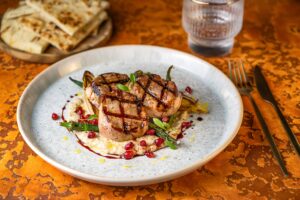 Fresh pork revenue increased by 3.7% year-on-year, representing 22.9% of group revenue. Growth was volume-led across retail, wholesale and export channels, underpinned by ‘sustained consumer demand for pork as an affordable and naturally protein-rich choice’.
Retail and wholesale volumes were 7.9% ahead, with revenue up by just 3% due to lower pricing, particularly in wholesale markets, ‘as the year-on-year reduction in pig prices flowed through’.
Strong retail demand continued, supported by pork’s relative affordability and a sustained consumer switching into fresh and added-value pork products. “We continued to drive premiumisation in the category through the use of bespoke genetics, delivering enhanced intramuscular fat levels and improved eating quality in premium retail ranges,” Cranswick said.
Export revenue was 4.6% down year on year, despite higher volumes, again due to lower pricing.
Pig herd growth
One of the key take aways from the latest update is how the company continues to grow its pig herd. Finished pig numbers increased by 6.5% year on year, as it expanded its indoor and outdoor herds. The company is now 55% self-sufficient in the pigs it processes, despite growth in demand from its three primary processing facilities and downstream added-value pork operations.
Cranswick invested £24m across its pig farming operations during the year, including the acquisition of the Fridaythorpe feed mill, with more than £115m invested over the last five years.
The JSR Genetics acquisition in January 2025 also contributed to strong growth in ‘external revenues’ from Cranswick’s pig farming operations. This and the Fridaythorpe feed mill acquistion have ‘delivered clear synergies, supporting improved efficiency and closer coordination across genetics, feed milling, farming and processing operations’, the company said.
“We remain committed to continued investment across our pig farming supply chain to ensure we can provide the quality and scale of supply required by our strategic retail partners,” Cranswick said.
Throughput increased across all three of its fresh Pork primary processing sites during the year, with the total number of UK pigs processed 3.1% up year on year.
The £100m redevelopment of the Hull primary processing facility ‘continues to progress in line with expectations’. The new highly automated on-site cold storage facility is now operational, and Cranswick is progressing the approval process for direct export to China. This project will expand capacity at the site to 50,000 pigs per week and is expected to complete following the financial year ending March 2027.
A record £163m was invested across the whole business, bringing the total invested to more than £560m over the past five years
Strong progress

Cranswick’s chief executive officer Adam Couch said: “Cranswick has delivered another year of strong strategic and financial progress, reflecting our proven business model and the disciplined execution of our long-term priorities.
“We have continued to invest with conviction across our industry-leading asset base, farming operations and in complementary acquisitions, strengthening capability, expanding capacity and creating further headroom for sustainable growth.
“Our performance reflects the enduring strength of our customer relationships, the quality and scale of our asset base and the increasing competitive advantage of our vertically integrated supply chain. Across our core categories, demand for our products remains strong, supported by close alignment with our strategic retail partners and a consistent focus on quality, service and innovation.”
Trading in the early part of the current financial year has been in line with the Board’s expectations, although it is ‘monitoring’ the implications and ‘potential for disruption’ of the conflict in the Middle East.