



The current situation with carbon dioxide supplies is ‘tight’ but there are no ‘immediate concerns over supplies, according to the British Meat Processors Association (BMPA).
Concerns have been raised following reports that the UK could face some food shortages, including chicken and pork, by the summer if the Iran war continues ‘in a worst case scenario’ drawn up by government officials.
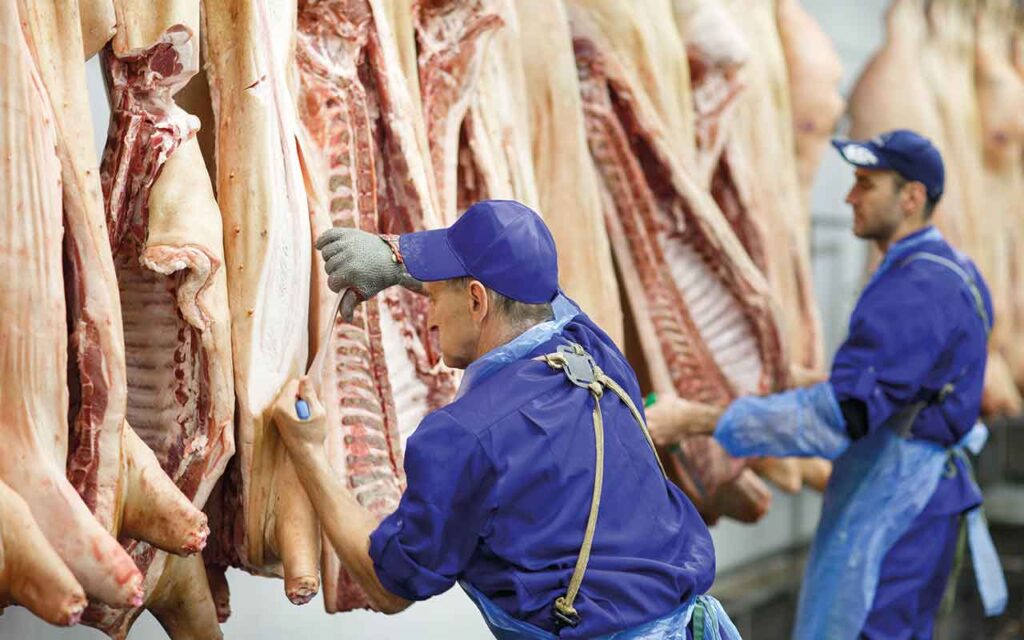
A government source told the BBC it was planning for a scenario which would involve the continued closure of the Strait of Hormuz and breakdowns in the supply of CO2, which is widely used to stun and slaughter some pigs.
The official stressed that this was a ‘worst case scenario’ and ‘not a prediction of what could happen, while, speaking to Sky News, Business Secretary Peter Kyle said the availability of CO2 was not a concern for the British economy ‘at this moment’.
Inevitably, with pigs already backed up on farms, the reports have generated some concerns within the sector.
However, new BMPA chief executive John Powell said: “There is no immediate concern about supplies. To our mind the government is quite correctly examining the challenges that may occur if the war continues over an extended period. “
“The situation is currently tight, but processors and gas suppliers are working closely together to manage available supplies. At this stage we are monitoring the situation carefully, but we are hopeful that disruption can be limited if supply improves in the coming weeks.”
He pointed out that with the UK recently largely reliant on CO2 imports, the government acted quickly to get the Ensus bioethanol plant reopened to ‘help ensure future supplies of CO2 and there have been a number of smaller plants that have been created given past problems’.
“Many processors have experience of managing CO₂ supply disruptions from previous incidents and have contingency arrangements in place. These include prioritising essential uses such as animal welfare requirements, adjusting production schedules, and working closely with gas suppliers to secure deliveries where possible. Companies are doing everything they can to maintain production while using available supplies as efficiently as possible,” Mr Powell said.
Huge ramifications
NPA chief executive Lizzie Wilson said: “As pig production is a continuous business, any disruption to the slaughtering and processing can have huge ramifications on farm with pigs unable to move through the supply chain.
“For farmers specifically, they will need to house and feed constantly growing pigs at a time when input prices are increasing, and the price paid for their pigs is falling.
“We currently have a significant number of pigs already backed up on farm as a result of abattoir issues at the end of last year. We are concerned that the ongoing war in the Middle East could exacerbate this situation further.
“If the production and therefore availability of CO2 is restricted, we would expect this to impact supply and result in difficulties moving pigs off farm, with potential welfare implications. It is positive to see that CO2 supply has been considered across the food and drink industries and by Defra in the last 12 months, and we welcome plans for the temporary re-opening of the Ensus bioethanol plant. We continue to call for the meat processing sector to be prioritised in the event of any future CO2 shortages.”