




 There has been plenty of scientific research and discussion about regenerative agriculture in arable and ruminant farming systems, but relatively little about what integration of regenerative practices looks like in pig and poultry production.
Maddie Dedman, sustainability programme manager at the Institute of Grocery Distribution (IGD), set out to help fill that gap while doing her master’s degree in food security and development.
“My main objective was to identify actionable steps that pig farmers can take if they want to work towards a regenerative farming system,” she said.
Her research asked the question: Which regenerative agriculture practices are the most effective and feasible within the pork sector, and what are the key barriers that are preventing their adoption?
It led her to develop a strategy to integrate regenerative agriculture across the pork sector, to help improve both ecological and economic resilience.
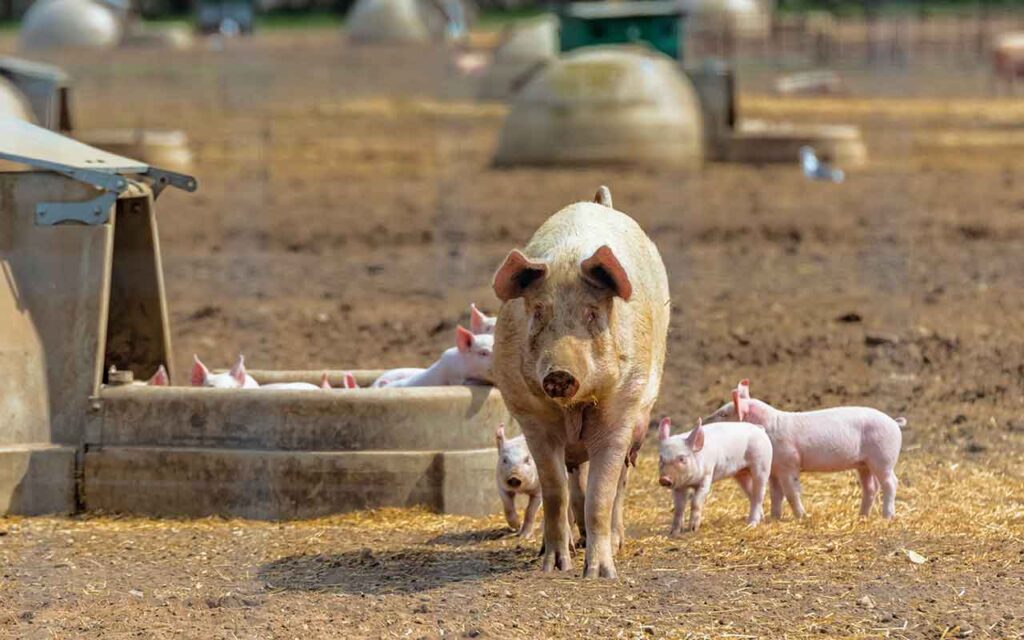
Maddie explored how pig farmers can integrate more circularity into their farming, also strengthening resilience. The research focused on pasture-raised pigs, including free-range, organic and outdoor-bred pigs, and those housed in straw barns.
Information sources included interviews with farmers and industry experts and secondary data from a survey on regenerative agriculture practices within the pork sector.

Key practices
The research concluded that there are four key regenerative practices that are both feasible and effective in outdoor pig systems.
1. Rotational grazing
Rotational grazing helps improve soil structure, reduce compaction, enhance nutrient cycling and increase soil organic matter.
Larger farms often use structured systems to rotate paddocks, with long rest periods of about 20 weeks, while smaller farms adjust rotation based on pig size, age and group behaviour. The cost for fencing is a challenge, but it is considered an effective way to manage land sustainably.
2. Cover cropping
Cover cropping is already widely used on outdoor pig farms as a low-cost, effective regenerative practice that improves soil health, reduces water run-off and provides high-protein forage for the pigs. Farmers typically sow a grass or mixed-species crop in the rest period, with diverse seed mixes boosting soil organic carbon, nitrogen fixation and biodiversity.
3. Straw and slurry mixes
The straw and slurry mix produced by indoor finishing units is a valuable natural fertiliser, which farmers can spread on their land or sell to neighbouring arable farms.
It increases soil carbon, improves nitrogen retention, helps boost crop yields, improves farm resilience and reduces the need for artificial fertilisers. Using this by-product closes nutrient loops and supports a more circular farming system.
4. Hedgerows and pollinator strips
Maintaining hedgerows, planting wild bird seed mixes and establishing pollinator strips are accessible ways for indoor and outdoor pig farms to adopt regen principles, with benefits including carbon sequestration, pest control and animal welfare.
Hedgerows provide habitat, increase species diversity and offer shelter for outdoor pigs, while pollinator strips enhance wildlife presence and overall ecosystem health. The main trade-off is that poorly maintained hedgerows can reduce crop yields along field edges, so some management is required.
There are a number of indoor producers with finisher sheds who have made use of the land around them – for example, by planting a hedgerow in front of a bare fence.
Agroforestry
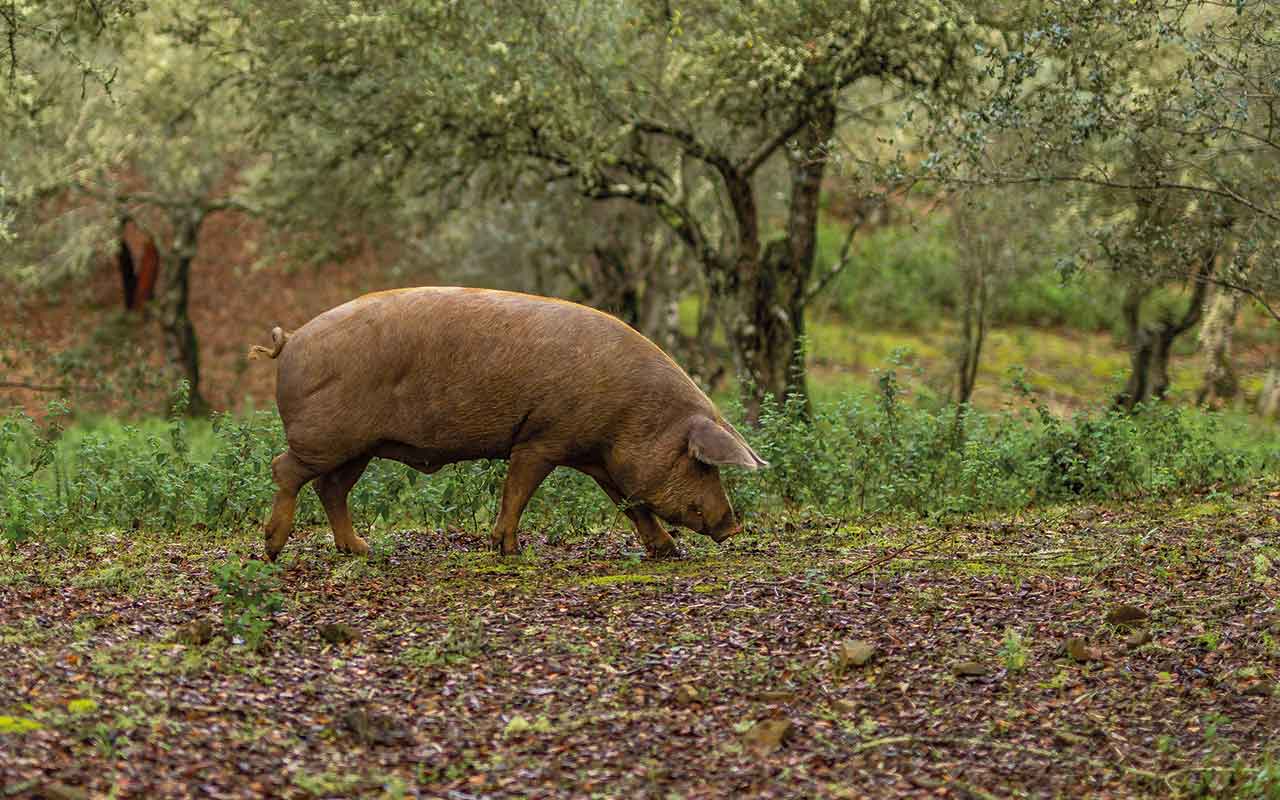
Maddie also investigated agroforestry and farm diversification. Agroforestry integrates pigs into woodland, benefiting soil and biodiversity, with farmers reporting better pig welfare. However, agroforestry remains niche in the pig sector.
The main barriers are the high initial cost of trees, fencing and infrastructure, with slow financial returns while trees mature. “It’s probably most feasible for landowners where they have land not being used for arable cropping,” said Maddie.
Farm diversification – especially combining pigs with arable farming – offers a practical way to build circular, regen systems that help strengthen farm resilience. Many arable farmers run pig finishing sheds as an extra income stream, growing their own feed and using manure as fertiliser.
Some separately owned pig and arable farms also operate circular systems by exchanging straw, muck and other by-products.
Overcoming barriers
“There is a lot of appetite among pig farmers to make their businesses more circular or regenerative, primarily to improve cost efficiency, as well as delivering environmental benefits,” said Maddie. “However, regenerative farming is a long-term investment and there is risk involved in trying new practices.”
The key barrier to adoption is the lack of a standardised, practical framework for regenerative agriculture in the pork sector, alongside limited financial support and sector structural constraints.
1. A clear definition
There is a need for a clear definition of regenerative agriculture specifically for pig farming, agreed by stakeholders including farmers, processors and advisory groups, so everyone shares the same understanding.
2. Farmer networks and training
Peer-to-peer farmer networks, along with tailored training, are needed to facilitate knowledge exchange. “The first port of call is to use existing peer-to-peer networks to share knowledge,” said Maddie. “There is also a role for processors that work with hundreds of farmers and could perhaps lead knowledge sharing on a regional basis.”
3. Environmental baselining
The introduction of consistent, farm-level environmental baselining methods across all pig farms – including tenanted land – using standardised tools and datasets would enable farmers to measure their current environmental impact, track improvements, support incentives and align environmental expectations across the sector.
4. Landowners maintaining data
Short-term land tenure makes it difficult for pig farmers to invest in regenerative practices because they may not stay on the land long enough to benefit from the results.
The proposed solution is for landowners to hold and maintain the environmental baseline data so each tenant can continue previous progress. Performance-based leases and shared access to carbon or green finance rewards can further encourage tenants to adopt long-term regenerative practices while reducing their financial risk.
5. Financial support and incentives
Financial constraints are a major barrier, because farmers must largely cover the upfront costs of transition to regenerative practices themselves.
Introduction of appropriate support, such as grants, subsidies and financial incentives, alongside better evidence of long-term economic benefits, would help make regenerative practices financially viable.
There is the opportunity for farmers to take advantage of the redesigned Sustainable Farming Incentive 2026 offer, specifically small farms and those who do not have an Environmental Land Management agreement.
6. Structure and decision-making
Where farms are contracted to a processor, it can be difficult to introduce regenerative farming practices, as farmers do not have full autonomy over core decisions such as feed sourcing.
The processors are well placed to lead change and support introduction of new initiatives across their contracted farms, Maddie suggested.
Retailers could also lead development of regenerative agriculture requirements within their procurement standards. Their purchasing power could help drive structural change among processor suppliers, while creating space for farmers to have more decision-making power and participate meaningfully in the transition.
Waitrose, as an example, is aiming for all its suppliers to farm using regenerative practices by 2035 through its Farming for Nature programme, and M&S is moving in a similar direction.
Different retailers, particularly the discounters, are catering for a different customer base where price is a greater priority. “I would still encourage all retailers to keep working on ways to help reduce environmental impact, working with their processor and farmer suppliers,” Maddie said.
“Retailers are also well positioned to educate consumers on different food production systems and provenance, helping to address the cheap food narrative, with others in the supply chain providing information and working with retailers to align messaging.”
Unified plan
The research concluded that progress requires a unified, pig-specific definition of regenerative agriculture, the promotion of scalable practices such as cover cropping and rotational grazing, and stronger farmer networks with tailored training.
Greater flexibility from processors and supportive policy could help shift the sector from a linear supply chain to a more regenerative, circular model.
Expanded financial incentives, universal environmental baselining and reforms to land tenure would help reward long-term stewardship, and consumer education is also essential.
“Together, these actions create a strategic roadmap for embedding regenerative agriculture into the pork industry in a resilient and economically viable way,” Maddie said.
