



Farming, for all the rewards and good times it can deliver, brings multiple unique challenges that can have a profound impact an individual’s mental health. SIMON KING spoke to people across the sector about why it’s important to talk and the help out there.
The frustrations, challenges and concerns that many in the industry – whether farmers, farmworkers or wider industry service providers – are facing are well known.
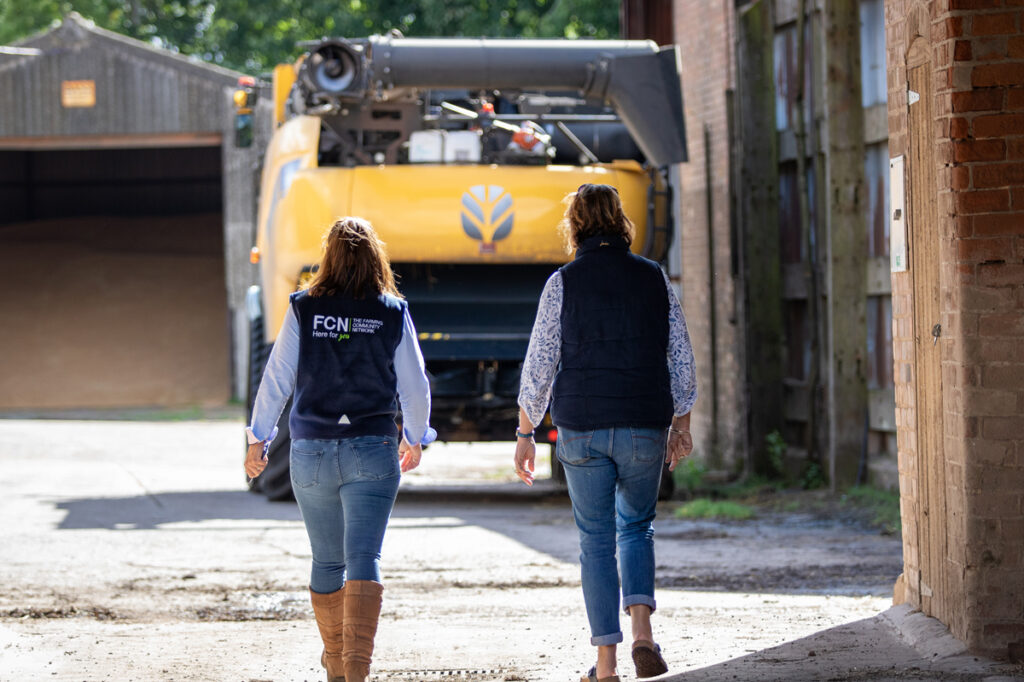
Research conducted by the Farming Community Network (FCN) and the University of Exeter’s Centre for Rural Policy Research has shown that long hours, working alone and a feeling of being undervalued and disconnected from the wider public are among the key factors that cause loneliness within the farming community.
For anyone who works in the pig industry, financial concerns, the threat of activists, disease outbreaks, staff shortages and more can all add to the mental pressure.
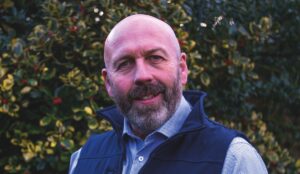
“The pressure in the pig system has had a knock-on effect on this mental health issue,” said United Pig Co-operative business development manager Simon Davies, who has been working quietly behind the scenes to support those in the industry with mental health challenges – and who was a driving force behind this article.
Alex Phillimore, FCN head of operations and communications, said farming often requires people to deal with things that are outside of their control, which is inherently stressful.
“We can all plan as much as we want, but the best-laid plans often go astray in farming,” he said. “You can’t account for the weather being a particular way or an animal disease outbreak – there are mitigations you can try, but, ultimately, those things are generally outside of your control. Another stressor is uncertainty about the future.”
The most common issues raised on FCN’s helpline are mental health concerns, family relationship challenges and financial problems, with many worried about the future of their farm business.
The purpose of this article is to encourage anybody in the farming community who has a mental health problem to seek help early, talk about it and not be ashamed of how they’re feeling, because it is an illness – and like any other illness, if you get help early, you won’t get so ill.
I spoke to a producer, a processor, a haulier and representatives from the allied industries, in some cases on the understanding that I didn’t reveal their identities.
Farm pressures
Research by the Farm Safety Foundation has shown that 95% of young farmers under 40 believe poor mental health is the biggest hidden problem facing farmers.
Nottinghamshire-based producer Fred Allen outlined his struggles with mental health. “People are rightly worried about poor mental health in agriculture, and the pig industry, particularly among young people,” Fred said.
“This is a really high-pressure environment. You have all the best intentions to stop and have a break and speak to someone, but you are in the middle of it, and you’ve got to keep the wheels turning, because there is so much relying on you.”
Fred started working on the family farm 11 years ago and, after two years, was made a director of the business. “Two years into being a director, I hit a real wall. I was burned out, suffering badly with stress and anxiety,” he said.
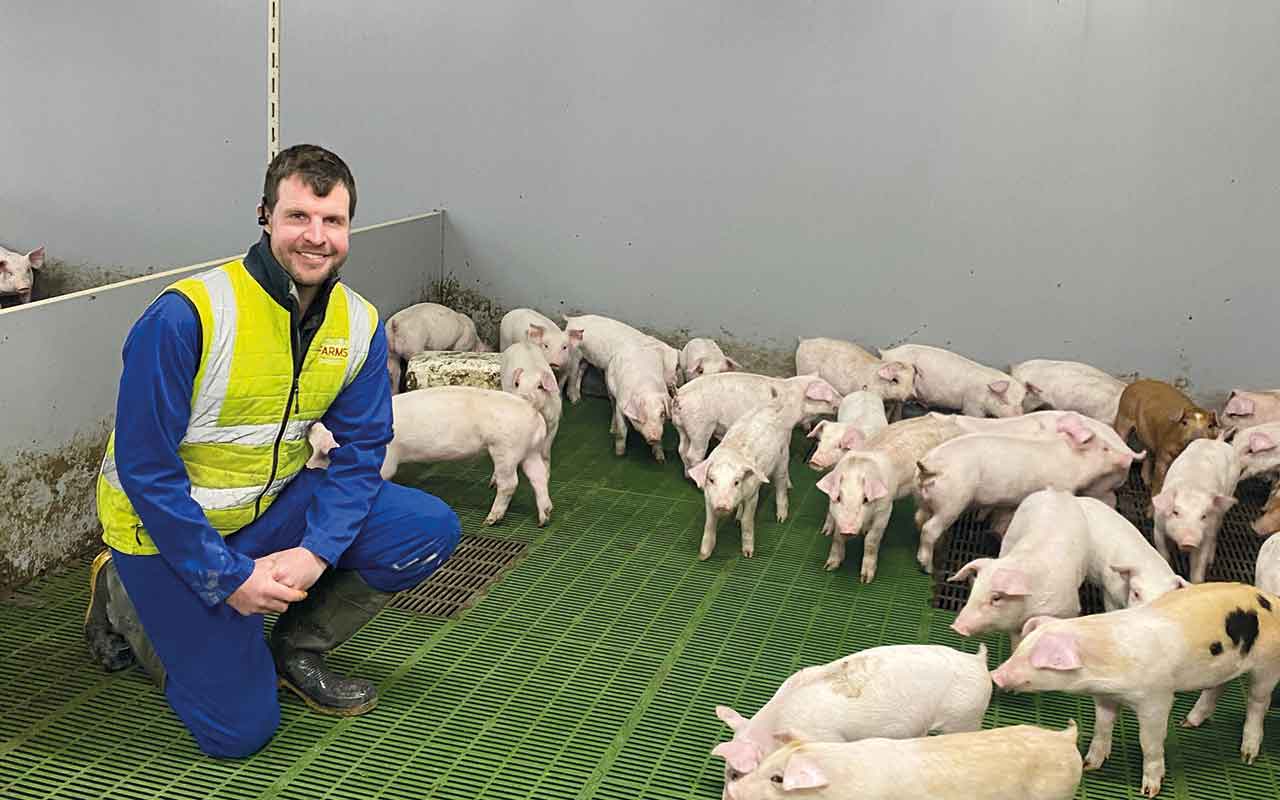
“I’d had enough of the pressure, and I couldn’t get a good night’s sleep; I wanted to leave. I came into this industry with high expectations, but I had become overwhelmed by it. At that time, there were family rifts, markets weren’t very good and labour was a challenge. I didn’t feel supported, so I walked away.”
Following advice from family and friends, Fred went to see his doctor and was eventually diagnosed with stress and depression, and was signed off for eight weeks.
“It was probably the hardest eight weeks I’ve ever had,” he said. “Because we were in the middle of harvest as well, I started to feel that I was really letting people down.”
He went into therapy to talk things through. “I came back eight weeks later with a fresh mindset,” he said. “The farm was where I wanted to be, but I needed to be better at managing my health and wellbeing at the same time.
“The job continues to be challenging and I still struggle at times. However, I know the warning signs now, so as soon as I start to struggle, I contact my therapist for a chat, just to clear my head. As I’ve got older and been in this game for long enough, I’m a bit more accepting of things going wrong. Maturing has definitely helped.”
Processing challenges
The processor representative said the most challenging part of their role is the incredible number of moving parts. “We operate a just-in-time business model, so everything is absolutely down to the wire,” they said. “If there’s one glitch in that system, the whole thing falls apart.
“We need quick, accurate decision-making, which always balances on a fine line between getting the job done and making the business profitable, while managing something that’s often beyond the processor’s direct span of control.”
The processors are also heavily reliant on others, including producers and hauliers, to ensure everything runs smoothly.
“We’re all working to such a narrow window,” they said. “The upstream supply chain doesn’t see how hard we try to get it right, because it is in absolutely nobody’s interest to get it wrong.
“It’s very challenging to balance; the producers always want the best money for their pigs, and I don’t blame them because they work really hard.
“The hauliers get up at stupid o’clock in the morning, and if there is a factory breakdown, their day could well be compromised. The cost associated with getting it wrong is a big stress.”
The haulier’s lifestyle
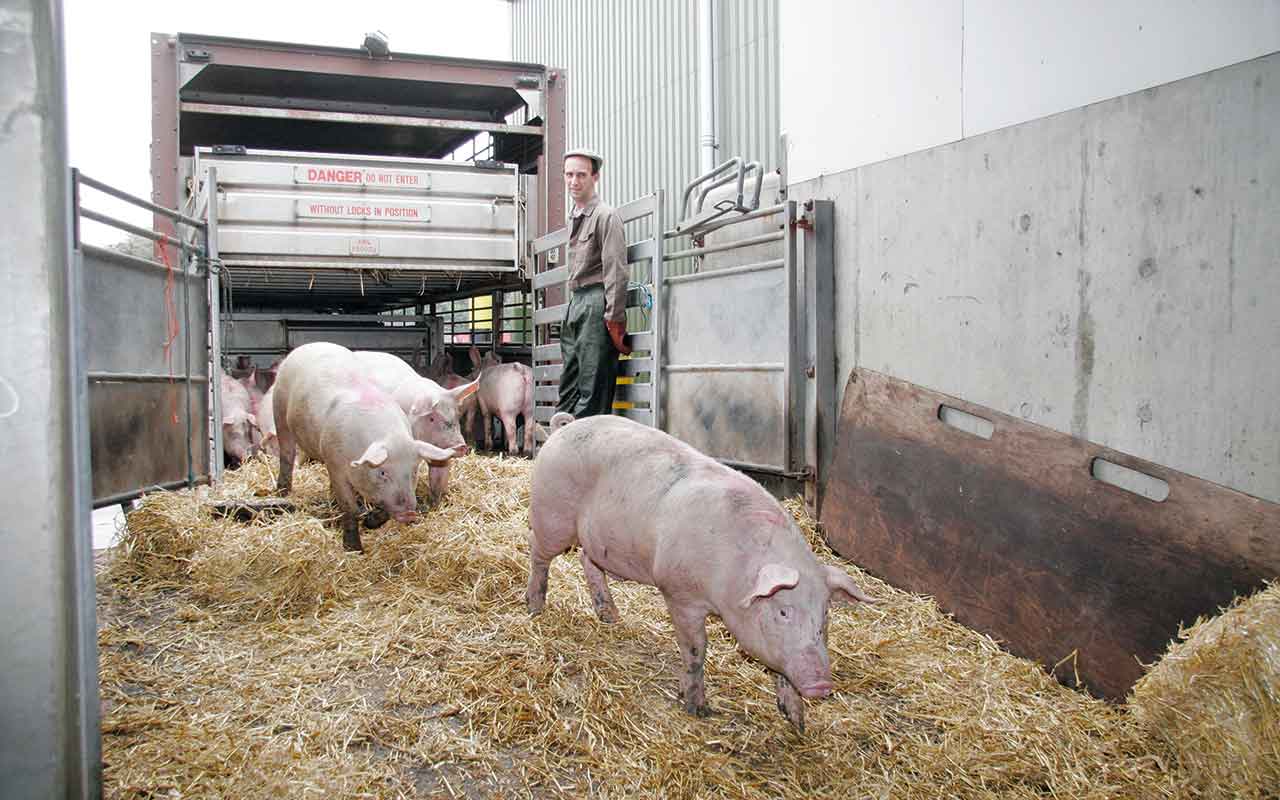
Hauliers have an important role to play in the sector – transporting livestock adds ‘unique pressures’ to HGV driving, according to Lisa Day from Walter Day and Sons.
“Unlike static products, livestock don’t stop growing, creating intense time sensitivity. Hauliers like us are in a niche industry and often face the brunt of miscommunication between abattoirs and farmers, leading to ‘tellings-off’ for drivers that ultimately feed back to us as business owners.
“Small haulage owners like us view our drivers as family. In an industry with a chronic driver shortage, the pressure to retain staff often leads us to absorb the stress of our employees’ problems, resulting in ‘compassion fatigue’ and catastrophic mental health declines.”
Lisa has been educated in mental health and offers in-house occupational health help to all staff. “We are there for them. We believe it’s better to keep mental health ‘healthy’, just like physical health, rather than leaving it to become a mental health illness,” she said.
She described haulage as a ‘lifestyle choice’ rather than a standard job, requiring 24/7 availability for emergencies such as accidents or equipment malfunctions.
“This, of course, puts pressure on us and our private life – my husband has, over the years, dealt with his own mental health, with depression,” Lisa added.
“The trouble is he may care too much – about the welfare of the animals, the staff and our customers, always wanting to do our very best, which puts added pressures on him. He is a huge advocate for talking about mental health.
“The lorry driver’s life can be a lonely one. The only people they talk to is farmers. Most farmers are genuine and nice, but quite a few are struggling mentally, too. And don’t get me started about social media and its role in mental health problems!”
“There are still stigmas around mental health, especially with men. Mental health remains a critical concern, with HGV drivers experiencing a suicide rate 20% higher than the national average.”
Removing the stigma
The first person from the allied industries I spoke to has worked for a number of different businesses across the industry.
“Far too often mental health is seen as a stigma, and people don’t want to talk about it within the pig industry, because we’ve all got this bravado that we’re big, burly farming men and nothing affects us in life. We’re all a bit too proud to admit defeat, but it’s not defeat,” they said.
“If you’ve got the flu, you go to the doctor. If you break your leg, you go to hospital. It’s the same for mental health – if something is not right, you should go and talk to someone, because the only way it is going to improve and get better is by vocalising what’s going on in your head.”
They went to a counsellor for six months, and said it was one of the weirdest and best experiences they’d ever had.
“You go into a room with someone who is completely neutral to you and your life, who wouldn’t know you from Adam, and they make you feel so comfortable just to sit there and talk to them,” they said.
“When I was going through my difficult time, I was never suicidal or anything like that, but I found a lot of comfort in food, and still now, if I’m down, my partner will know that I’ve had a bad day or I’m having a bad week because I’m eating a lot more. It’s OK not to be OK.”
Having outlets beyond work is important – they go to the gym, play rugby and play golf.
“Golf has been my main thing, because at the end of the round, you have chewed the fat for five or six hours with a couple of friends and everything in the world seems all right again,” they said.
They issued some advice about talking to farmers, including the importance of asking open questions. “Don’t give a farmer an opportunity to just say yes or no, because that doesn’t solve anything,” they said.
“People might not want to talk about it, but if you can get them subliminally talking about it without making them realise, then the weight of the world comes off their shoulders.”
Industry pressures
The second representative from the allied industry has worked in pig marketing since 1979. “One phone call in particular haunted me,” they said.
“He is out of pigs now – but there was an issue with biting and the pigs were eating themselves alive. He had booked in 150 pigs, and I could only move 100. He had about 35 pigs in a sick pen that needed destroying. On a Friday evening, he told me: ‘I’ve got 36 cartridges, I’m going to shoot these pigs, and the last cartridge is for me’.
“On the Sunday, I couldn’t rest without telephoning him. He picked up the phone and asked me why I was calling him on a Sunday, and I told him I hadn’t been able to sleep and was worried about him.”
“Last spring, we came under an enormous amount of pressure from the processors, who were trying to cajole the farmers to sell the pigs,” they said. “Now the job has flipped and we’ve got the abattoirs not wanting the pigs because trade is on its backside.
“I prefer to speak to every one of my farmers when I cannot move all their pigs for them. I have that conversation, and then I am very apologetic – the effect on my mental health is really taxing.”
Farming Community Network

Farming Community Network (FCN) volunteers are available 365 days of the year to listen, support and ‘walk with’ you, your family and your farm business through any issues, whether personal or business related.
Increasingly, FCN is taking a proactive approach to supporting farmers’ health, wellbeing and resilience.
“Through our FarmWell website, community events, research, partnership work and other activities, we are working hard to create networks of support and to help farmers,” said Alex Phillimore, head of operations and communications.
“We are frequently humbled by the goodwill we see from the farming community and the enthusiasm for our work, which continues to make a real difference. Each year, we help hundreds of farmers and their families and have been called a ‘lifeline’ by those we have supported. Please do continue to take care of yourselves and those around you during this challenging time.”
Seeking help
If your problems require more professional help, FCN knows people who may be able to help you. “Everything is confidential, and we will be there for you. FCN volunteers understand farming life and its unique pressures, and are here to listen and support,” Alex said.
You can call FCN on 0300 0111 999 or email help@fcn.org.uk. You will initially speak to a member of FCN’s helpline team. They will listen in confidence and can then connect you directly with further support.
Other support
- Royal Agricultural Benevolent Institution (RABI): help@rabi.org.uk; 0808 2819 490
- Royal Scottish Agricultural Benevolent Institution (RSABI): helpline@rsabi.org.uk; 0300 1114 166
- You are Not Alone (YANA): helpline@yanahelp.org; 0300 323 0400
- Samaritans: 116 123
- Addington Fund: enquiries@addingtonfund.org.uk; 01926 620 135
