




Pig farmers in Catalonia have lost more than €60 million so far, as a result of the African swine fever outbreak in the Spanish state, according to a Spanish farming union.
A total of 60 positive cases have now been reported in wild boar in the infected area close to Barcelona since the first case was confirmed in late November. However, the virus has not been detected in any of the 57 pig farms located within a 20 km radius of the infected area, despite extensive testing.
Nonetheless, the outbreak has led to movement restrictions for 61,500 pigs, 10% of Barcelona’s pig population, and has had a significant direct impact on exports, especially to China, despite the introduction of various regionalisation agreements in the weeks following the outbreak, the Unió de Pagesos said.
The outbreak has had a big impact on the Spanish pig price, which had already fallen significantly from a high of reaching €1.815/kg, as measured by the Mercolleida live pig price, at the beginning of July by late November, only to plummet further to €1/kg by the start of this year.
The union estimates the Catalan pig sector lost €63m due to the outbreak up to the end of 2025, driven by a 17% drop in the turnover during November and December.
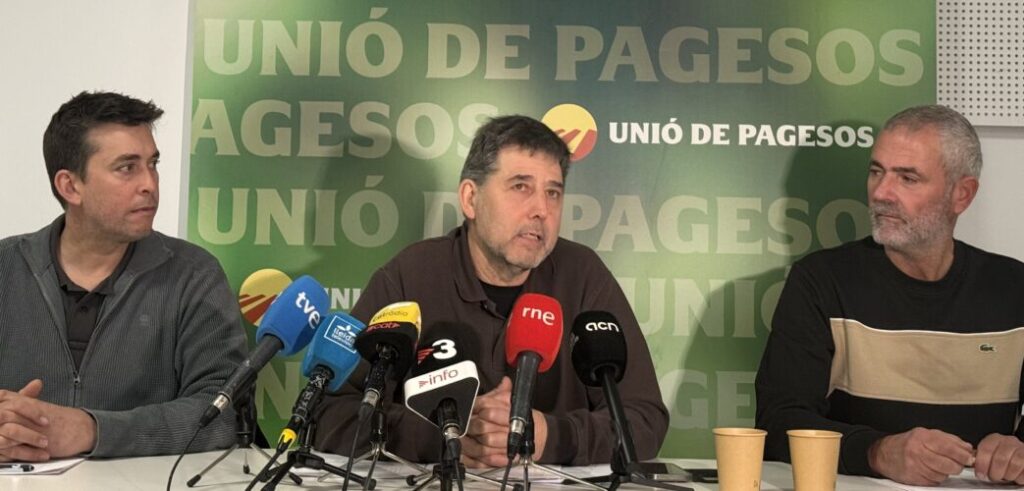
“What we can’t do is produce at a loss for an extended period,” Rossend Saltiveri, head of the pig farming sector at Unió de Pagesos, said at a press conference in Lleida, Spanish news outlet ARA reported. He predicted that the sector will ‘adapt to market circumstances’, to restructuring and reducing production to ‘avoid prolonged losses’.
Welfare regulation delay
The union has also reiterated its calls for new animal welfare regulations planned for the coming months to be delated again.
It obtained a one-year moratorium on the regulations at the beginning of 2025 ‘in order not to lose productive potential on Catalan farms’. “Although the extension will end on March 9, the union has requested the withdrawal of this modification in order not to put further obstacles to the future of the sector,” the union said.
The union has also called for a delay in the introduction of a mandatory computer tool ECOGAN, designed for farms to communicate the level of their pollutants and greenhouse gas emissions and the techniques they have applied to reduce them.
It said this represents ‘a new bureaucratic burden for farmers’ and has asked that it can replace the regional registers that already do this to avoid duplication.