




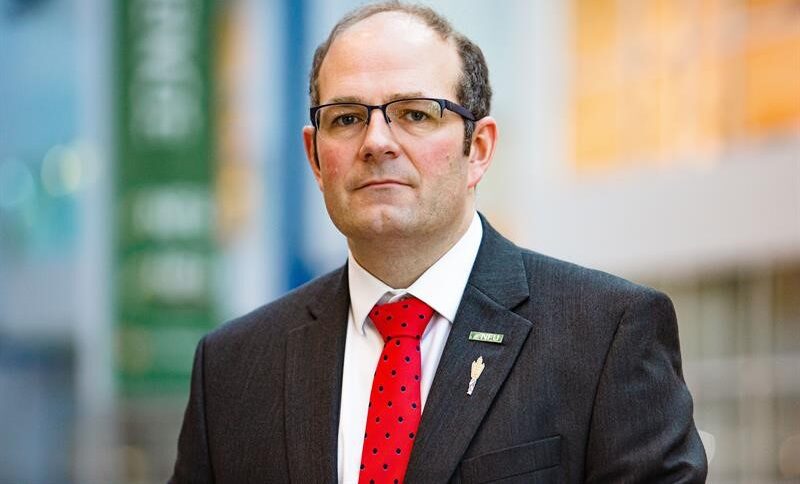
The UK farming sector has shown great resilience in the face the multiple challenges it faced during 2025, as it enters 2026 on ‘firmer ground’, according to NFU president Tom Bradshaw.
In his New Year message, Mr Bradshaw said: “As we head into the new year, we can take pride in the resilience UK farming has shown over the past 12 months. I am optimistic that we now have firmer ground to build on and grow in 2026.
“It is right to look back and acknowledge that 2025 has been one of the toughest years on record. From impacts caused by global geopolitics and trade deals with the potential to undermine our marketplace, to ongoing price volatility and uncertainty around farming schemes, farmer confidence has reached an all-time low. Add to that the devastating spell of dry weather and drought which wreaked havoc with the summer’s harvest and created ongoing issues for farmers and growers, compounded by the changes to inheritance tax – which has now thankfully been changed.
“However, it is at testing times like these when I am most proud of our sector. Proud to see farmers standing together and proud of the work of the NFU to ensure farming’s voice is heard nationally and locally.”
Successes
He highlighted the industry’s ‘notable successes’ over 2025, led by the changes the government made just before Christmas to Agricultural Property Relief and Business Property Relief, raising the threshold to £2.5 million.
The change followed 14 months of persistent campaigning by the NFU, its members and allied industries, while thousands of farmers and their families have ‘dug in deep, standing up for what they knew to be right’, Mr Bradshaw said.
“We have had hours of calls with Labour backbenchers, particularly those representing rural seats, resulting in a rebellion with nearly 40 abstentions on the vote on Budget Resolution 50,” he said.
“I also had two very constructive meetings with Prime Minister Sir Keir Starmer and dozens of conversations with Defra Secretary Emma Reynolds. I am thankful that common sense has prevailed, the government has listened and there is a huge sense of relief for many farming families across England and Wales.”
He also highlighted the NDU’s campaign to strengthen the law around attacks on livestock, concessions made on beef access to the US market while US imports were restricted to a limited quota of hormone-free beef and the the re-opening of the SFI application window and a roll-over of Countryside Stewardship Mid-Tier agreements.
“It’s also great to see that many of the government’s priority actions from the recently published Farm Profitability Review reflect the proposals we put forward in our own submission,” he said.
“2025 was also the year when public support for British farming continued to surge. Our annual Farmer Favourability Survey saw the public again rank farming as the second most respected profession in the UK for the third-year running, behind nursing.”
Looking ahead
“Looking ahead to 2026, UK farming continues to face challenges in an uncertain world, but we now have a stronger foundation to build on and grow. In the new year, as the government takes forward its five key recommendations from the Farm Profitability Review, we stand ready to work in partnership to deliver our shared ambition: an agriculture sector that is set up to thrive and drive economic growth.
“Effective use of tax reliefs, alongside a push for greater energy resilience and a stable policy environment to encourage investor confidence, could all help domestic production thrive.
“Reforming supply chain relationships, creating an enabling planning system and addressing high energy costs and standing charges – issues the NFU has consistently raised – will also be vital.
“We will also continue to lead the charge in the new year on the other big issues impacting our members. These include trade and border security, farm safety, rural crime, avian influenza vaccination schemes, flexibility within the Seasonal Workers Scheme, the public procurement of more sustainable British food, stopping the worst aspects of trade deals, protecting tenant farming rights and securing the future of uplands farmers and protecting the iconic landscapes they manage.”