




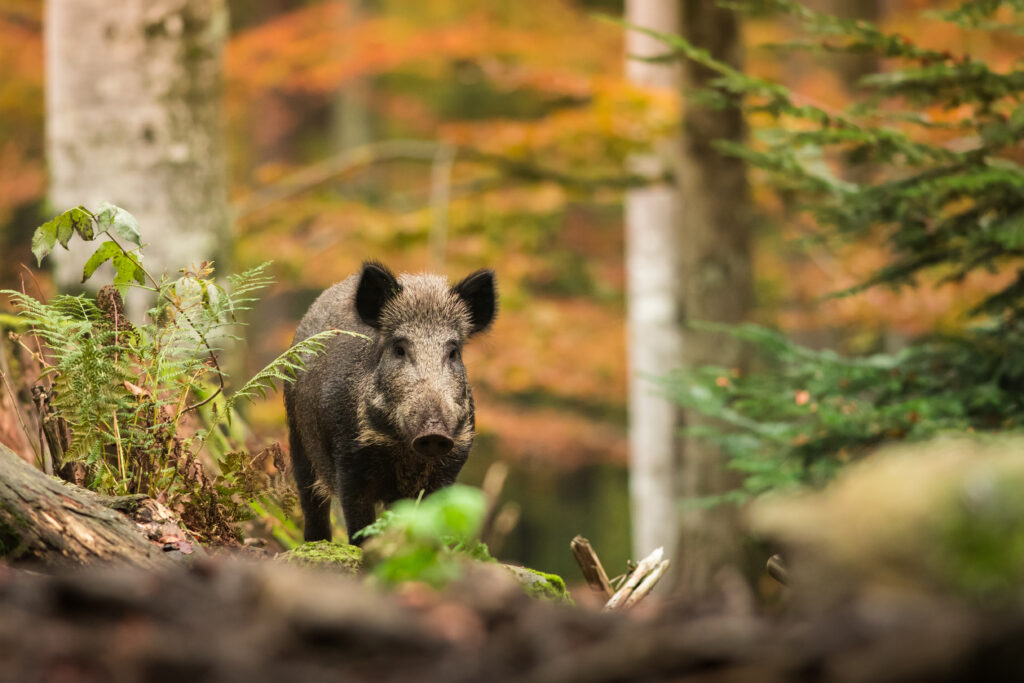
The Catalan government is considering implementing a major programme to control wild boar numbers in the state, following the shock discovery of African swine fever (ASF) in two wild boar on November 28.
The latest official figure is that 13 wild boar have tested positive for ASF, all found close to the original cases, a few miles from Barcelona. According to the NFU’s BAB office in Brussels, a total of 56 wild boar carcases have been found during the active search.
The Catalan government has declared a state of emergency, with various restrictions in place within a 6km contamination zone and a wider 20km infected area.
The infected area includes a number of pig farms, which, according to the BAB office, have 61,900 places, including 6,300 places for sows. All the animals have been tested, with no positive cases.
Catalan News reports that slaughterhouses have begun receiving the first pigs from farms located within the 20-km zone. Catalonia’s Minister of Agriculture Òscar Ordeig said meat from the 35,600 pigs will be sold domestically for human consumption due to the export ban.
Speaking at a press conference, Mr Ordeig said: “We can confirm that the virus has not affected any farm, not a single trading system.”
Wild boar control
The Catalan government has created a committee to study wild boars across the territory. Mr Ordeig is coordinating measures and, according to Catalan News, the authorities are considering reducing wild boar populations across the territory – currently estimated at between 125,000 and 180,000, depending on the time of the year and the breeding season – by half.
On Wednesday, the Ministry of Agriculture convened the heads of game management from the local communities to gather information on the epidemiological surveillance and biosecurity measures they are implementing for wildlife, data on wild boar population monitoring, and the measures in place for their control.
The ministry pointed out that population control measures, given an overabundance of wild boar, ‘cannot and should not be limited to hunting’ and stressed the need for collaborations with local authorities, scientific experts, and hunters themselves to implement the most effective measures based on the characteristics of each territory.
Authorities are also studying areas with a higher wild boar population, such as Girona, inland Catalonia, and the Pyrenees, with data showing that 9 out of 10 traffic accidents involving animals were caused by wild boars, the report adds.
Economic impact
Even with regionalisation agreements in place allowing exports to continue from outside Catalonia, the outbreak is having a big impact on farms, given that the region accounts for 40% of pork processing.
The Spanish pig price, which had already been in freefall since the summer, plummeted last week. The Unió de Pagesos and Asaja farmers’ unions have reportedly said that the outbreak is causing losses of €24m per week across Spain.
The government has announced a €10 million aid package to ease the economic impact of the disease, but the farming unions have described this as ‘insufficient’. “This will not be enough, and we will continue pushing for new subsidies based on the sector’s needs,” said Rossend Saltiveri, head of the pork sector at Unió de Pagesos, Catalan News reported.