


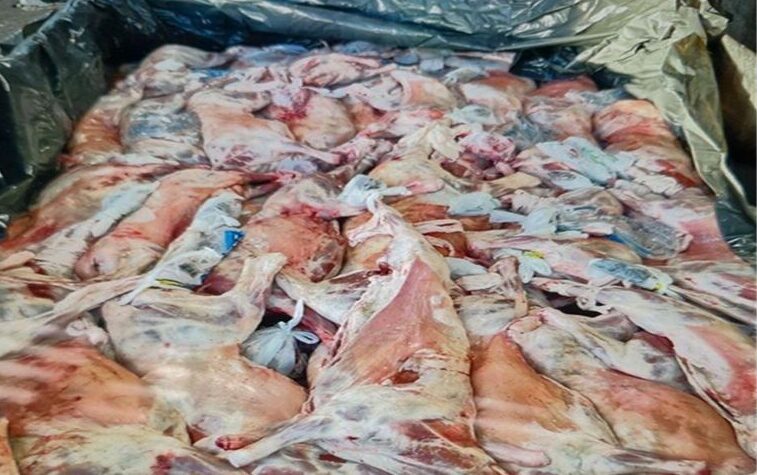
The Dover Port Health Authority (DPHA) has revealed it identified and removed more than 14.2 tonnes of illegal meat in a single week at the end of March, as it highlighted the importance of its work to the UK’s national biosecurity.
In total, DPHA spot checks have prevented more than 422t of illegal meat from entering the UK since September 2022, with volumes seized increasing markedly over recent months. DPHA’s latest update, posted last week, follows the revelation that it seized a record 34t of illegal meat in January, compared with just under 8.5t in January 2024 and 24.5t in January 2025.
In the run up to the start of the current financial year, beginning this month, DPHA was still awaiting news from Defra on its settlement for the 2026-27 financial year.
Defra provided £3.1m for DPHA for 2025-26, which the authority said enabled it to provide 20% coverage on checks for illegal imports coming through the port. In late-March, Defra said funding for 2026-27 was ‘still be finalised’.
In its latest update, DPHA emphasised the ongoing need for spot checks at the port.
“AI, automated paperwork checks, and remote retrospective traceability can’t spot or remove concealed illegal meat; but spot checks and officers on the ground at this border do,” it said.
“The evidence is unequivocal: to be effective, border checks must be carried out at the border (our frontline, where risk first breaches the UK, and the point at which biosecurity intervention, is most critical).
“Once goods move unfettered inland, the threat to animal health alone, is already inside the country, and our ability to intervene is needlessly compromised.”
Failed BTOM
It added that the ‘unique’ Border Target Operating Model (BTOM) approach implemented by the government at the Short Straits, which has allowed products to ‘travel freely, 22 miles inland before inspection’, has failed.
“It has enabled non‑compliance, created avoidable biosecurity gaps, increased business costs, and exposed the UK to preventable animal‑disease and public‑health risks,” DPHA said.
“With evidence now confirming that many vehicles never attend for inspection, despite the risks they may pose to the UK, urgent and substantive change is essential now, and as we move towards the new EU SPS agreement.”
The authority said it supported Defra’s work to close these gaps and ensure that the checks needed to protect the UK and to identify and remove illegal meat in real time, remain firmly where they work, at both Dover and the point of entry at Coquelles, in France. “It is clear; our border is only as strong as the checks we do at it,” it said.