



I write this from the perspective of our own experience of 46 years spent supplying control systems to farmers. We have been collecting the stuff remotely from pig production sites since 1996 and, in the intervening years, our archive has accumulated in excess of 30bn records.
It’s a lot of numbers by any standard, and I’m afraid to say not worth a tuppenny damn unless somebody adds value.
Everyone agrees the numbers are important. However, producers don’t have the time, skills or inclination to do anything about it and, frankly, those professionals associated with production, like nutritionists and veterinarians, have looked the other way.
To be fair, staff on farm make use of the information in their routine management, but we don’t use data as a strategic management tool in production businesses… or do we?
It’s probably important to understand what kind of data we’re talking about. One simple distinction is between transactional data – this sow gave birth to this number of piglets on this date – and continuous-flow data – house temperature measured by a sensor; water disappearance measured by a meter.
Herd-recording systems
Herd-recording systems (transactional data) have been around for decades and are pretty much regarded as essential for professional pig production management. DIY spreadsheets are in widespread use, particularly in the grower/finisher herd, manually combining data from herd records, farm reports and abattoir returns.
Data from feed and environmental control systems have also been around for years, but deriving true value from these data streams has proved a much tougher nut to crack.
To be brutally honest, it’s all just a bit too complicated. If you’re someone who has a real interest in detail and skills with IT, you’re in with a bit of a chance.
The late Nick Bird, who co-founded Farmex with me, was such a person and spent hours poring over the numbers, looking for trends and indicators of change. But how many producers have that sort of time to devote to data analysis? That’s right: none.
Just a very few pig farmers we know make active and frequent use of the information based on data flows from their farms. Contractors, maintenance staff in large operations and our own technical support people are also numbered among regular users in support of their work.
But have we as a sector really made any significant strides in routinely optimising feed and energy use?
I hope some readers’ hackles are bristling with indignation at being lumped into a sweeping generalisation of implied lack of progress by the sector, but I reckon there won’t be many.
So, we have buckets of data from all kinds of sources and, not least because it’s really difficult to get any of them to talk to each other, we continue to fiddle about with a bit of insight and improvement here and there.
Another approach
Is there another approach, and where will that take us? I think there is: if people haven’t got the time, let’s use artificial intelligence (AI) to do the graft.
Optifarm is a UK company that has been developing AI-based continuous-flow data analysis for several years now. Originally focused on poultry, data from pig farms are also being processed with a view to improving environmental management, increasing productivity, reducing production costs and providing the ability to validate animals’ welfare.
Where might this lead? We are already seeing the control loop being closed. Controller produces data – AI analyses data – AI adjusts the controller. Look, no hands!
Given all the current concern about AI taking over, is there anything producers can do to protect themselves? After all, producers own the source data, but any number of other stakeholders are queuing up to use it for various purposes – not least training AI algorithms.
In fact, there is something producers can do: they must insist that all third parties that handle their data are certified as safe and trustworthy. Farm Data Principles is a company specifically set up to address this issue, and it is a straightforward process for data-handling companies to certify their systems as Farm Data Safe.
Nick Bird Award winner highlights benefits of machine learning
The winner of the 2026 Nick Bird Award used machine learning to compare multiple sources of data singly and in combination to investigate early warning of disease onset in nursery pigs.
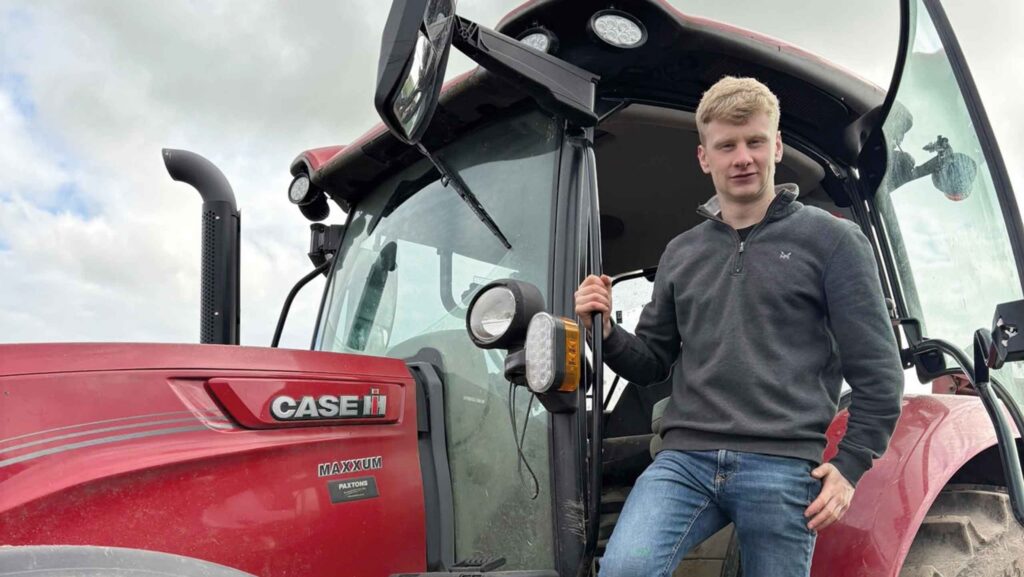
Lancashire farmer’s son Declan Parker, who won the award at Harper Adams University for his master’s degree engineering project, comes from a practical farming background, with a beef and sheep enterprise on the family farm.
He is particularly interested in precision livestock farming, data science and practical technologies that can help farmers make better-informed decisions to help improve farm productivity.
His study looked at whether combining data from several sensors on a large pig farm, using machine-learning models, could spot early signs of disease better than a single sensor alone.
Combined data
The combined data was in the form of acoustic SoundTalks respiratory scores, Optifarm activity data, water consumption per pig and environmental data, including indoor temperature, outdoor temperature and humidity.
“Most farms use these sensors separately or struggle to turn raw data into something useful,” he said. “My study found that fused data sets, combining multiple sources, consistently outperformed single-source models, particularly water-only models.
“This suggests acoustic, water, environmental and management data all carry complementary information, and combining them correctly can predict disease better than any one source alone.”
The study covered 14 consecutive nursery batches from one farm with 662 daily batches of data. Models tried to predict when medicinal treatments or pig losses would happen.
“The best treatment prediction models had a balanced accuracy of about 0.70-0.73. So, although this isn’t ground-breaking accuracy, I feel it highlights the potential of combined data from pig housing to try to manage disease,” said Declan.
He acknowledged that the data was limited to one study farm, meaning the results aren’t conclusive, but said the results highlight the potential of smart data to boost productivity and welfare.
“The models I built beat chance, but weren’t reliable enough to act as an early warning on their own. However, the project does show how much value data from pig housing could add to pig management, which is often overlooked on farms,” he said.
Excellent work
The award – a perpetual trophy and a cheque for £500 – was set up by Reading-based energy specialist Farmex in recognition of the work carried out by company director and co-founder Nick Bird, who died in 2013.
Farmex director Hugh Crabtree said: “This is a really excellent piece of work and very much in line with where data use has to go. It is clear to the judges that artificial intelligence is definitely the way forward.”
Having received his degree, Declan has joined Staffordshire dairy engineering company Jace Supplies, where he will be applying the knowledge gained on a practical level.