


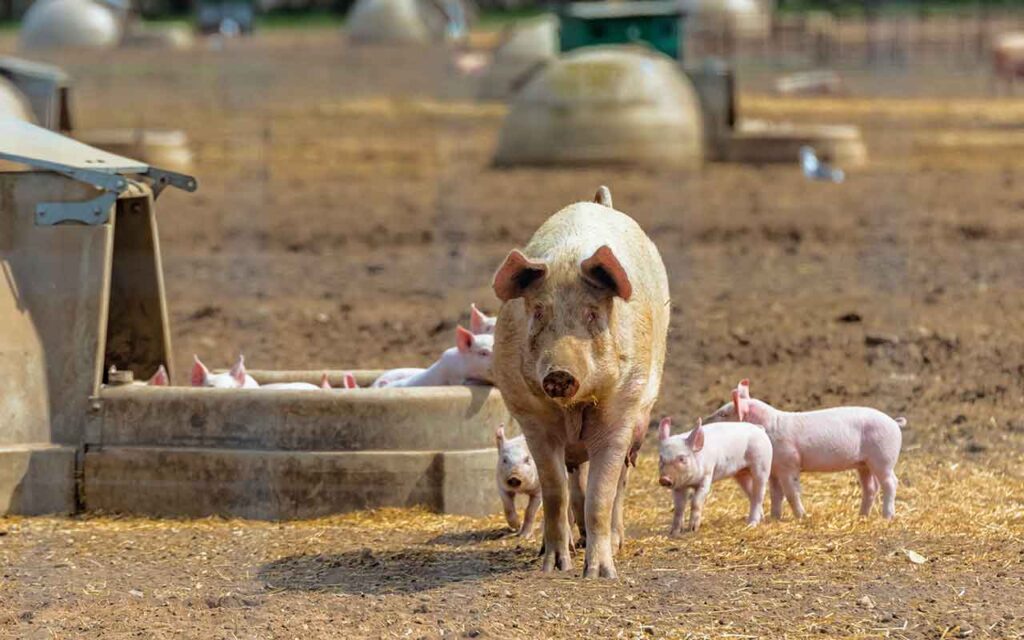
A new industry group has come together to address the environmental challenges facing outdoor pig production in the East of England.
The group marked the evolution of the ‘Swaffham group’ into a more formal industry forum – the Outdoor Pig Environmental Risk Reduction Programme – with a broader remit and stronger structure.
The first meeting, chaired by AHDB sustainability and technical programmes manager Zanita Markham and including representatives from major pork businesses, the NPA and AHDB, took place in September. They discussed the need for a coordinated, evidence-based approach to managing environmental risks and opportunities.
Zanita said: “A key focus of the group will be generating practical evidence and insight that can be used to inform discussions with government agencies and policymakers over the coming months and years.
“The initiative is expected to become a significant area of work for the sector, helping producers navigate emerging environmental requirements while ensuring the industry’s voice is heard.”
The group will also help build trust and engagement with organisations such as the Environment Agency and Natural England.
NPA chief executive Lizzie Wilson welcome the cross-industry approach to this difficult issue. “This is another area where the pig sector has recognised that we need to be proactive and responsible,” she said.
“While outdoor pig production has great story to tell, it is coming under increasing scrutiny. There are are plenty of measures producers can take, and many are already taking, to minimise the environmental impact. The group will work to identify these and promote good practice.”
Swaffham Project
The programme, formally referred to as the ‘Swaffham project’, began in 2016, with the intention of safeguarding the outdoor pig industry.
An increase in incidents related to outdoor pig rearing and the potential impact on water sources, both above and below ground, prompted AHDB to facilitate the bringing together of producers and water stakeholder groups.
The goal was to find solutions to help reduce the environmental impact of outdoor pig farming. Areas previously discussed included outdoor enterprises and arable rotations, emerging environmental schemes, and the use of grass swards and cover crops.
Further meetings are planned, and AHDB is developing briefing materials, training proposals and practical templates to support wider industry engagement and collaboration.