



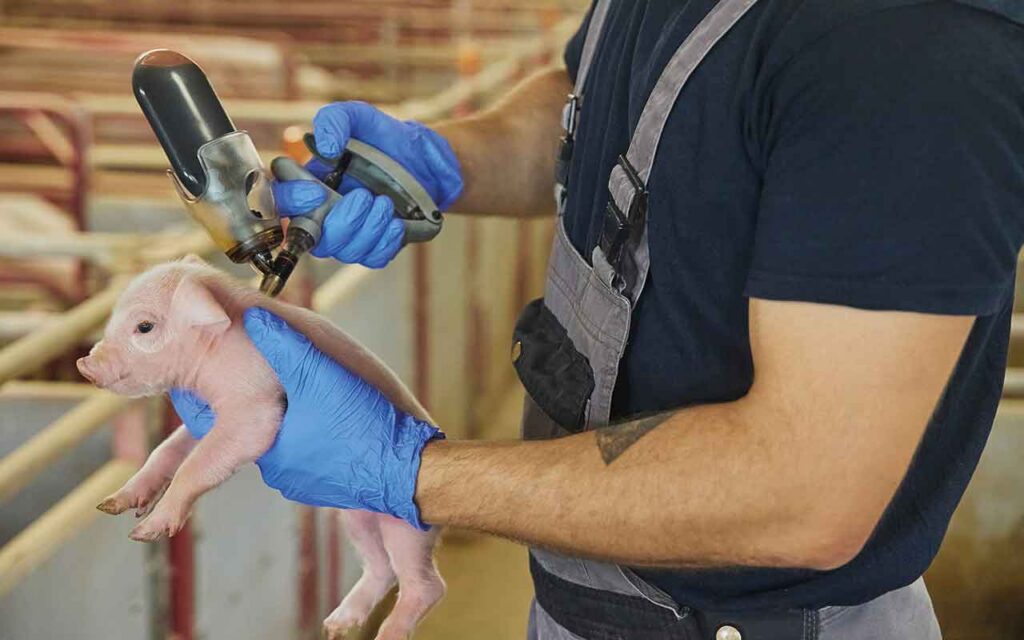
New figures published by the Veterinary Medicines Directorate (VMD) show far fewer animals are being used to release batches of veterinary vaccines than a decade ago.
The average number of animals needed to check the quality, safety and effectiveness of a single batch of animal vaccine fell by 41% – from 29 animals in 2013 to 17 in 2024.
Overall animal use fell by 29% over the same period, despite an increase in the number of vaccines being released.
The fall has been driven by advances in science and changes to testing requirements, which mean animal tests can increasingly be replaced with alternative measures, while continuing to make sure farmers, vets and pet owners have access to safe and effective vaccines that protect animals from disease, the VMD said.
The eport shows that removing the routine Target Animal Batch Safety Test in 2013 was a major turning point, cutting the number of animals used by thousands each year.
The proportion of veterinary vaccines released onto the UK market that require any animal testing as part of quality control has also fallen sharply, from 74% in 2013 to 34% in 2024.
The VMD said Tte progress supports the government’s commitment to reduce and ultimately replace the use of animals in science wherever possible.
Animal testing has not yet been replaced for every type of veterinary vaccine. For some vaccines, developing alternatives that do not use animals ‘remains scientifically and technically challenging’, the VMD added.
Work is continuing with scientists, regulators and the veterinary medicines industry to develop and approve new approaches so that animal use can be reduced further without compromising the safety, quality or effectiveness of veterinary vaccines.
Real pogress
Baroness Hayman, Defra Minister for Biosecurity and Trade, said: “This is real progress for animal welfare, we are using far fewer animals to make sure veterinary vaccines are safe and effective, which is welcome news for animal lovers across the country, including myself.
“Better science means we can reduce animal testing, while still giving farmers, vets and pet owners the vaccines they rely on to keep animals healthy and stop disease spreading.”
Abi Seager, Veterinary Medicine Directorate Chief Executive Officer said: ” This report shows 212 years of sustained, measurable progress in reducing animal testing within the veterinary medicines industry.
“We are committed to driving further reductions, and we will continue working with the animal health sector and our partners to replace animal-based testing wherever the science makes it possible.”