




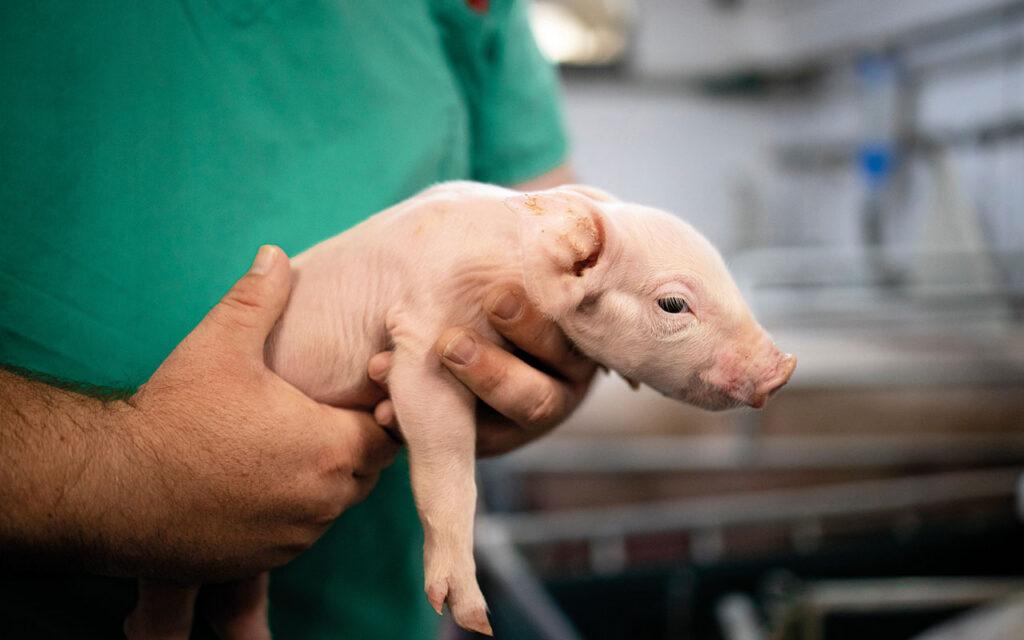
Pig vets are being urged to look out for a new disease syndrome associated with a new parvovirus variant found in pigs on a number of farms in the Netherlands and a single breeding farm in Denmark.
The key clinical features seen in multiple pigs are bilateral exophthalmos (bulging eyes), strabismus (eyes point in different directions), generalised skin reddening, skin wrinkling and alopecia, and reduced growth. Some pigs show respiratory signs, APHA advised in an update on its Emerging & Endemic Disease Alert System (EEDAS).
It said the first two clinical signs are ‘unusual and striking’, and their occurrence in multiple pigs with some description of skin pathology is likely to qualify as a suspect case for which there is funding at APHA for investigation. Morbidity is variable and can be high, mortality is low and most pigs recover.
It is most likely that affected pigs will be sucking piglets or weaners from 2 to 10 weeks of age, although age is not a criterion for submission to APHA if the key clinical signs are present in other ages of pig.
Morbidity is variable, but the disease can affect up to 80% of pigs in 50% of the litters at the same time. However, deaths directly due to the syndrome are low. Experience from infected farms has shown that clinical signs persist in a herd for 3 to 6 months, with an average of 4.
Consequences can include peri-weaning diarrhoea or ‘greasy pig disease’ and batches become uneven with poorer quality finishers.
No common or specific risk factors have yet been identified to trigger the disease, but a new parvovirus (PV) variant has been detected in high amounts in tissues from all affected pigs tested to date in both countries, and not in healthy pigs, the agency said.
“This new PV variant differs from known porcine PVs. It is most closely related to a PV that has been detected in faeces and spleen samples from foxes in the Netherlands, Croatia and Denmark,” it added.
Introduction
It is not known how or when the virus was introduced into pigs in the Netherlands or Denmark. The virus was detected in foxes, although no disease was associated with it in these cases. Its pathogenic role in wildlife remains ‘uncertain’, the agency added.
A definitive causal relationship between the new PV variant and this disease syndrome in pigs has not yet been established, with further epidemiological studies and experimental trials are needed to confirm its role.
“In the meantime, pig keepers and vets in Europe are being alerted to the clinical signs described and encouraged to investigate any suspected cases, to identify cases beyond the Netherlands and Denmark,” APHA added.
Risk to pigs in Great Britain
This syndrome is not known to have occurred in pigs in Great Britain and, to date, there is no information as to whether the novel PV described occurs in pigs, foxes or other wildlife in Great Britain.
“Live pigs and pig semen can be imported into Great Britain from authorised EU countries or territories, subject to the applicable animal health requirements and certification. However, very little is known at present about risk factors, transmission and risk pathways,” the ageny said.
No human illness, or concerns about human illness or food safety, are described in relation to the new PV variant in the Netherlands or Denmark.
Commercial vaccines for endemic porcine PV are not expected to provide immunity for the new PV variant.
Reporting suspected cases
- If you encounter suspect cases, contact APHA’s Pig Expert Group vet leads PigExpertGroup@apha.gov.uk or your local APHA Veterinary Investigation Centre.