

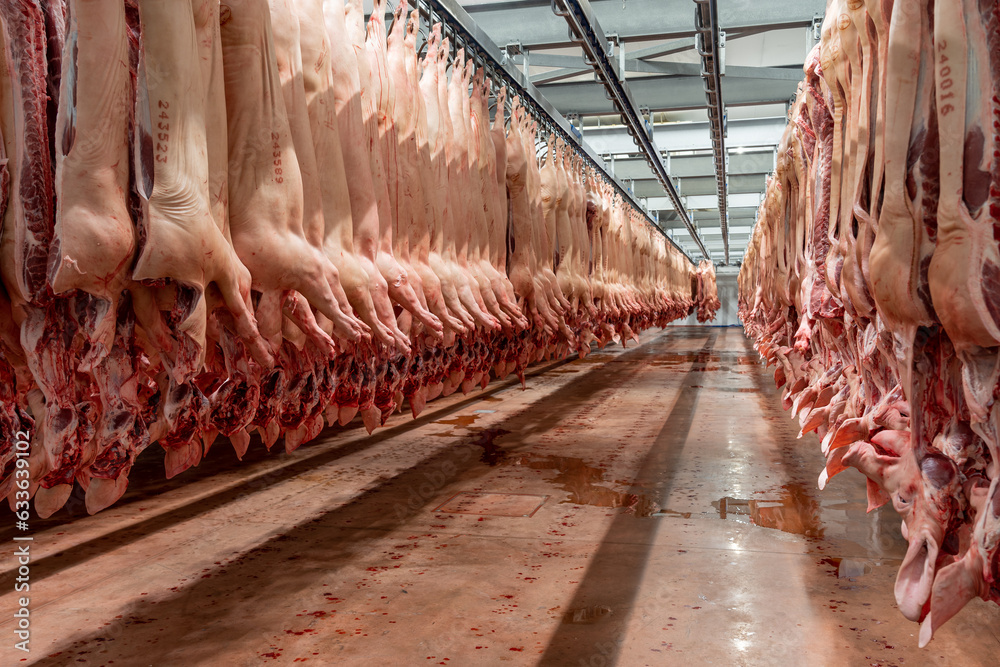
The Association of Independent Meat Suppliers (AIMS) has described new significantly increased Food Standards Agency (FSA) meat inspection charges as ‘unlawful’, ahead of a legal challenge.
The hourly rate for an Official Veterinarian will increase by 20.8% from April to £79.60 an hour or £165,500 a year. It means charges to industry as a whole are going to rise by £10 million in the coming year, a 24% increase, when inflation is 3%, AIMS said.
“Because industry does not believe FSA charges are lawful it has launched a Judicial Review, funded by the whole industry, which will be heard in the High Court in April”, Peter Hewson, AIMS’ veterinary director said.
He said the industry will be paying the FSA about the equivalent of the prime minister’s salary for an unqualified OV.
“The FSA blames an increase in contractor costs and reduced number of chargeable hours, whilst at the same time reducing its discount by over £3 million” he said.
“We have been pressing the agency to introduce the obvious efficiencies available in view of the reduced requirement and limited value of official controls in slaughterhouses, but the FSA has flatly refused to engage while it played with changes to a discount system that should not be required if FSA charges were lawful”.
FSA response
Junior Johnson, director of operations at the FSA, said: “The Judicial Review is before the court and will be heard in April. In the meantime our priority remains ensuring that British meat is safe, protecting public health, and upholding high standards of animal welfare, helping to ensure people have confidence in the food they eat.”
The agency said its charges are based on what it costs to deliver this assurance, which are rising. It pointed out that global veterinary shortages mean it must pay more to recruit and retain these skilled professionals, alongside the other impacts of inflation.
The FSA gives businesses a discount on our charges, but total funding for the discount is reducing – this year the meat industry received £14.9m in discount support, but this will be reduced to £11.8m in 2026/27, 18% of the total estimated charges of £66m.
As a result, the discount is being targeted more towards the smaller businesses. The agency said it was committed to maintaining the discounts of up to 90% on the cost of regulation that the smallest abattoirs have received for many years.
The FSA denied that it has ‘flatly refused to engage’, adding that it discusses delivery of controls and charges with industry bodies frequently at all levels.
The FSA is meeting industry representative bodies on February 26 to present its 2026/27 meat charges to them and will publish documents relating to its 2026/27 charges on its website after that meeting. It is also due to consult soon on proposals to reform how discount support is distributed.