




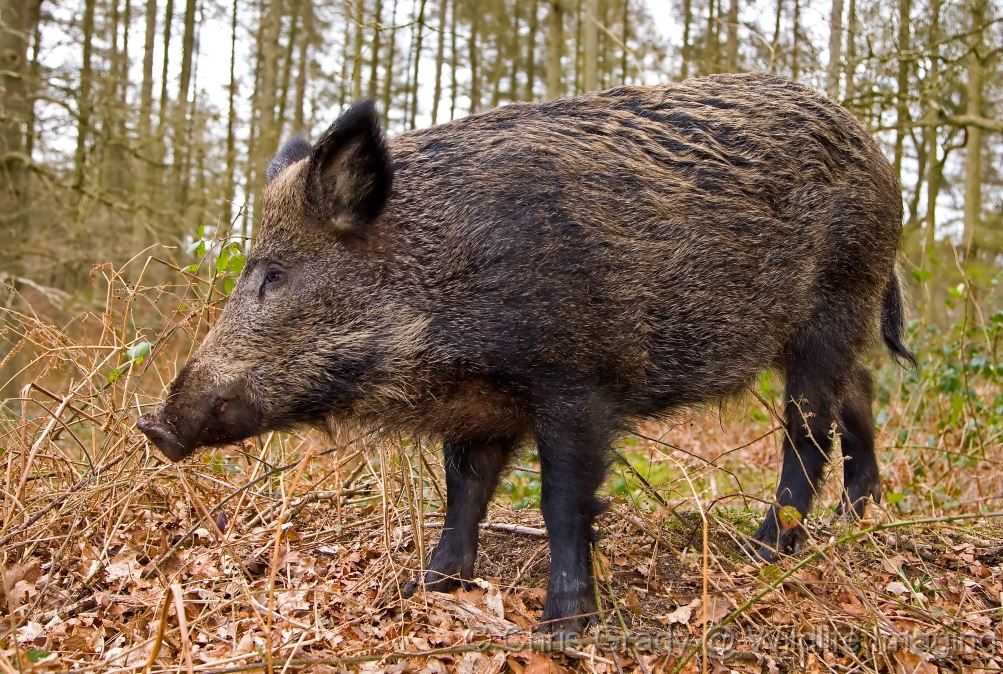
African swine fever (ASF) continues to spread to new parts of Catalonia, prompting the imposition of fresh restrictions.
On Tuesday, the Catalonian government’s Official Veterinary Services confirmed the virus had been found in a further seven wild boar in two outbreaks. One of these was located in the municipality of Sant Feliu de Llobregat, reportedly 13km from the original outbreak confirmed in late November. It has therefore been added to the high-risk zone.
On Friday, the authorities announced that two new cases had been found near the western towns of El Papiol and Molins de Rei in Barcelona’s metropolitan area – the first cases located outside the original infected area.
The latest cases brings the total number of reported outbreaks to 31, three of which are ‘primary’ and 28 ‘secondary’. These outbreaks include a total of 162 positive cases/wild boars in seven municipalities: Cerdanyola del Vallès, Sant Cugat del Vallès, Sant Quirze del Vallès, Terrassa, Rubí, Molins de Rei, and Sant Feliu de Llobregat.
Spanish media reports that ASF surveillance has now been expanded to municipalities, including areas previously considered safe, in response to the recent expansion of the virus’s reach.
The decision to expand the restricted zone was made after analyzing data collected in January, Russpain reports. At that time, experts noticed that infected animals were already appearing along major transport routes, prompting concerns the virus is capable of quickly spreading significant distances and moving beyond the initial six-km infected zone.
In addition, 1,112 other cases have been analysed and tested negative. Of these, 661 were from captured animals and 451 came through passive surveillance – whole carcasses or remains found in the wild, or animals with symptoms that were killed in the infected area and its surroundings.
Intensive efforts
The veterinary authorities highlighted efforts to contain the virus within a perimeter fenced area to prevent, and in the case of the municipality of Sant Feliu de Llobregat, a ‘double fence’ installed following the route of the A2 motorway and the AVE high-speed rail line.
“Intensive efforts continue to search for wild boar carcasses and to reduce wild boar populations in the infected area, primarily through the use of traps and population control measures carried out by rural agents and specially trained hunters under the supervision of the competent authority,” it added.
“Similarly, work continues on isolation measures and fencing, utilising existing fencing along roads and railways, and prioritizing the control of corridors used by wild boar. These measures are being adapted to the evolving epidemiological situation, particularly through the constant monitoring of the spatial distribution of cases and the highest-risk areas.”
Pig farm surveillance
The Veterinary Inspection Service (SVO) is maintaining its controls on pig farms, inspecting biosecurity measures and carrying out the enhanced passive surveillance established by EU regulations on the 57 farms located in the Infected Zone. So far, no compatible symptoms or lesions have been detected on any of the farms.
“A high level of alert is being maintained with reinforced passive surveillance and biosecurity on pig farms and in wild boar populations, both in Catalonia and the rest of Spain,” it said.